Does Equipment Age Matter in Commercial Financing?
Does equipment age matter? Learn how age, mileage, condition, seller type, and useful life can affect commercial equipment financing options and timing.

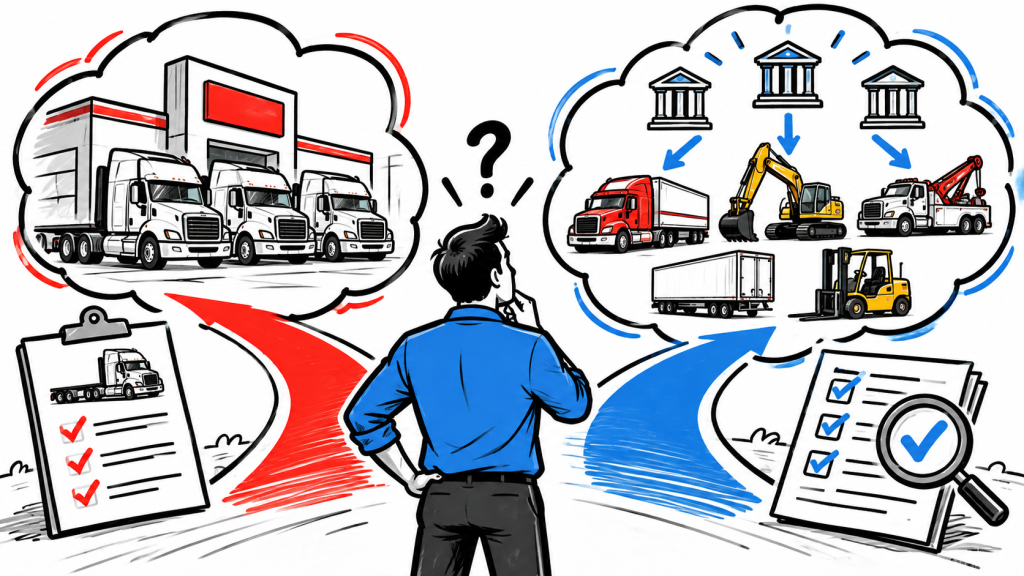
A truck is down, a replacement is available, and the seller wants a financing decision before another buyer takes it. That is when the finance broker versus captive question becomes operational, not theoretical. The right source can affect the paperwork required, down payment expectations, approval path, and how quickly a qualified business can put revenue-producing equipment into service.
For an established fleet, contractor, towing company, medical transport operator, or other equipment-dependent business, the better option is rarely determined by the name on the finance quote. It depends on the asset, seller, business profile, cash flow, and whether the proposed structure fits the equipment’s working life.
A captive finance company is affiliated with a manufacturer or brand. It commonly supports purchases of that manufacturer’s new equipment and, in some cases, select used units sold through authorized dealers. A truck manufacturer, trailer maker, construction-equipment brand, or vocational-equipment manufacturer may offer captive financing as part of the sales process.
The appeal is straightforward. The dealer may be able to present the equipment quote, finance application, warranty options, and delivery plan in one place. Captive programs can also be designed around particular new models, dealer inventory, or manufacturer sales initiatives. For a well-qualified buyer purchasing a new, standard-spec asset from an authorized dealer, that alignment can be useful.
But the captive’s focus is naturally tied to its brand and dealer network. If the best truck for the job is a different make, the unit is a late-model used asset, or the transaction includes several equipment types from different sellers, the captive option may be less suitable. That is not a flaw. It is simply a narrower financing channel built to support a manufacturer’s equipment sales.
An equipment finance broker is a financing partner that works with multiple funding sources rather than representing one manufacturer’s finance program. The broker reviews the transaction, borrower profile, equipment details, and documentation, then helps identify financing programs that may fit the deal.
That broader approach can matter when a business is buying outside a dealer network or has a transaction that does not fit a standard new-equipment template. Examples include a used wrecker from an independent seller, several trailers from different vendors, a high-mileage but well-maintained vocational truck, or a mix of forklifts, yellow iron, and transport equipment for an expansion project.
A capable broker also adds practical coordination. That can include confirming the equipment description and serial numbers, reviewing a purchase order or invoice, identifying title or lien documentation needs, communicating with the seller, and helping the borrower respond to lender questions. For a fleet manager trying to replace an aging unit before it creates more downtime, this work can reduce avoidable back-and-forth.
Commercial Fleet Financing, Inc. operates in this role as a specialized commercial equipment finance broker and financing partner for established businesses throughout the United States.
The main difference is choice versus brand integration. A captive may offer a direct path when the buyer, equipment, dealer, and program align. A broker may offer more flexibility when the deal needs to be matched across potential funding sources.
Neither route guarantees the best rate, term, approval, or down payment. Those outcomes are driven by the credit profile, time in business, financial strength, existing debt, fleet history, collateral, asset age, mileage or hours, seller type, and requested structure. A strong business buying a new standard truck from a franchised dealer may have a very different set of options than a contractor buying a 10-year-old excavator from a private seller.
A captive program is often worth evaluating when the equipment is new, sold by an authorized dealer, and central to a single manufacturer’s product line. It may also be a practical choice when the dealer has experience packaging its brand’s paperwork and the buyer wants a consolidated purchase process.
Consider a regional carrier ordering several new tractors with consistent specifications from one dealer. The manufacturer’s finance arm may understand that equipment well, recognize the dealer documents, and offer a structure designed for the model. The buyer should still compare the full proposal, including term length, payment frequency, advance requirements, documentation fees, end-of-term obligations, and any prepayment provisions.
A broker can be particularly valuable when equipment selection is driven by availability, application, or replacement urgency rather than brand loyalty. A towing company may find the right rollback at an independent dealer. A construction firm may need an excavator, a compact loader, and attachments from more than one seller. A medical transport company may be purchasing specialty vehicles that require lenders familiar with commercial use and conversion values.
In these cases, the issue is not merely finding money for an asset. It is presenting the asset and the operating story in a way that fits lender requirements. The broker can help identify details that matter, such as whether the equipment is titled, whether a conversion is complete, how many miles are on a truck, whether the seller is a dealer or private party, and whether the business has comparable equipment already in service.
A broker relationship may also help businesses that want to preserve flexibility across future purchases. A company that buys one brand of tractor this year, trailers from another vendor next year, and used support equipment later may prefer a financing partner that is not limited to one equipment manufacturer.
A lower monthly payment can be useful for cash flow, but it should not be the only comparison point. Extending the term may reduce the payment while increasing the total financing cost or leaving the business with a balance that outlasts the asset’s most productive years.
Equipment condition and revenue use should shape the structure. A newer over-the-road tractor with documented maintenance and predictable utilization may support a different financing approach than an older dump truck, a specialized ambulance, or a piece of yellow iron that will work seasonally. The intended use, resale market, and expected replacement cycle all matter.
Business owners should also ask whether payments are monthly, seasonal, deferred, or aligned with project cash flow where available. Seasonal structures can be helpful for certain industries, but lender acceptance depends on the borrower, asset, and documented operating pattern. A payment schedule should support the business without creating a funding gap later.
The fastest path is usually a complete, accurate package rather than a rushed application with missing facts. A finance source will commonly need the legal business name, ownership information, time in business, tax identification details, business address, and purchase documentation. Depending on the deal, recent bank statements, financial statements, tax returns, proof of insurance, fleet schedules, or payoff information may also be requested.
Equipment details matter just as much. Provide the year, make, model, VIN or serial number, mileage or hours, selling price, seller information, and intended commercial use. For trucks, include body type and specifications when relevant. For a wrecker, rollback, car hauler, or medical transport vehicle, specialized body and conversion details can affect how the asset is evaluated.
Established businesses with good to strong credit, verifiable operations, and a documented history using similar equipment generally present a clearer financing profile. That does not mean every transaction follows the same path. A lender may view a used unit, a private-party purchase, a high-dollar expansion, or an older asset differently from a straightforward replacement purchase.
Start with the equipment plan, not the finance label. If the equipment is new, brand-specific, and available through an authorized dealer, compare the captive proposal with any other qualified financing option. If the transaction involves used equipment, multiple vendors, specialized assets, or a need for more than one program to be considered, a broker may provide useful range and deal-structuring support.
Ask each source to explain what is included, what documents are still needed, and what could change the proposal. Be specific about timing, especially if a vendor has a delivery date or another buyer is waiting. Fast decisions or funding in as little as 24 hours can be possible in some transactions, but only when the credit profile, asset, documentation, lender requirements, and deal structure support that timeline.
The equipment needs to earn its keep once it reaches the jobsite, route, or customer. Choose the financing path that gives the business a clear, workable route to acquire the right asset and keep operations moving.
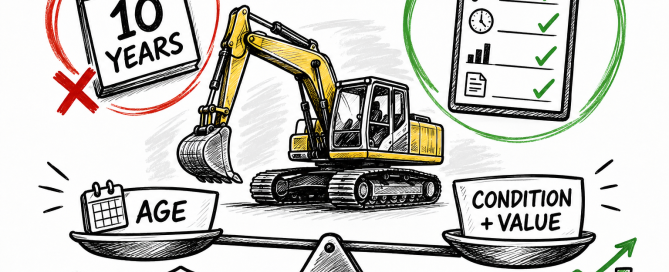
Does equipment age matter? Learn how age, mileage, condition, seller type, and useful life can affect commercial equipment financing options and timing.
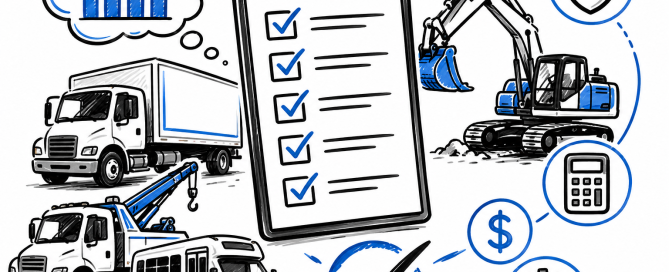
Use this fleet acquisition checklist to assess equipment fit, costs, financing readiness, vendors, and uptime before committing capital to a purchase.
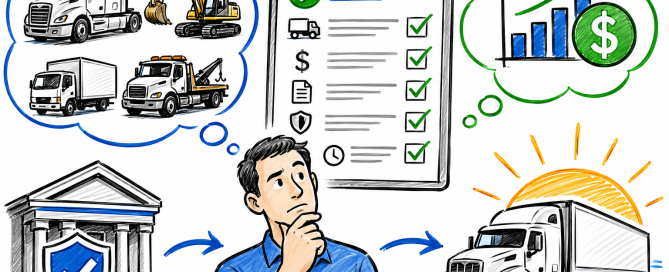
A fleet financing partner review helps established businesses compare lender access, equipment knowledge, terms, timing, and support before they commit.

Learn how to finance ambulances with terms that protect cash flow, fit vehicle specifications, and help qualified medical fleets stay ready for service.
Learn how to plan equipment replacements around uptime, cash flow, resale value, and financing so your fleet stays productive as assets age and costs rise.