How to Preserve Working Capital for Fleet Growth
Learn how to preserve working capital when replacing or adding commercial equipment, with practical financing and purchasing guidance for established fleets

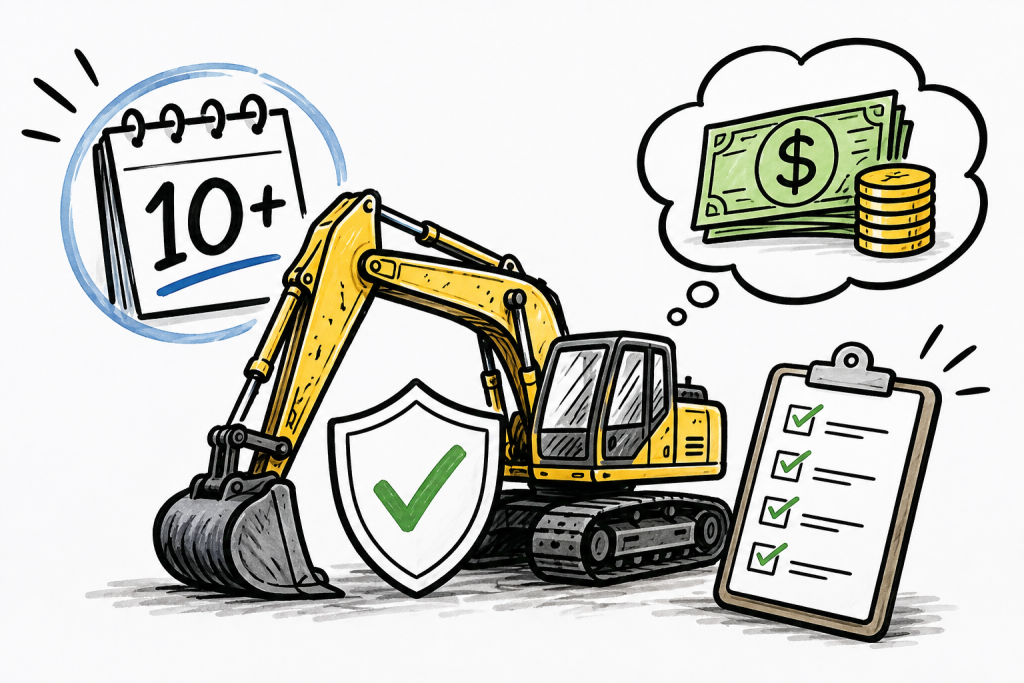
A late-model replacement is not always the best purchase. A well-maintained 10-year-old excavator, a low-mileage used rollback, or a proven trailer from a known seller may put productive capacity into service at a lower acquisition cost. So, can businesses finance older equipment? Often, yes – but the approval process usually puts more weight on the asset’s condition, remaining useful life, and resale value than it would for new equipment.
For established businesses, older equipment financing is less about a single cutoff year and more about whether the transaction makes commercial sense. The equipment has to support revenue, fit the buyer’s operating plan, and meet the requirements of a funding source willing to finance that particular asset.
Many commercial assets can be financed after they are several years old, including semi-trucks, trailers, tow trucks, dump trucks, box trucks, forklifts, excavators, loaders, industrial machinery, buses, and specialty vocational equipment. The workable age range varies by equipment category and transaction structure.
A 12-year-old trailer, for example, may be viewed differently from a 12-year-old road tractor. A well-documented excavator with reasonable hours may have stronger financing potential than an older machine with incomplete maintenance records. Specialty equipment can also be evaluated differently when it has a recognizable market, a clear serial number, and a practical resale path.
The central question is not simply, “How old is it?” A more useful question is: “Will this asset remain productive and marketable for the requested term?” Lenders and funding sources generally look at both the equipment’s current age and its projected age when the financing term ends.
That is why a business may find a 36-month structure more practical than a 60-month structure on an older asset. A shorter term can reduce the risk that the equipment will be worth substantially less than the remaining balance later in the transaction.
Age matters, but it is only one part of the file. A strong transaction brings together a financeable asset, a qualified business, and clean documentation.
Condition matters more than cosmetic appearance. For trucks, that may mean mileage, engine history, service records, tires, emissions equipment, and whether the unit is ready to work. For construction equipment, operating hours, undercarriage condition, hydraulics, attachments, maintenance history, and signs of heavy wear can affect how the asset is viewed.
An older piece of yellow iron with consistent service records and manageable hours can be more attractive than a newer unit that has been heavily used or poorly maintained. The same applies to a wrecker or rollback. A truck that is already in serviceable condition, inspected, and supported by maintenance documentation generally presents a clearer picture than one needing major work before it can produce revenue.
Common equipment with an established secondary market is usually easier to place than highly customized or obsolete equipment. Standard trailers, recognizable truck makes, common forklifts, and widely used construction machines may offer more financing paths than equipment built for a narrow, unusual application.
Customization is not automatically a problem. A car hauler, ambulance, NEMT vehicle, crane body, or specialized recovery unit may be essential to a buyer’s operation. Still, the more specialized the asset, the more the funding source may focus on its age, specifications, seller, valuation, and potential market if it must be resold.
Equipment purchased from an established dealer often has a cleaner documentation trail than a private-party sale. Dealers typically provide invoices, equipment details, serial numbers, titles when applicable, and payoff information if there is an existing lien.
Private-party purchases can be financeable, but they often require more review. The buyer may need a bill of sale, clear ownership documentation, photographs, maintenance records, and verification that no outstanding liens interfere with the transfer. If the asset is titled, the title path has to be clear before funding can proceed.
For older equipment, the business behind the transaction becomes especially important. Established companies with good to strong credit, verifiable time in business, stable revenue, and a history of operating similar equipment are generally better positioned than buyers with limited documentation or no track record in the industry.
A fleet’s experience also matters. A towing company adding a used wrecker that matches its existing service model presents a different profile from a business entering an unfamiliar line of work. Likewise, a contractor replacing an aging excavator with a comparable used unit may be easier to evaluate than a company making a major shift into a new equipment category.
Older equipment can require a different structure than new equipment. Depending on the asset, borrower profile, and funding source, that may mean a shorter term, a larger down payment, or both.
A down payment reduces the amount financed and can help align the loan balance with the asset’s value. It may be particularly useful when the purchase price is high relative to an older unit’s wholesale or resale value. In other cases, a qualified borrower and strong asset may have access to lower-down-payment options. Neither outcome should be assumed before the equipment and complete credit profile are reviewed.
Term length is another practical lever. Financing a 14-year-old dump truck over a shorter period may increase the monthly payment, but it can reduce total financing cost and lessen the chance of carrying a balance after the truck has reached a difficult point in its service life. A longer term may preserve monthly cash flow, but it deserves a realistic look at repair exposure, expected utilization, and residual value.
The right structure depends on how the equipment will earn. If a used box truck is replacing a unit that is creating frequent downtime, the higher payment may still be justified if the replacement can make deliveries consistently. If an older piece of equipment is only needed for occasional projects, a large monthly obligation may not match its revenue contribution.
Older equipment transactions can slow down when the purchase price, condition, and documentation do not line up. A seller may be asking retail-level pricing for a unit with high hours or substantial mileage. A machine may need repairs before it can operate. A truck may have title issues, or its VIN information may not match the paperwork.
The equipment’s projected age at the end of the requested term can also limit available programs. A funding source may be comfortable financing the unit today but not for as long as the buyer prefers. This is not necessarily a rejection of the asset. It may simply call for a revised term, additional cash down, a different collateral structure, or selection of a comparable but newer unit.
Businesses should also consider the operating cost side of the purchase. Older equipment can lower the upfront price while increasing maintenance risk, fuel consumption, parts delays, or downtime. Financing approval is only one part of the decision. The asset still has to be reliable enough to protect service commitments and margins.
Preparation can make a meaningful difference, particularly when a deal involves a private seller or a specialty asset. Before requesting financing, collect the seller’s quote or purchase agreement, make and model information, VIN or serial number, mileage or hours, year, photographs, and available maintenance records.
For the business side, be ready to provide current business information, ownership details, and financial documentation appropriate to the transaction. Funding sources may also want to understand the intended use, projected utilization, existing fleet or equipment, and whether the purchase is a replacement, expansion, or upgrade.
Be candid about needed repairs and modifications. A unit requiring a body installation, liftgate, towing equipment, or other upfit may still be workable, but the full project cost and vendor scope should be identified early. Surprises after approval can create delays and complicate the funding process.
Financing older equipment can be a sound move when the asset is well-maintained, appropriately priced, and capable of producing revenue soon after purchase. It can allow a business to preserve working capital for payroll, fuel, materials, insurance, maintenance, or the next growth opportunity.
It may be less attractive when the purchase is driven only by a low sticker price. An inexpensive truck with uncertain engine history or a machine with worn components can quickly absorb the savings through repairs and downtime. The best used-equipment purchase is usually one where the operating condition, purchase price, expected service life, and payment structure all support the same business case.
Commercial Fleet Financing, Inc. works with established businesses nationwide to evaluate commercial equipment transactions through multiple funding sources. A productive conversation starts with the equipment details, seller information, business history, and the role the asset will play in operations. When those pieces are clear, an older unit can be evaluated on its real business value rather than its model year alone.

Learn how to preserve working capital when replacing or adding commercial equipment, with practical financing and purchasing guidance for established fleets

Learn how to finance fleet trailers using structures, documentation, and asset factors that can protect cash flow and keep freight moving in service.

Compare the best ways to fund sprinter vans, from loans and leases to vendor programs, while protecting working capital and matching terms to use well.
This commercial vehicle lifecycle guide helps fleet leaders plan purchases, maintenance, replacement, and financing around uptime, cash flow, and asset value.
This commercial vehicle title guide explains liens, title transfers, VIN checks, and finance steps that help fleets put purchased equipment into service.