How to Preserve Working Capital for Fleet Growth
Learn how to preserve working capital when replacing or adding commercial equipment, with practical financing and purchasing guidance for established fleets

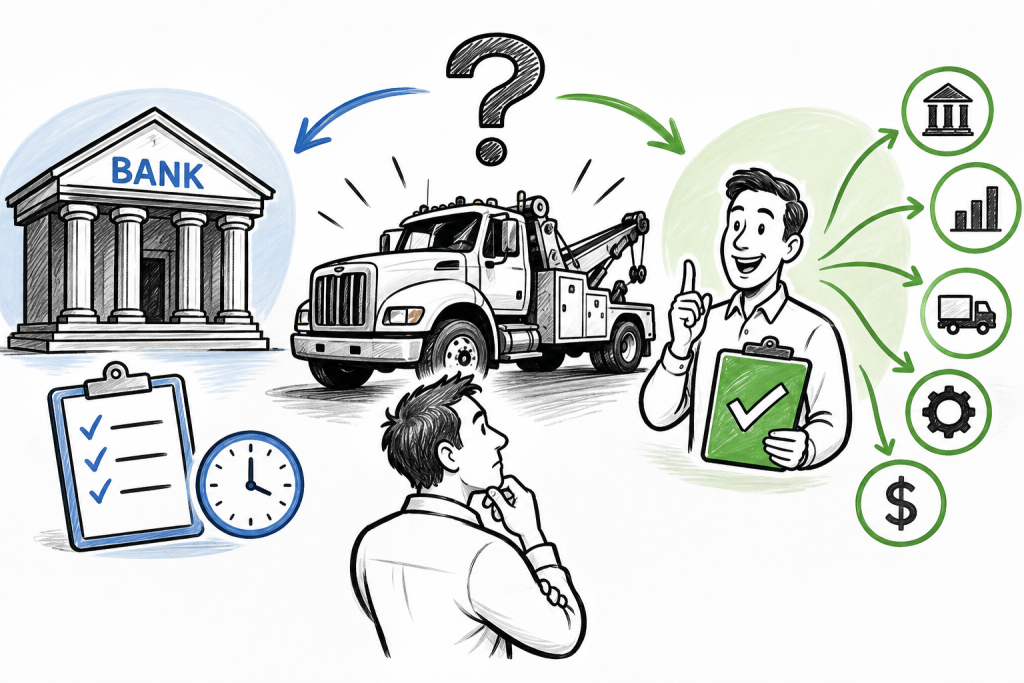
A truck replacement can become urgent long before it becomes convenient. A unit may be spending too much time in the shop, a construction contract may require another excavator, or a towing company may need a rollback before a municipal bid starts. When the purchase is time-sensitive, the choice between an equipment finance broker versus banks affects more than the payment. It can affect the equipment options, documentation path, vendor coordination, and how quickly a qualified business can put an asset into service.
For established businesses, neither option is automatically better. A bank relationship can be valuable, particularly when the transaction fits the bank’s credit box and timeline. A specialized broker can be useful when the asset, borrower profile, seller, or structure needs a more tailored approach. The right choice depends on the full transaction, not just the advertised rate.
Banks commonly offer equipment loans and, in some cases, lines of credit that can support commercial asset purchases. A business with substantial deposits, long operating history, strong financial statements, and an established banking relationship may find a bank process straightforward for newer equipment from a recognized dealer.
The potential advantage is familiarity. The bank may already understand the company’s cash flow, borrowing history, deposit activity, and ownership structure. If the requested truck, trailer, forklift, or other asset fits its lending guidelines, that familiarity can reduce questions about the business itself.
A bank can be particularly sensible when the company is planning well ahead, has clean and current financials, and is comfortable with the bank’s documentation and underwriting timeline. Some borrowers also prefer consolidating deposit, treasury, real estate, and equipment relationships in one institution.
That said, a bank is generally evaluating the transaction within its own policies. Those policies may address minimum time in business, financial statement requirements, asset age, mileage, loan amount, industry concentration, and collateral standards. A late-model day cab bought from a franchised dealer may be an easier fit than a 10-year-old wrecker, specialized trailer package, or piece of yellow iron sold by a private party.
An equipment finance broker is not a bank or a direct lender. The broker’s role is to understand the proposed purchase, organize the financing request, and match a qualified borrower and asset with appropriate funding sources and programs.
That broader lender access can matter because commercial equipment is not a single category. A lender comfortable with a newer box truck may have different appetite for a high-mileage sleeper, ambulance conversion, car hauler, crane truck, excavator, or industrial machine. The seller also matters. A dealer invoice, auction purchase, and private-party sale can each create different documentation and funding considerations.
A specialized broker looks at the transaction as a package: the business profile, equipment, use case, seller, amount financed, requested term, cash down, and timing. Rather than asking whether the transaction fits one institution’s guidelines, the broker can identify which potential funding sources may be most relevant to the request.
At Commercial Fleet Financing, Inc., that work includes helping qualified established businesses present equipment transactions clearly, coordinate with vendors, and navigate lender documentation requirements. It does not eliminate underwriting, but it can reduce avoidable back-and-forth when the details are gathered early.
The most useful comparison is not broker versus bank in the abstract. It is how each path handles the issues that tend to delay or change a commercial equipment deal.
A bank offers its own products. A broker may have access to multiple funding sources, each with different preferences for asset types, industries, credit profiles, and transaction sizes. This can be helpful when the equipment is vocational, used, specialized, or being acquired outside a traditional dealer channel.
For example, a profitable towing company replacing an older heavy wrecker may have strong commercial credit and years of operating history. Still, equipment age, valuation, and the complexity of the body and chassis can influence which lender is a fit. A broker can focus the request on funding sources that routinely consider commercial-use assets of that type.
More options do not mean every option is available or appropriate. A strong deal still needs a financeable asset, verifiable operations, acceptable credit, and documentation that supports the request.
The lowest stated rate is not always the lowest cost of doing business. A shorter term can reduce total financing cost but create a higher monthly payment. A longer term may preserve working capital, though it can increase the total amount paid over time. Down payment, advance payment, fees, residual structure, and repayment schedule all deserve review.
Banks may offer attractive terms for borrowers and assets that meet their standards. Brokers may be able to explore structures across several programs, which can be useful when a business wants to balance payment, down payment, and asset life. The right structure should reflect how the equipment earns revenue.
A dump truck working under a steady contract, for example, has a different cash-flow profile from an excavator purchased ahead of seasonal work. The business should avoid stretching a term simply to reach a target payment if the equipment’s expected useful life, maintenance outlook, or replacement cycle does not support it.
Both banks and financing sources working through brokers will review information. The difference is often preparation and routing. A well-prepared package can include the equipment quote or purchase agreement, VIN or serial number when available, year, mileage or hours, seller details, business formation documents, ownership information, and recent financial information when required.
For larger requests, older equipment, private sales, or more complex credit files, lenders may request tax returns, interim financial statements, bank statements, proof of insurance, payoff information, or a fleet schedule. A broker helps identify likely requirements early and keeps the request aligned with the lender’s process.
This matters because a purchase order alone may not answer the questions underwriting needs answered. Is the unit titled correctly? Does the seller have a clear payoff? Is the equipment configured for the borrower’s stated use? Is a used unit’s mileage consistent with its condition and value? Details like these can affect timing.
A bank may be the efficient route when the relationship is established and the request is simple. But an internal approval process can be less flexible when the asset is outside policy or the vendor needs a specific funding process.
A broker can coordinate among the borrower, seller, and funding source, helping keep titles, invoices, insurance requirements, payoff letters, delivery details, and closing documents moving in the right sequence. For qualified borrowers, decisions and funding can move quickly in some transactions, but timing remains conditional on credit profile, time in business, fleet history, asset type, complete documentation, seller cooperation, lender requirements, and deal structure.
Businesses should be cautious about planning a delivery date around an assumed approval. Until the lender has completed underwriting and closing requirements, a proposed timeline is only a target.
A bank may be the logical first call when the business has a strong existing relationship, the purchase is conventional, and the company has time to work through the bank’s process. This can include a newer fleet vehicle from an established dealer, a clearly documented replacement purchase, or a transaction that fits the company’s existing credit line.
It may also be the better option when the bank has already reviewed the business’s current financial performance and can offer terms that meet the company’s payment and cash-flow goals. There is no business advantage in adding another party to a transaction that the bank can handle well.
A broker may be the better route when the deal has moving parts: specialized equipment, a used asset, higher mileage, an independent seller, a tight delivery schedule, multiple units, or a need to evaluate more than one financing structure. The same is true when a business wants market perspective without submitting a poorly organized request to several sources on its own.
Consider a regional carrier adding three late-model tractors and several trailers after winning new freight volume. The company may have strong revenue but also need to preserve cash for insurance, payroll, repairs, and fuel. A broker can help evaluate whether the equipment package, advance payment, and term are aligned with the company’s operating plan, then direct the request toward potential sources suited to that fleet profile.
The broker route is also useful for vendors. Dealerships and equipment sellers benefit when a finance partner can help a qualified customer move from a quote to complete documentation without leaving the seller to explain lender conditions or chase missing information.
Before approaching either a bank or broker, define the asset and the operating need. Know whether the purchase is a replacement, expansion, or contract-driven acquisition. Be ready to discuss the equipment’s year, mileage or hours, purchase price, seller type, expected delivery date, and how it will generate revenue.
Then review the business side honestly. Time in business, commercial credit strength, recent revenue, existing debt, fleet size, maintenance history, and available down payment can all affect the financing path. A company with excellent credit may still face different options for a 2025 tractor from a dealer than for a 2014 specialized unit purchased at auction.
Finally, compare complete proposals rather than isolated payment figures. Ask about the term, rate or factor structure, down payment, fees, prepayment provisions, personal guaranty requirements, collateral terms, insurance requirements, and funding conditions. A clear comparison protects the business from choosing a payment that looks attractive but does not fit the transaction.
The best financing path is the one that gets a suitable revenue-producing asset into service while protecting cash flow and meeting the business’s actual operating needs. Start the conversation with the equipment, the seller, and the business objective, then choose the financing channel that can support the full deal.

Learn how to preserve working capital when replacing or adding commercial equipment, with practical financing and purchasing guidance for established fleets

Learn how to finance fleet trailers using structures, documentation, and asset factors that can protect cash flow and keep freight moving in service.

Compare the best ways to fund sprinter vans, from loans and leases to vendor programs, while protecting working capital and matching terms to use well.

This commercial vehicle lifecycle guide helps fleet leaders plan purchases, maintenance, replacement, and financing around uptime, cash flow, and asset value.
This commercial vehicle title guide explains liens, title transfers, VIN checks, and finance steps that help fleets put purchased equipment into service.