How to Preserve Working Capital for Fleet Growth
Learn how to preserve working capital when replacing or adding commercial equipment, with practical financing and purchasing guidance for established fleets

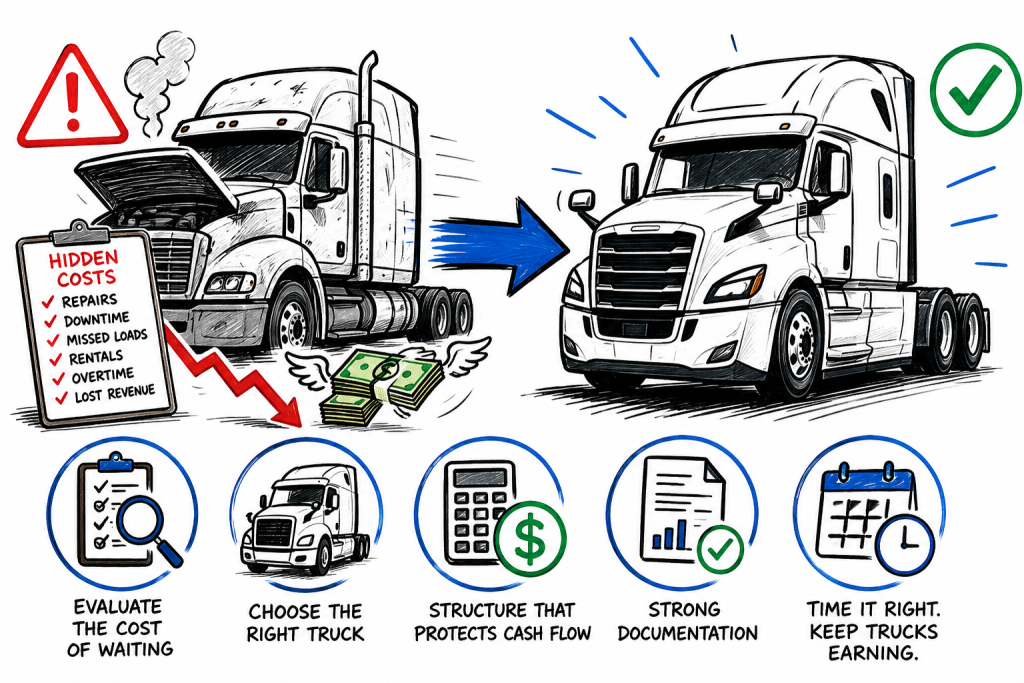
An aging truck rarely fails on a convenient schedule. It starts with missed dispatches, repeat shop visits, rising maintenance invoices, driver complaints, and a unit that cannot be relied on for the next contracted load. A sound truck replacement financing guide starts there: not with the monthly payment, but with the operating cost and revenue risk of keeping the old truck in service.
For an established business, replacing a truck is a capital-allocation decision. The goal is to put a dependable revenue-producing asset into service while preserving enough working capital for payroll, fuel, insurance, maintenance, and the normal swings of the business.
The purchase price of a replacement truck is visible. The cost of delay is often spread across several departments and harder to measure. A tractor that spends two days a month in the shop may also create rental expense, overtime, late deliveries, lost runs, and pressure on the rest of the fleet. For a towing company, a rollback or wrecker out of service can mean turning away calls when demand is highest. For a construction contractor, a dump truck failure can hold up crews and material movement.
Before shopping for financing, compare the truck’s recent repair history, unscheduled downtime, expected maintenance over the next 12 months, fuel consumption, and practical resale or trade value. Then estimate what the replacement unit can produce. A newer sleeper tractor assigned to a proven lane has a different economic case than a specialized vocational truck purchased for work that has not yet been contracted.
This analysis also helps determine whether replacement should happen now or after another operating season. There is no universal mileage trigger. A well-maintained highway tractor with documented service history may remain financeable and productive at mileage that would make a heavily used local unit a poor candidate. Intended use, maintenance records, engine and emissions condition, and available warranty coverage all matter.
The right truck is not always the newest truck on the lot. A late-model used truck from a reputable dealer may fit a replacement plan better than a new unit with a long build schedule. Conversely, a new truck may be justified when warranty coverage, fuel efficiency, driver retention, or a specific upfit materially affects operating performance.
Lenders and funding sources generally look at the asset as well as the business. A standard late-model Class 8 tractor, box truck, dump truck, tow truck, or trailer may fit more readily within common equipment-finance programs than an older, highly customized, or unusually high-mileage unit. That does not make specialized equipment impossible to finance. It means the transaction may require a more deliberate structure, additional documentation, or a larger cash contribution.
Seller type matters as well. A franchised dealer or established commercial equipment vendor typically provides a clear invoice, vehicle details, serial or VIN information, payoff documentation when applicable, and title-related paperwork. A private-party purchase can be workable, but it may involve extra verification of ownership, condition, lien status, and payment instructions. Build that time into the replacement schedule.
New trucks can offer current specifications, warranty coverage, and longer potential repayment terms. They also carry the highest acquisition cost and may involve availability constraints. Used trucks can reduce the amount financed and may be available immediately, but age, mileage, maintenance condition, and remaining useful life take on greater importance.
A rebuilt engine, remanufactured component package, or refurbished vocational body can extend the useful life of an asset, but financing eligibility depends on how the work is documented and whether the transaction is treated as equipment acquisition, repair, or a combination of both. Detailed vendor invoices and a clear scope of work are valuable in these cases.
Most truck replacement transactions use an equipment finance agreement or lease structure designed around the asset, the business profile, and the desired payment. The terminology can vary by funding source, but the central questions are consistent: How much cash should remain in the business? How long should the payment run? Who will own the equipment at the end? How much residual value, if any, is assumed?
A longer term can lower the scheduled monthly payment and preserve operating cash. The tradeoff is that the business may pay financing costs over a longer period and could owe more than the truck is worth early in the term if depreciation is steep. A shorter term can reduce the total financing cost and build equity faster, but it creates a higher monthly obligation.
A down payment may lower the payment, improve the lender’s advance position, and broaden available options. However, using too much cash at closing can create a different problem if insurance deposits, tax payments, seasonal payroll, or repairs on other units are due soon. Depending on the credit profile, time in business, fleet history, asset, and deal structure, some qualified businesses may have low-down or potentially zero-down options. Those outcomes are not available on every transaction.
Some structures use a stated end-of-term purchase amount or residual. This can reduce periodic payments because part of the asset’s expected value is addressed at the end rather than fully paid down during the term. It can be useful for trucks with predictable resale value and a fleet that follows disciplined replacement cycles. The tradeoff is an end-of-term obligation or decision point, so it should match the company’s plan to keep, refinance, trade, or sell the unit.
Avoid selecting a structure solely because it produces the lowest monthly number. A payment that looks attractive may be tied to a longer term, a larger final amount, or assumptions that do not fit how long the business intends to operate the truck.
Established fleets usually benefit from presenting a clear operating story rather than submitting only an application. Credit strength matters, but commercial equipment financing decisions may also consider years in business, business bank activity, revenue consistency, existing debt, payment history, fleet size, equipment experience, and the purpose of the replacement.
For example, a carrier replacing two aging tractors with similar late-model units for established routes presents a different risk profile than a company adding several specialized trucks for a new market. Both may be financeable, but the second transaction may require more evidence of contracts, backlog, cash reserves, or management capacity.
Documentation requirements vary by transaction size and lender program. Businesses can reduce avoidable delays by having current information ready, including:
A clean package does not guarantee approval. It does give funding sources the information needed to evaluate the request without repeated follow-up, especially when a dealer has a truck ready for delivery.
A trade-in can reduce the amount financed, but it should not be assumed to eliminate the existing payoff. Obtain the current payoff from the existing finance company and compare it with realistic trade value. If the truck has positive equity, that value may support the replacement transaction. If it has negative equity, the shortfall needs to be addressed through cash, transaction structure, or a separate business decision.
Rolling a large payoff balance into a replacement truck can increase the payment and weaken the collateral position. It may be acceptable in limited circumstances, particularly when the old unit’s downtime risk is substantial, but it deserves a direct discussion before documents are signed. The same applies to repairs needed to make a trade-in marketable. Spending money to improve a unit before disposal only makes sense if the expected value increase exceeds the cost and delay.
A replacement plan can stall after approval if the quote changes, the VIN is wrong, a body builder has not completed the upfit, insurance cannot be bound, or the title and payoff details do not line up. These are ordinary transaction issues, but they are costly when a truck is needed for a committed job.
Start financing discussions once the business has narrowed the equipment specification, not only after the seller demands a deposit. Provide the vendor quote early and communicate whether the unit is in stock, ordered, being upfitted, or purchased from a private seller. If a truck must be titled, registered, or delivered before it can earn revenue, make those steps part of the operating timeline.
Commercial Fleet Financing, Inc. works as a specialized equipment finance broker and financing partner, helping qualified businesses present the truck, operating profile, and documentation to appropriate funding sources. That can be especially useful when a replacement involves older equipment, a specialized body, a payoff, multiple units, or a vendor with delivery requirements that need coordination.
Ask whether the replacement will improve the business’s ability to deliver work profitably. A truck payment should be evaluated alongside expected utilization, maintenance savings, insurance cost, fuel use, driver availability, and the cash retained for the rest of the fleet. For some operators, buying a dependable used unit and keeping a larger cash reserve is the disciplined choice. For others, a new unit with the right warranty and specifications better supports a high-utilization operation.
Bring the equipment quote, trade details, and a realistic view of cash flow to the financing conversation early. The strongest replacement plan is the one that gets the right truck into service without creating the next operating problem somewhere else in the fleet.

Learn how to preserve working capital when replacing or adding commercial equipment, with practical financing and purchasing guidance for established fleets

Learn how to finance fleet trailers using structures, documentation, and asset factors that can protect cash flow and keep freight moving in service.

Compare the best ways to fund sprinter vans, from loans and leases to vendor programs, while protecting working capital and matching terms to use well.

This commercial vehicle lifecycle guide helps fleet leaders plan purchases, maintenance, replacement, and financing around uptime, cash flow, and asset value.
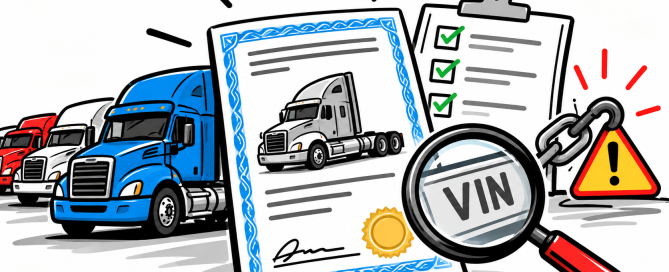
This commercial vehicle title guide explains liens, title transfers, VIN checks, and finance steps that help fleets put purchased equipment into service.