How to Plan Equipment Replacements Without Gaps
Learn how to plan equipment replacements around uptime, cash flow, resale value, and financing so your fleet stays productive as assets age and costs rise.


A vehicle sitting at a dealer, upfitter, or remount facility is not generating trips. But moving too quickly on a financing proposal can create a payment structure that strains cash flow long after the unit enters service. A useful medical transport financing review looks beyond the monthly payment and asks whether the vehicle, term, down payment, and funding process fit the operator’s route volume, reimbursement cycle, and replacement plan.
For established ambulance and non-emergency medical transportation operators, the objective is straightforward: acquire dependable, revenue-producing vehicles while preserving enough working capital to operate them. The details behind that objective can vary substantially between a new Type III ambulance, a used wheelchair-accessible van, and a late-model stretcher van with a specialized interior conversion.
Medical transport equipment is not one uniform category. A basic passenger van used for ambulatory NEMT service carries a different financing profile than a purpose-built ambulance with a diesel chassis, patient compartment, power-load system, communications equipment, and extensive medical interior. The vehicle’s purchase price is only part of the decision.
Before comparing financing structures, identify how the unit will work in the fleet. Consider expected trips per day, average mileage, crew configuration, service territory, reimbursement timing, and whether the vehicle fills a replacement need or supports growth. A replacement vehicle may protect uptime and prevent expensive maintenance interruptions. An expansion unit needs enough contracted or demonstrated demand to support its full operating cost, including insurance, staffing, fuel, maintenance, and the new payment.
The seller type also matters. A purchase from an established dealer or recognized ambulance manufacturer is generally easier to document than a private-party purchase. For used equipment, lenders may review the model year, mileage, chassis condition, conversion quality, title status, and whether the unit meets the buyer’s operational and applicable regulatory requirements. Older ambulances can still be workable assets, but age and mileage may limit available term length or require a larger down payment.
The lowest stated rate does not automatically produce the best transaction. A lower-rate option with a shorter term and higher required down payment may place more pressure on operating cash than a slightly higher-cost structure with an appropriate term. Conversely, stretching payments too far can leave the business carrying debt on a vehicle approaching a major replacement cycle.
Review the proposed structure as a complete package. The key question is whether it matches the asset’s useful life and the business’s ability to pay through normal variations in trip volume, payer timing, or seasonal utilization.
A conventional equipment finance agreement commonly provides fixed payments over a set term, with the business acquiring ownership under the agreed structure. A lease structure may be useful when the operator values payment flexibility, planned vehicle rotation, or an end-of-term option. Neither is inherently better. The right approach depends on whether the business intends to keep the vehicle through its full useful life, how it manages replacement cycles, and the terms available for that specific borrower and asset.
Ask for clarity on the payment amount, term, down payment, end-of-term obligation or option, documentation fees, and any conditions required before funding. A proposal should also identify whether taxes, delivery costs, upfitting, remount work, graphics, radios, and other installed equipment are included in the financed amount. Leaving necessary items outside the transaction can create an unplanned cash requirement just as the vehicle is being placed in service.
New ambulances and new accessible vans may support longer repayment periods than older, higher-mileage units, subject to the buyer’s profile and lender guidelines. That does not mean the longest available term is automatically the right one. A fleet manager should compare the payment against projected utilization and the planned replacement date.
For example, an established NEMT operator adding two late-model wheelchair-accessible vans may prioritize a payment that leaves room for driver hiring, commercial insurance deposits, and lift maintenance. A hospital-affiliated transport provider replacing an aging ambulance may focus more on keeping a critical unit in service with minimal downtime. Both transactions involve medical transport, but they should not necessarily be structured the same way.
Used units deserve extra attention. Review service records, conversion documentation, maintenance needs, tires, batteries, lift or ramp condition, stretcher hardware, HVAC performance, and any anticipated chassis work. Financing a low purchase price can be less attractive if the unit requires immediate repairs that consume the cash preserved by financing. For ambulance remounts, confirm exactly what is being remounted, the chassis specifications, warranty coverage, expected completion date, and how progress payments will be handled if applicable.
Lenders evaluate the business behind the equipment as closely as the equipment itself. Established operators generally present a clearer request when they can document operating history, commercial credit strength, existing fleet performance, and the purpose of the purchase.
Useful information often includes time in business, entity details, ownership information, recent business financials or bank statements when requested, current debt obligations, fleet schedule, insurance information, purchase order or invoice, and details on the vehicle’s intended use. An operator acquiring an additional unit may also be asked to explain the source of demand, such as existing contracts, route growth, or utilization trends. This is not busywork. It helps the financing source understand whether the asset is likely to generate dependable revenue.
A business with strong credit, documented revenue, and a stable fleet history may have access to more structure options than a business with limited operating history or a heavily leveraged balance sheet. The same applies to down payment requirements. Low-down-payment or, in some cases, zero-down structures can be possible for well-qualified transactions, but they depend on the credit profile, asset, time in business, fleet history, documentation, lender requirements, and overall deal structure.
Timing is often the most difficult part of a medical vehicle purchase. An operator may have a unit down, a new contract starting, or a manufacturer production slot that requires a deposit. Yet an equipment order is not ready to fund simply because a quote has been issued.
A clean transaction starts with accurate equipment details. Confirm the legal seller name, vehicle identification number when available, complete invoice, delivery location, title process, and whether the vehicle is completed, in production, or awaiting conversion. For a used ambulance or accessible van, confirm who has clear title and whether any liens must be released. For new builds, confirm the payment schedule and the point at which the vehicle can be inspected and accepted.
Fast decisions or funding can be possible on well-documented transactions, but timing depends on the borrower, asset, seller, required documentation, lender review, and transaction structure. Submitting incomplete information often creates more delay than the credit review itself. A financing partner that understands commercial vehicles can help coordinate documentation among the business, vendor, and funding source so issues are found early rather than at closing.
The first mistake is choosing by payment alone. A lower payment can result from a longer term, a larger final obligation, or costs that are not immediately visible in a simple quote. Compare total structure, not one line item.
The second is treating every used vehicle as equivalent. Two ambulances with the same model year can have very different mileage, maintenance histories, interior configurations, and remaining service life. Likewise, two accessible vans may differ materially in conversion age, lift condition, passenger capacity, and suitability for contracted work.
The third is underestimating working-capital needs. Financing can preserve cash for payroll, insurance, fuel, maintenance, licensing, and staffing, but it does not eliminate those expenses. The fourth is waiting until the vehicle is needed next week to organize financial and vendor documentation. A clear file gives the business more room to compare options and address conditions without disrupting deployment.
A medical transport financing review should end with a practical operating decision: buy this vehicle now, revise the structure, select a different unit, or delay the purchase until documentation or utilization supports it. The right answer may be different for a growing NEMT fleet than for an EMS provider replacing a frontline ambulance.
Commercial Fleet Financing, Inc. works as a specialized equipment finance broker and financing partner, helping qualified established businesses evaluate available funding sources, equipment details, and transaction requirements. The most productive conversation begins with the vehicle quote, fleet profile, time in business, credit and financial picture, intended use, and timeline.
The goal is not simply to get a vehicle financed. It is to put an appropriately structured, service-ready asset into the fleet without creating avoidable pressure on the operation that depends on it.

Learn how to plan equipment replacements around uptime, cash flow, resale value, and financing so your fleet stays productive as assets age and costs rise.

What credit score matters in commercial equipment financing? Learn how business and personal credit, asset quality, and deal structure affect options.
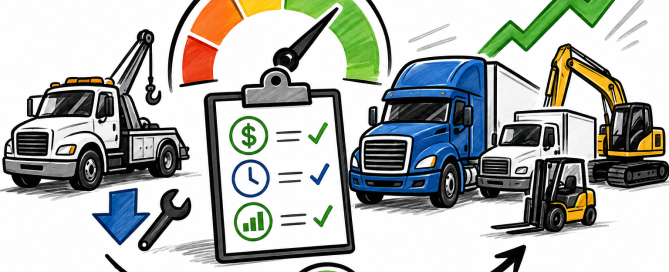
Learn when fleet financing makes sense for replacing aging equipment, preserving working capital, and adding capacity without disrupting daily operations.
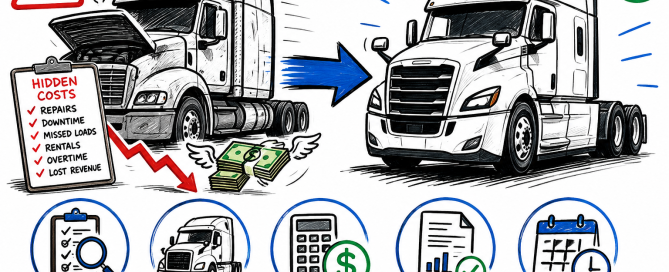
A truck replacement financing guide for established fleets: compare structures, protect working capital, and put dependable equipment into service faster.
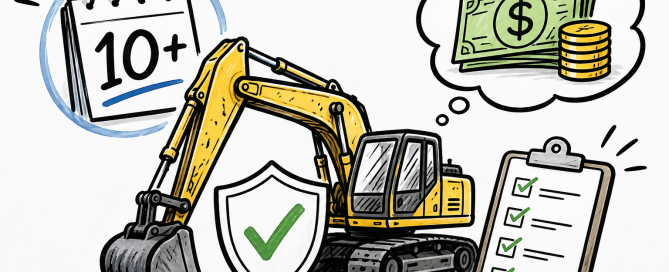
Can businesses finance older equipment? See how asset age, mileage, condition, seller type, and borrower strength affect commercial financing options.