Does Equipment Age Matter in Commercial Financing?
Does equipment age matter? Learn how age, mileage, condition, seller type, and useful life can affect commercial equipment financing options and timing.

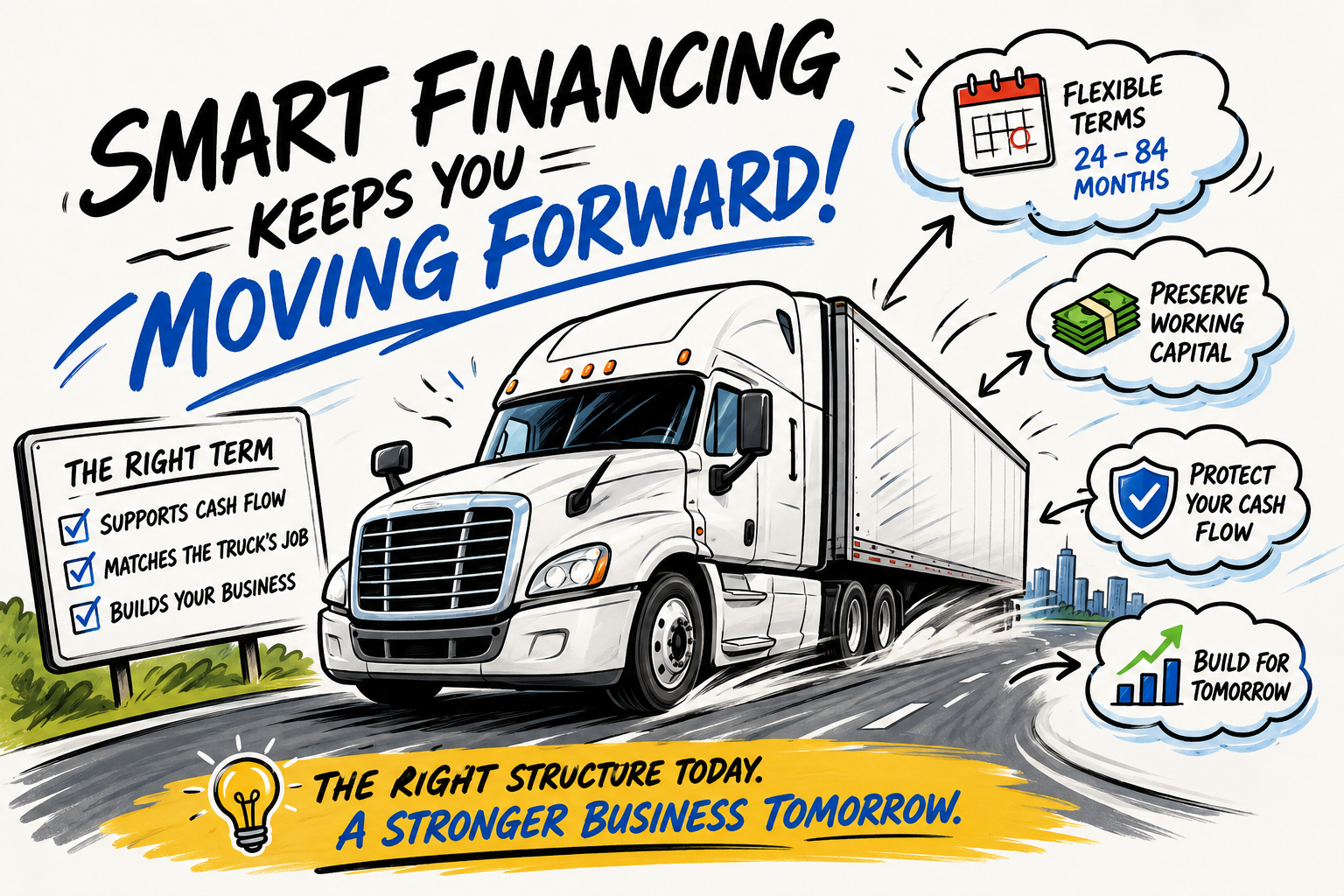
A truck that earns money every day should be financed with the same level of discipline you use to run the business. When borrowers ask how long can you finance a commercial truck, the real answer is not just a number of months. It depends on the truck’s age, condition, mileage, expected service life, your business profile, and how the payment structure fits your cash flow.
For most commercial truck transactions, financing terms commonly fall somewhere between 24 and 84 months. In some cases, newer equipment with strong borrower qualifications may support longer terms, while older trucks usually require shorter structures. The right term is the one that helps preserve working capital without leaving you overextended on an asset that may age out before the note does.
For many business-use trucks, a practical range is 36 to 72 months. That is often the middle ground where payments stay manageable without stretching the term too far beyond the truck’s useful business life.
Newer heavy-duty trucks, especially units with strong remaining value and clean documentation, may qualify for terms up to 84 months. On the other hand, used commercial trucks with higher mileage or older model years often land in the 24- to 60-month range. Lenders and finance sources want the term to make sense relative to the collateral. A 10-year-old truck usually will not be financed the same way as a late-model sleeper or day cab with lower miles and a stronger resale profile.
This is why term length is rarely a one-size-fits-all answer. A fleet expanding with late-model tractors may be offered a very different structure than an owner-operator replacing an aging truck or a contractor buying a used dump truck for seasonal work.
The truck itself is one of the biggest factors. Year, make, model, mileage, usage class, condition, and expected life all matter. A newer on-highway truck with a strong service history is easier to structure on a longer term than an older vocational unit with heavy wear.
Borrower strength matters too. Time in business, credit profile, cash flow, industry, and prior equipment ownership all influence available structures. A well-established company with stable revenue and experience operating similar equipment may have access to more flexibility than a startup or a borrower with recent credit issues.
Deal structure also matters. Down payment, truck price, seller type, and documentation quality can change the term options. A larger down payment may improve the overall structure and reduce risk. A clean invoice, a reputable dealer, and complete financial documentation can also help move a transaction toward more favorable terms.
Lender preferences play a role as well. Different funding sources have different credit boxes, asset appetites, and age-and-term guidelines. That is why term shopping is not just about asking for the longest repayment period possible. It is about matching the right transaction to the right program.
New trucks generally support longer financing periods because they offer a longer useful life and stronger collateral position. If a business is financing a new semi-truck, box truck, tow truck, or dump truck, a longer term may be easier to justify from both an operational and underwriting standpoint.
Used trucks are more variable. A clean, low-mileage used truck from a strong seller may still qualify for a competitive term. But as trucks age, the available term often compresses. Lenders do not want a structure that leaves too much balance on a truck deep into its later service years.
That matters for borrowers focused only on monthly payment. A long term may lower the monthly obligation, but if the truck is older, stretching it too far can create a mismatch. You may still owe money when maintenance costs rise sharply or when the truck’s resale value drops faster than expected.
Not automatically. Lower monthly payments can help preserve cash for payroll, fuel, repairs, insurance, permits, and growth. For many businesses, that flexibility matters. Financing can be a tool to keep capital available for operations instead of tying it all up in one asset.
But longer terms come with trade-offs. You will usually pay more total finance charges over time, and the truck may depreciate faster than the balance declines. If the unit is worked hard, a very long term can also put you in a position where the equipment’s maintenance curve rises before the financing ends.
Shorter terms usually mean higher monthly payments but lower total borrowing cost and faster equity buildup. That can be attractive for businesses with strong cash flow or buyers acquiring used trucks they want paid down more aggressively.
The best term is often a balance between affordability and asset life. If the payment works but the structure leaves no room for operating volatility, it may be too aggressive. If the term is so long that the truck outlives the financing logic, it may be too stretched.
A truck’s use case should shape the financing decision. An over-the-road tractor running high annual mileage has a different wear pattern than a local box truck making urban deliveries. A dump truck, rollback, wrecker, or vocational unit may have different utilization, maintenance demands, and residual value considerations.
That means the answer to how long can you finance a commercial truck should always be tied to revenue use. How many years do you expect this unit to stay productive in your fleet? How quickly will miles accumulate? Will it be a primary truck, a backup unit, or a growth asset for a new contract? Those questions matter just as much as the rate or payment.
For example, a business adding a late-model truck to support long-term contracts may prioritize lower monthly payments and preserved liquidity. A buyer picking up an older used truck for shorter-term demand may want a faster payoff to reduce exposure.
A newer truck with strong borrower qualifications may fit into a 60- to 84-month structure. A mid-age used truck may be more likely to fall into the 36- to 60-month range. An older commercial truck, especially one with higher mileage, may be limited to shorter terms or may require more cash down.
That does not mean older units cannot be financed. It means the structure usually needs to reflect the risk profile of the asset. In many deals, the most workable approval is not the longest one. It is the one that aligns the borrower, equipment, and documentation in a way that makes sense to the funding source.
This is where a specialized commercial financing partner can add value. Structuring truck financing is not only about plugging numbers into a calculator. It involves understanding asset class, lender requirements, borrower profile, and how to present the transaction in a way that supports approval and funding coordination.
Start with cash flow, not just the truck price. Look at what the unit is expected to generate, what your fixed costs already are, and how much room you need for repairs, insurance, and business fluctuations. A payment that looks fine on paper can still be too tight in a slow month.
Next, be realistic about the truck’s service life in your operation. If you plan to rotate the truck out in three or four years, an extended term may not be ideal unless you are comfortable with the payoff position at that point. If the unit is expected to stay in service for the long haul, a longer term may be easier to justify.
It also helps to consider total cost, not just monthly payment. Two structures can both feel affordable, but one may cost significantly more over time. Businesses that are growing quickly often focus on liquidity, while more established operators may prioritize paying equipment down faster. Neither approach is automatically better. It depends on the company’s priorities.
Finally, get the deal reviewed by a team that understands commercial trucks and equipment financing. A well-structured file can make a real difference in available options, especially when the truck is used, the business is growing, or the deal needs flexibility around down payment and term.
For business owners and fleet operators, the better question is not simply how long can you finance a commercial truck. It is how to structure that truck so it supports revenue, protects cash flow, and still makes sense six, 12, and 36 months from now.
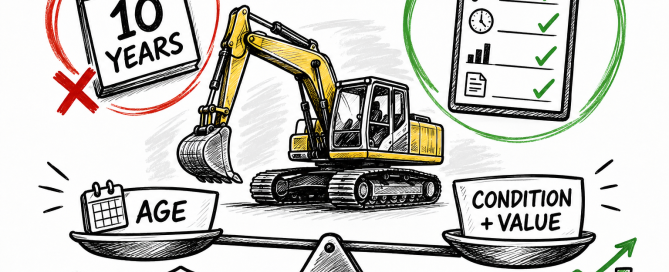
Does equipment age matter? Learn how age, mileage, condition, seller type, and useful life can affect commercial equipment financing options and timing.
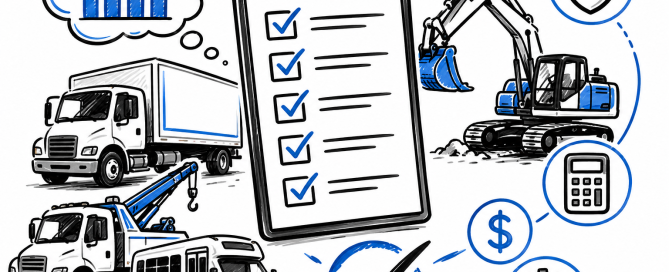
Use this fleet acquisition checklist to assess equipment fit, costs, financing readiness, vendors, and uptime before committing capital to a purchase.
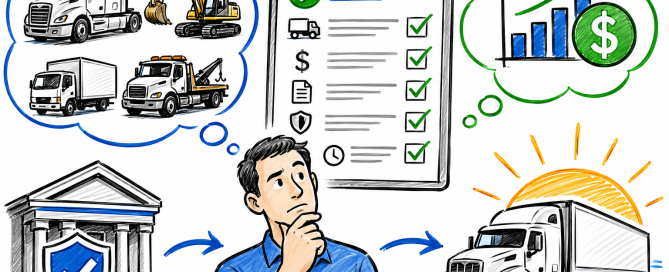
A fleet financing partner review helps established businesses compare lender access, equipment knowledge, terms, timing, and support before they commit.

Learn how to finance ambulances with terms that protect cash flow, fit vehicle specifications, and help qualified medical fleets stay ready for service.
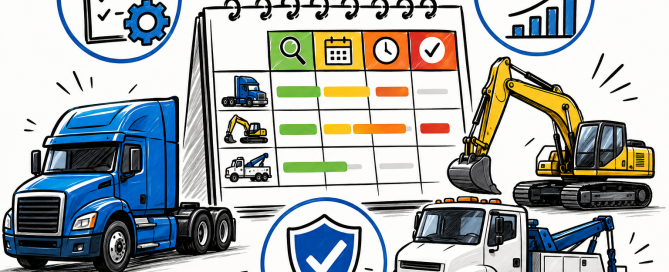
Learn how to plan equipment replacements around uptime, cash flow, resale value, and financing so your fleet stays productive as assets age and costs rise.