How to Finance Dump Trucks for Fleet Growth
Learn how to finance dump trucks with terms that protect cash flow, fit the truck’s age and use, and support a productive fleet replacement plan over time.

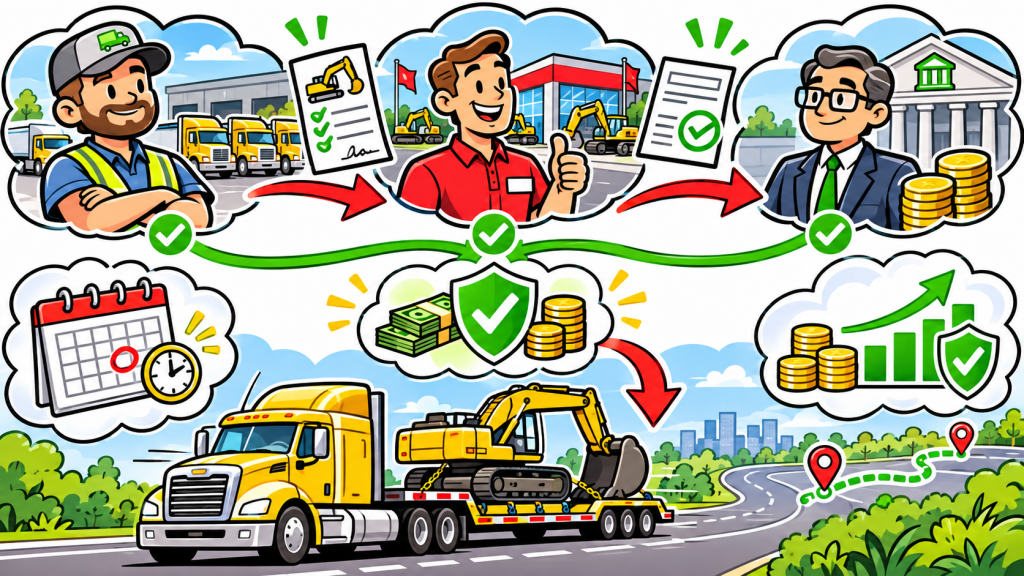
A truck is available, a purchase order is ready, and a customer contract starts next month. The question is rarely whether the equipment is needed. It is whether the buyer, seller, and financing source can structure the transaction without delaying delivery or tying up cash needed for fuel, payroll, insurance, and operations. These vendor financing examples show what that coordination can look like for established commercial businesses.
Vendor financing can describe two related arrangements. Most often, it means a dealer, manufacturer, or equipment seller helps its customer obtain third-party financing through a financing partner. In other cases, the vendor extends payment terms directly, usually for a short period or as part of a larger commercial arrangement. The first model is far more common for high-value vehicles and equipment.
For a fleet operator or equipment-dependent business, vendor financing is not simply a way to make a monthly payment. It is a purchase process. The structure needs to account for the asset, seller, delivery date, title work, insurance, down payment, lender documentation, and the point at which the equipment can begin producing revenue.
The right structure depends on the equipment category, the seller, the age and condition of the asset, and the buyer’s operating history. A newer over-the-road tractor purchased from a franchised dealer is generally evaluated differently from a 12-year-old wrecker bought from an independent seller.
A regional carrier needs to replace a tractor that is creating repeated maintenance downtime. The carrier selects a late-model truck from a commercial dealer, receives a buyer’s order, and submits the transaction for equipment financing.
The dealer supplies the invoice, vehicle identification number, mileage, specifications, and title information. The finance source reviews the carrier’s time in business, credit profile, fleet experience, bank statements or financials as required, and the truck’s age and mileage. If approved, the funding documents identify the dealer as seller, and funds are disbursed according to the closing requirements.
This is a straightforward vendor-assisted transaction, but it still has variables. A buyer with a strong operating history may have more structure options than a company replacing its first unit. A higher-mileage truck may require a shorter term or a larger down payment than a newer model. The benefit is that the dealer, buyer, and financing party are working from the same equipment documents instead of trying to reconcile them after approval.
A logistics company orders several dry vans or refrigerated trailers from a manufacturer or large dealer. The equipment may not all be delivered on the same day. Production schedules, upfitting, inspections, and delivery routing can split the order across weeks or months.
In this case, the financing structure may be built around a master approval or a series of individual schedules, subject to final lender requirements. The buyer provides a clear order, delivery expectations, and the intended use of the trailers. The vendor provides serial numbers as available, invoices, and delivery documentation. Each unit is funded when the required documents and asset details are complete.
This arrangement can help the business avoid paying cash for an entire order well before every trailer enters service. It also requires discipline. A change in model year, price, delivery location, or specification can require an updated approval or revised documents. Fleet managers should keep the purchasing, accounting, and operations teams aligned so delivered units are insured, titled where required, and placed into service without a paperwork gap.
A towing company finds a used rollback or heavy wrecker through an independent equipment seller. The asset fits the business because the chassis, body, and recovery equipment are already configured for the market it serves. The price may be attractive, but used specialty equipment brings additional underwriting questions.
The financing source may look closely at the truck’s model year, mileage, maintenance condition, body manufacturer, installed equipment, and current market value. It may also verify that the seller has clear authority to sell the unit and can provide acceptable title or lien-release documentation. If the truck is being purchased across state lines, transport, registration, and timing should be discussed early.
The trade-off is clear: buying used can reduce acquisition cost and shorten the time to deployment, but older assets may have tighter term limits or require more cash from the buyer. An incomplete title trail can delay funding even when the operating company is well qualified. For specialty equipment, the seller’s paperwork can matter as much as the buyer’s financial profile.
Not every vendor transaction involves a finished machine sitting on a lot. A construction contractor may order an excavator with attachments, a custom dump body, or other equipment that requires factory work, installation, or upfitting before final delivery.
Some transactions use a progress-payment approach, where the vendor receives funds at specified stages, subject to the financing source’s program and documentation requirements. For example, a deposit may be due when a machine is ordered, with later payments tied to completion, inspection, or delivery. The exact structure is asset- and lender-specific.
This can be useful when the contractor needs to reserve production capacity but does not want to use operating cash for the full purchase price. It also creates more coordination work. The buyer should understand who is responsible for deposits, when payment obligations begin, what happens if specifications change, and whether attachments, freight, taxes, and installation are included in the financed amount.
A box truck dealer may offer 30-day payment terms for a portion of a fleet order while the buyer arranges longer-term equipment financing. The dealer’s short-term terms are not the same as financing the full purchase. They may cover a deposit, delivery timing, or a temporary bridge while final funding documents are completed.
For an established business, this can be practical when a replacement unit is needed quickly and the transaction has a clear closing path. It is not a substitute for a confirmed approval. The buyer should not assume vendor terms will remain available if documentation, insurance certificates, entity information, or required financial information is still outstanding.
The strongest vendor-financed transactions start with accurate information. Buyers should be prepared to provide the legal business name, tax identification information, ownership details, operating history, equipment use, and requested financial documents. The depth of review varies by transaction size, credit strength, asset type, and lender program.
The vendor should provide an itemized quote or invoice that clearly identifies the equipment, sales price, serial or VIN information when available, any trade-in, freight, taxes, add-ons, and expected delivery date. For used units, title status and seller authority are particularly important. A quote that changes after approval can force a rework of documents or underwriting.
Asset suitability also matters. A finance source may be more comfortable with a standard tractor, trailer, forklift, or excavator than a highly specialized unit with a narrow resale market. That does not make specialty assets unfinanceable. It means the transaction often needs a more precise explanation of the equipment’s condition, value, intended use, and the buyer’s experience operating it.
A dealer’s captive or preferred program can be efficient, especially for new equipment from a major manufacturer. It may be a logical first option when the equipment, buyer profile, and requested structure fit that program well. The buyer should still evaluate the full transaction, including term length, advance rate, payment schedule, down payment, documentation conditions, and whether accessories or ancillary costs are included.
An independent equipment finance broker can be valuable when the transaction falls outside a single vendor program’s preferred profile. That may include mixed equipment packages, used vocational trucks, older assets, multiple sellers, unusual delivery schedules, or a business that wants financing options evaluated across more than one funding source. Commercial Fleet Financing, Inc. works as a specialized financing partner, helping qualified businesses coordinate equipment details, vendor documentation, and lender requirements through the transaction.
The best route is not always the one with the shortest application. It is the one that gives the business a workable structure and gets the right asset into revenue service with fewer preventable delays.
Before committing to a purchase, ask the vendor for complete equipment details and a realistic delivery schedule, then compare that information against your operating cash needs and replacement plan. A well-prepared transaction gives every party a clearer path to putting the equipment to work.
Learn how to finance dump trucks with terms that protect cash flow, fit the truck’s age and use, and support a productive fleet replacement plan over time.

Use this nationwide equipment financing broker guide to assess lender access, deal structure, documentation, and funding timing for commercial assets.

Vendor financing examples show how fleets can buy equipment, preserve working capital, and coordinate dealers, delivery, and lender requirements clearly.

Use this used truck age requirements guide to assess lender limits, mileage, condition, seller rules, and financing options before buying any commercial truck.

Learn how to fund ambulance replacements with financing structures that protect cash flow, meet lender requirements, and put dependable units into service.