What Credit Score Matters for Equipment Financing
What credit score matters in commercial equipment financing? Learn how business and personal credit, asset quality, and deal structure affect options.


A truck sitting in a vendor’s yard while an older unit keeps missing service is not just a purchasing problem. It is an uptime, labor, customer-service, and cash-flow problem. US fleet financing gives established businesses a way to put replacement or growth equipment into service without tying up all available capital in a single acquisition.
The right structure depends on more than the equipment price. A lender will look at the business behind the asset: operating history, credit profile, existing fleet, cash flow, asset age and mileage, seller, intended use, and the documentation available to support the transaction. For a fleet manager or CFO, the objective is not simply to obtain approval. It is to match a payment structure and term to the equipment’s productive life and the business case for adding it.
Financing decisions are stronger when the equipment has a defined operating purpose. A late-model sleeper tractor intended to replace a high-maintenance unit has a different case than a tri-axle dump truck added for a newly awarded sitework contract. The first may be driven by repair avoidance and driver retention. The second may be supported by contracted volume and expected utilization.
Before requesting financing, establish the unit’s expected revenue contribution, operating costs, available drivers or operators, insurance requirements, and target in-service date. That work helps determine whether a new asset, a used asset, or a different configuration makes better financial sense.
For example, a towing company may need a rollback immediately because a current unit is down frequently. A new rollback can offer warranty coverage and longer useful life, while a well-maintained used unit may lower the acquisition cost and preserve cash for winches, lighting, insurance, and initial setup. Neither choice is automatically better. The right answer depends on the workload, cash reserves, and the condition of the available equipment.
Commercial equipment financing is evaluated as a business transaction, not a personal vehicle purchase. Strong credit matters, but it is only one part of the file. Lenders generally want to understand whether the borrower can support the payment and whether the asset has reasonable value and utility in its market.
Established businesses with documented operating history are generally easier to evaluate than companies with limited revenue history. Time in business, financial statements or tax returns when requested, bank activity, and current debt obligations can help show repayment capacity.
Fleet experience also matters. A carrier adding its sixth comparable tractor presents a different profile from a company buying its first specialized heavy-haul unit. Likewise, a contractor with years of operating excavators and loaders can more clearly support a purchase of additional yellow iron than a business entering an unfamiliar equipment category.
Equipment age, mileage, hours, condition, make, model, and configuration affect financing options. Late-model, broadly marketable assets can be easier to place than older, highly customized, or niche equipment. A 2023 box truck with documented mileage and a clear title history may fit a different program than a 15-year-old vocational truck with substantial modifications.
That does not mean used equipment cannot be financed. It means the structure may need to account for the asset’s remaining useful life, resale market, seller type, and inspection or maintenance records. For used trucks and equipment, accurate serial numbers, VINs, hour or mileage readings, photos, and a detailed purchase order often prevent avoidable delays.
A down payment can reduce the financed amount and monthly payment, but it is not the only measure of a sound transaction. Preserving working capital may be more valuable when a business also needs to cover payroll, fuel, maintenance, materials, licensing, or insurance deposits.
Depending on the borrower profile, asset, and lender requirements, some transactions may allow lower down payments or, in select cases, no down payment. That should be evaluated against the total payment, term, and cash needs of the operation rather than treated as a goal by itself. Existing equipment loans, leases, and seasonal revenue patterns should be part of the discussion early.
A commercial equipment loan typically spreads the cost of the asset over a set term, with the business building ownership as payments are made. It can be a practical fit when the company expects to operate the truck, trailer, or machine well beyond the financing term.
A lease structure can offer another way to acquire equipment, sometimes with payment or end-of-term options that suit a planned replacement cycle. The details matter. Payment amount, term length, residual assumptions where applicable, end-of-term obligations, and ownership goals should be reviewed before comparing one proposal to another.
A lower monthly payment is not always the lower-cost choice. Extending a term can improve monthly cash flow, but it may increase total financing cost and can leave a business making payments after the equipment has become less productive. A shorter term may build equity faster but create unnecessary pressure during slower months.
For seasonal operators, the ideal structure may also depend on revenue timing. A landscaping company, roofing contractor, or construction business may need to consider whether its payment schedule aligns with its busy season and backlog. Availability of seasonal or deferred structures depends on the lender, borrower profile, asset, and transaction details.
Many equipment purchases slow down because the buyer selects the unit first and gathers documents later. A better approach is to prepare the operating and equipment information while sourcing the asset.
For a typical established-business transaction, expect to provide a completed application and business information. Depending on the request, lenders may also need recent business bank statements, financial statements, tax returns, debt schedules, proof of insurance, copies of titles for trade-ins or payoffs, and identification for guarantors. The precise requirements vary by lender and deal size.
Vendor documentation deserves the same attention. A purchase order should identify the buyer and seller, equipment description, VIN or serial number, purchase price, any taxes or fees, and deposit amount. If equipment is being purchased from a private seller rather than a dealership, title status, lien releases, payoff information, and verification of ownership become especially important.
Insurance can become a critical path item for trucks, trailers, ambulances, tow units, and specialized vehicles. The coverage must satisfy the transaction requirements and accurately reflect the intended commercial use. Waiting until funding is otherwise complete to address insurance can push out delivery.
The financed amount is only part of the acquisition cost. A new tractor may require plates, federal compliance costs, telematics, decals, safety equipment, a PTO, or a trailer match. A dump truck may need body work, tarping equipment, or hydraulic setup. A medical transport vehicle may require conversion work and inspection planning.
These costs should be identified before comparing financing options. In some situations, certain soft costs or equipment additions may be financeable, subject to the asset, vendor documentation, borrower profile, and lender guidelines. In other cases, the business should plan to cover them separately. Assuming every add-on can be included is a common budgeting mistake.
The purchase decision should also account for downtime during delivery, upfitting, inspections, or driver training. A unit that appears cheaper can become costly if it takes weeks to enter service or requires repairs that were not visible at purchase.
A specialized equipment finance broker can help an established business present a transaction to appropriate funding sources and navigate differing lender requirements. That matters when the deal includes older equipment, multiple units, a private-party sale, a refinance, a trade payoff, or a mix of trucks, trailers, and vocational assets.
Commercial Fleet Financing, Inc. works as a commercial equipment finance broker and financing partner, not as a bank or direct lender. Its role is to help qualified businesses evaluate structures, coordinate with vendors, organize documentation, and seek suitable financing options through multiple funding sources. Timing can be efficient when the borrower, asset, documents, and lender requirements align, but approval and funding timing always depend on the full transaction.
For vendors and dealers, clean documentation and early communication can make the difference between a buyer who is interested and a buyer who is ready to close. For fleet operators, the practical benefit is less time translating operational needs into a finance file and more focus on getting the right asset into service.
The best time to discuss financing is often before the current unit becomes a dispatch problem. Start with the replacement cycle, the equipment specification, and the cash flow the unit needs to produce. That creates room to compare options carefully instead of making a rushed decision when uptime is already gone.
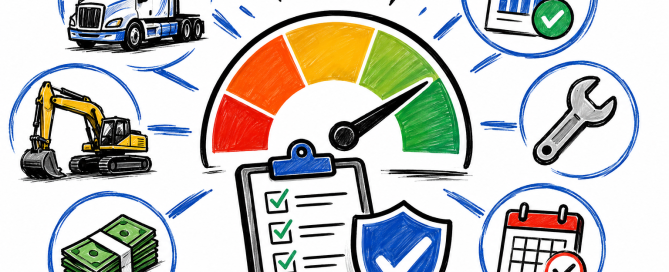
What credit score matters in commercial equipment financing? Learn how business and personal credit, asset quality, and deal structure affect options.
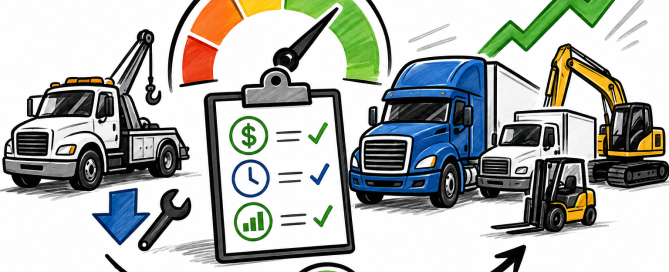
Learn when fleet financing makes sense for replacing aging equipment, preserving working capital, and adding capacity without disrupting daily operations.
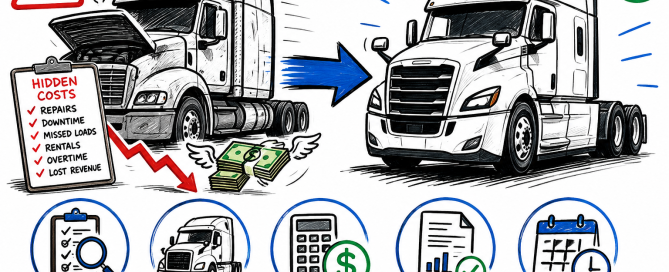
A truck replacement financing guide for established fleets: compare structures, protect working capital, and put dependable equipment into service faster.
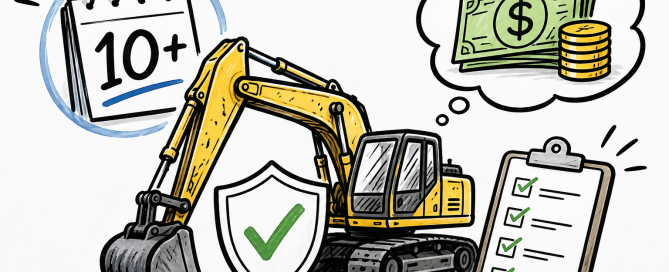
Can businesses finance older equipment? See how asset age, mileage, condition, seller type, and borrower strength affect commercial financing options.
Learn how to finance multi-unit fleets with structures that protect working capital, fit replacement schedules, and support faster equipment deployment.