Equipment Collateral: What Lenders Evaluate
Learn how equipment collateral affects commercial financing, from asset value and condition to advance rates, documentation, and deal structure decisions.


A lower monthly payment can look attractive until the truck reaches its mileage limit, needs body repairs, or must be returned just as your operation needs it most. A useful truck lease comparison goes beyond the payment and asks a more operational question: does this structure put the right truck into service while protecting cash flow and preserving flexibility for the next replacement cycle?
For an established carrier, contractor, towing company, or delivery fleet, the answer depends on how long the asset will stay in service, how predictably it will be used, and who should carry the risk of its future value. Leasing can be a sound fit for some replacement plans. Financing ownership can be a better fit for others.
The most meaningful difference between a lease and an equipment finance agreement is often what happens at maturity. Before comparing payment quotes, determine whether your business expects to return the truck, buy it, refinance it, or trade it toward the next unit.
A true operating lease is generally structured around use rather than ownership. The business makes scheduled payments for a defined term and may return the asset at the end, subject to mileage, condition, and other contractual requirements. This can work well when a fleet follows a disciplined replacement schedule and wants to avoid owning older equipment.
A finance lease, capital lease, or lease-to-own structure is more ownership-oriented. Depending on the agreement, it may include a fixed purchase option, a nominal end-of-term buyout, or another path to ownership. In practical terms, it often functions more like financing the truck over time while preserving a lease format.
A loan or equipment financing agreement usually results in ownership once the obligation is paid. That approach may make sense for vocational units with a long useful life, specialized bodies, or trucks that will remain productive well after the financing term ends.
The labels matter less than the actual terms. Ask for the end-of-term purchase option, return requirements, renewal provisions, residual responsibility, and any fees in writing. A low payment is not automatically a lower cost if a large buyout or return exposure sits at the end.
Two proposals can show similar payments while shifting costs and risks very differently. A fleet manager comparing a three-year lease against a five-year finance structure should account for the full expected cost during the period the truck will be in service.
Start with the payment, upfront cash requirement, term length, and purchase option. Then evaluate costs that may not appear in the headline number, including documentation fees, return charges, excess mileage, wear-and-tear assessments, early termination costs, and insurance requirements.
Residual value deserves particular attention. Residual value is the estimated value of the truck at the end of the lease term. A higher assumed residual can reduce the monthly payment because the structure is financing less depreciation. But if the business is responsible for that residual, directly or indirectly, it has taken on more exposure if used-truck values decline.
For example, a regional carrier replacing highway tractors every 36 months may have predictable mileage, maintenance records, and a reliable remarketing plan. A structure with a residual component could be worth considering. A roofing contractor purchasing a Class 7 dump truck with a specialized body may be better served by a structure that supports long-term ownership, particularly if the truck will work for seven to 10 years.
Tax treatment also affects the comparison, but it should not be assumed. The accounting and tax treatment of a lease versus an owned asset can vary by agreement and business circumstances. Review the proposed structure with your CPA or tax advisor before making a decision based on expected deductions.
Lease return standards are manageable when the asset is used within a planned operating profile. They become more difficult when dispatch demands change.
A long-haul tractor can accumulate miles faster than expected after a new customer contract, a driver shortage, or a routing change. A rollback or wrecker may experience paint damage, interior wear, hydraulic-system use, and body wear that are normal for the job but relevant at return. A box truck in urban delivery service may collect more cosmetic damage than a unit operating primarily on interstate routes.
Review how mileage is measured, whether unused miles can offset overages, and what condition standards apply. Request clarity on tires, glass, body panels, decals, interior condition, maintenance documentation, and modifications. Equipment that has been upfitted for a specific operation may be harder to return under a standard lease program than a conventional sleeper or day cab.
Uptime is part of the financial calculation as well. A truck is a revenue-producing asset, not simply a payment. If leasing enables a fleet to rotate out aging units before maintenance events and downtime become disruptive, the operational benefit may justify a different cost profile. If a well-maintained truck is dependable and well suited to the work, retaining ownership longer may produce a stronger result.
Leasing is generally worth evaluating when a business has a defined replacement cycle, stable utilization, and a reason to limit the amount of capital tied up in each unit. It can be particularly relevant for fleets that want newer highway equipment, prefer predictable terms, and expect to transition out of trucks before major aging-related repairs increase.
It may also fit businesses adding units for a contract with a known duration. If the contract is expected to run for three years and the truck specification is broadly marketable, a lease aligned with that period can reduce uncertainty. That does not eliminate risk, but it can match the asset commitment more closely to the revenue opportunity.
Leasing is less straightforward when mileage is volatile, the equipment is highly customized, or the business expects to keep the unit for many years. In those cases, ownership-oriented financing may offer more control and fewer end-of-term constraints.
The best structure on paper still has to meet lender and program requirements. Commercial truck lease options can be influenced by time in business, business and personal credit strength, fleet experience, existing debt, cash flow, the truck’s age and mileage, seller type, and the intended use of the unit.
A late-model, low-mileage tractor purchased from an established dealer may fit different programs than a 10-year-old truck purchased from a private seller. A company with several years of documented operations and a stable fleet history may have more options than a business making its first commercial equipment purchase. Down payment requirements can also vary by borrower profile, asset, term, and structure.
Documentation affects timing. Financial statements, bank statements, tax returns, debt schedules, insurance information, equipment specifications, purchase orders, and vendor details may be needed depending on the transaction. Providing complete information early helps identify structures that are realistic for the borrower and the truck.
A specialized equipment finance partner can help established businesses compare available programs across multiple funding sources and identify the trade-offs before a buyer commits to a vendor or delivery date. Commercial Fleet Financing, Inc. works in that role, helping coordinate documentation, equipment details, vendor communication, and the funding process for qualified commercial transactions.
Ask whether the truck is being leased for use or acquired for ownership. Then ask what happens if annual mileage rises, the truck is damaged in normal operations, the unit is no longer needed before maturity, or the business wants to keep it at the end.
Also ask whether the proposed term matches the truck’s expected service life. A 36-month lease may be sensible for a replacement tractor on a controlled cycle. It may be poorly matched to a specialized crane truck, rollback, dump truck, or other vocational asset that will stay in the fleet much longer.
The right structure should support how the truck earns revenue, not merely make the monthly payment fit a budget. Bring the truck specification, expected annual mileage, replacement timeline, and vendor quote into the conversation early. That gives your financing team a clearer basis to compare options and helps keep the equipment moving toward productive service.
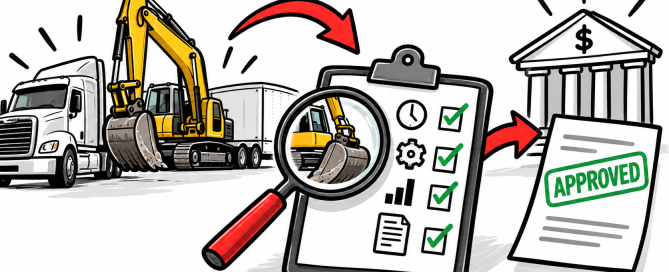
Learn how equipment collateral affects commercial financing, from asset value and condition to advance rates, documentation, and deal structure decisions.
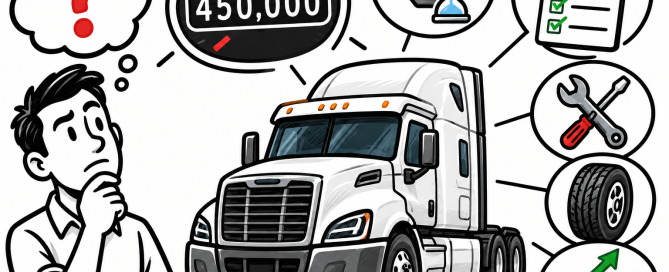
Learn how to evaluate commercial truck mileage before buying or financing, using engine hours, service records, asset age, and intended duty cycle needs.
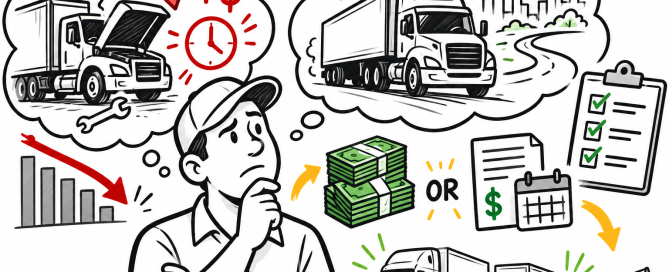
Fleet cash flow affects uptime, buying power, and growth. Learn how established businesses can plan equipment purchases while protecting working capital.
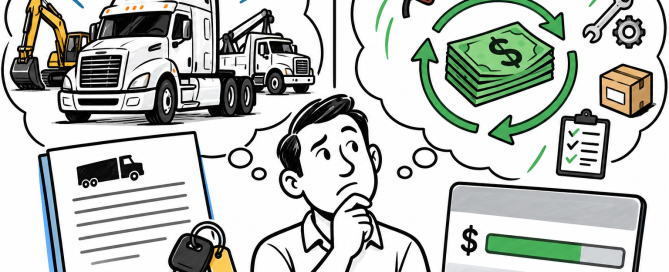
Compare fleet loans versus credit lines for equipment purchases, repairs, and expansion. See how terms, collateral, cash flow, and timing shape the choice.
This medical transport financing review explains how established operators can compare terms, protect cash flow, and put the right vehicle in service.