Commercial Equipment Approval Guide for Fleets
Use this commercial equipment approval guide to prepare your file, address lender criteria, and keep qualified fleet purchases moving toward funding now.

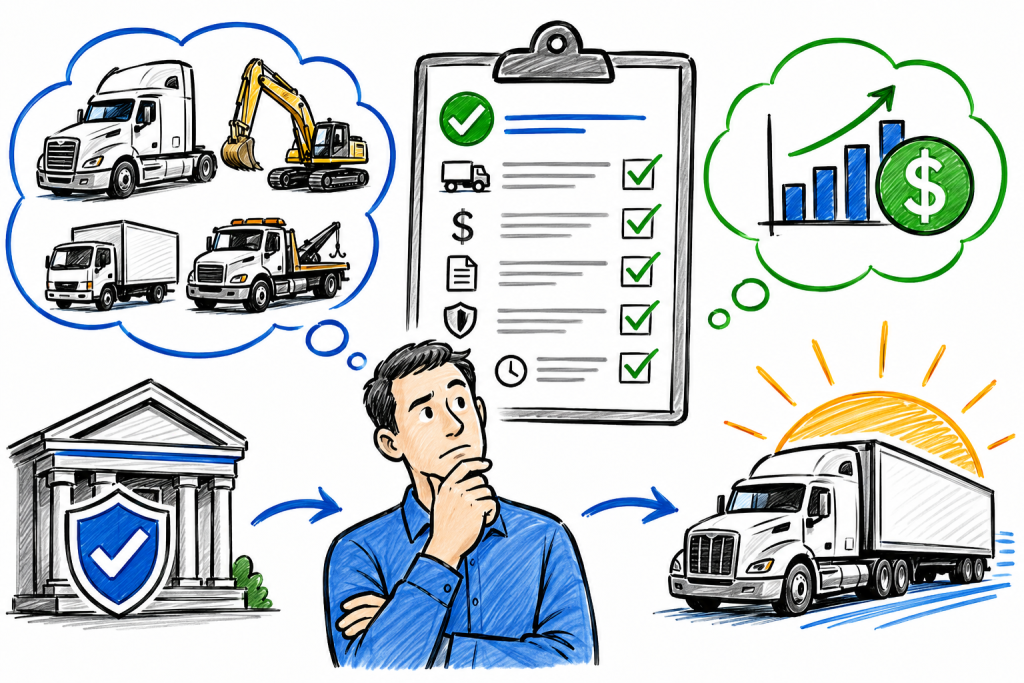
A replacement truck that cannot be put into service is not just a purchasing delay. It can mean missed loads, overtime for the remaining fleet, deferred maintenance, and pressure on customer commitments. A fleet financing partner review should therefore go beyond the advertised monthly payment. Established businesses need to know whether a financing partner can understand the asset, present the transaction clearly, and help move a workable deal from equipment quote to funding.
For a fleet manager, CFO, owner, or dealer, the right question is not simply, “Can this equipment be financed?” The more useful question is, “Can this financing partner structure this specific transaction around our equipment, operating history, cash flow, and delivery timeline?”
Commercial equipment financing is not one uniform product. A late-model sleeper tractor, a high-mileage rollback, a new excavator, and a specialty medical transport vehicle can raise very different questions for funding sources. Asset age, mileage, useful life, resale value, seller type, title history, and intended business use can all affect the available structure.
A productive review starts with the partner’s ability to evaluate those variables rather than treating every request like a standard vehicle loan. A financing partner should ask practical questions early: Is the equipment new or used? Is it being purchased from a dealer, auction, or private seller? How soon must it be delivered? Will it replace an aging unit or add capacity? Does the business have comparable equipment already in service?
Those questions are not unnecessary friction. They help identify lender requirements before a customer commits to a purchase contract or sends a nonrefundable deposit.
A business with strong credit, several years of operating history, and a documented fleet may qualify for a different structure than a company buying an older specialized unit or equipment with limited resale demand. One funding source may favor newer trucks with lower mileage, while another may be more comfortable with a vocational asset, a construction machine, or a used trailer package.
That is where a specialized equipment finance broker can add value. Rather than forcing every transaction into one credit box, the broker can match the borrower and asset profile to appropriate programs. This does not guarantee approval or a particular rate, term, or down payment. It does give qualified businesses a more practical path than relying on a single financing option that may not fit the transaction.
Ask how the partner approaches exceptions. For example, an established towing company may have strong financials but need a 7-year-old wrecker from a private seller. The asset may be productive and appropriate for the operator, yet its age, value, and seller documentation can require a different approach than financing a new chassis through a franchised dealer.
A financing partner does not need to run your fleet, but they should understand why the asset matters to your operation. A dump truck used in a seasonal paving business has a different revenue pattern than a dry van used in dedicated freight. An excavator, forklift, ambulance, car hauler, sprinter van, and rollback each carry different underwriting considerations.
Equipment knowledge matters most when the transaction is not straightforward. A lender may want to understand whether an asset will be titled, how it will be insured, whether it is replacing a unit already in service, and whether the purchase price aligns with the equipment’s age and condition. On used equipment, clean serial numbers, maintenance records, photos, and an accurate invoice can become material to the file.
The partner should also recognize when a lower purchase price is not necessarily the better financing decision. An older truck with high mileage may cost less upfront but could require a larger down payment, a shorter term, or more working capital reserved for repairs. A newer unit may carry a larger payment but improve uptime and offer a longer useful operating window. The right choice depends on the business’s revenue plan, maintenance capacity, and replacement cycle.
A low monthly payment can be achieved in ways that do not always serve the buyer. Extending the term, increasing the final payment, or adding more cash down can change the payment without changing the real cost or risk of the transaction.
Ask for a clear explanation of the proposed structure. The finance term is the number of months over which the equipment is paid. The down payment is the cash contributed at closing. A residual or final payment, if applicable, is an amount due at the end of the scheduled term. Each affects cash flow differently.
For a business replacing several tractors, preserving cash for payroll, fuel, insurance, and maintenance may matter more than minimizing the payment on any one truck. For another business with excess cash and a short operating horizon for the asset, a larger down payment or shorter term may make better commercial sense.
A sound financing partner will discuss these tradeoffs directly. Be cautious if the conversation focuses only on a headline payment while avoiding the full equipment cost, term length, fees, documentation conditions, and end-of-term obligations.
During a fleet financing partner review, ask whether the partner can explain the following in plain language:
The quality of the answers often tells you more than a fast verbal quote. Established operators should expect candid discussion of the strengths and limits of their transaction.
Many equipment purchases slow down after a credit decision, not before it. The issue may be a missing invoice, a purchase order that does not match the application, an incorrect legal business name, an insurance requirement, a title question, or an equipment description that differs from the seller’s paperwork.
A capable financing partner helps coordinate these details among the buyer, vendor, and funding source. This is particularly valuable when several assets are being acquired, when equipment is coming from more than one seller, or when a dealer needs to close a sale within a defined delivery window.
For borrowers, preparation helps. Recent business bank statements, current financial information when requested, ownership details, insurance information, equipment specifications, and a complete seller invoice can reduce avoidable follow-up. A business with a long operating history and strong credit should not assume documentation will be minimal. The exact requirements still depend on the lender, asset, transaction size, and deal structure.
Commercial Fleet Financing, Inc. works as a specialized commercial equipment finance broker and financing partner, helping qualified businesses organize these transactions and access multiple potential funding sources. The practical value is not merely submitting an application. It is identifying the relevant details early enough to keep the equipment purchase moving.
Speed matters when a unit is down, a contract has been awarded, or a vendor has limited inventory. But an honest financing review separates what can move quickly from what still requires documentation, underwriting, and seller coordination.
Some well-documented transactions involving established businesses, familiar asset types, and clean invoices may progress quickly. Other deals require more review because of used-equipment condition, asset age, private-party sales, complex ownership, unusual use cases, or incomplete paperwork. Funding in as little as 24 hours may be possible in select circumstances, but it depends on the credit profile, time in business, fleet history, asset, documentation, lender requirements, and transaction structure.
The partner you choose should set expectations early. A realistic timeline is more useful than an aggressive promise that ignores the actual condition of the file.
The best financing arrangement is not defined by a generic approval message. It is one that supports a revenue-producing asset without putting unnecessary strain on the business. That may mean financing a newer truck to improve uptime, adding trailers to meet contracted demand, replacing a failing wrecker, or acquiring yellow iron needed for a scheduled project.
Before choosing a financing partner, bring the real operating picture to the conversation: the equipment you are buying, the seller, the anticipated delivery date, the intended use, your existing fleet, and the cash-flow objective. A partner that can work from those details is better positioned to help turn an equipment decision into a transaction that is ready to perform.
Use this commercial equipment approval guide to prepare your file, address lender criteria, and keep qualified fleet purchases moving toward funding now.
Compare an equipment lease versus loan for commercial trucks and machinery. See how ownership, cash flow, terms, and asset life shape the right fit today.
Used box truck financing requirements vary by truck age, mileage, seller, credit, and operating history. See what lenders review before you buy for work.
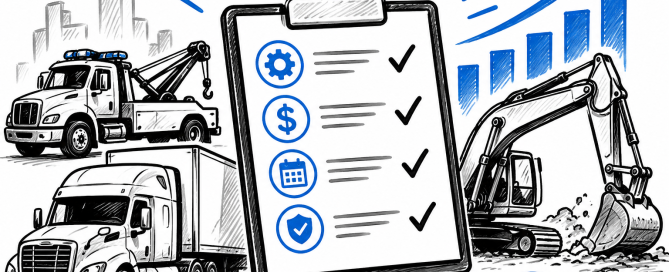
Equipment finance industry trends are reshaping fleet planning, lender review, and capital decisions for established U.S. operators across markets today.
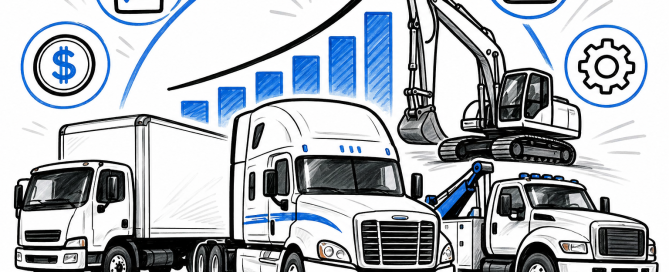
This commercial fleet financing guide explains how established businesses structure vehicle and equipment purchases around cash flow, uptime, and growth.