How to Preserve Working Capital for Fleet Growth
Learn how to preserve working capital when replacing or adding commercial equipment, with practical financing and purchasing guidance for established fleets

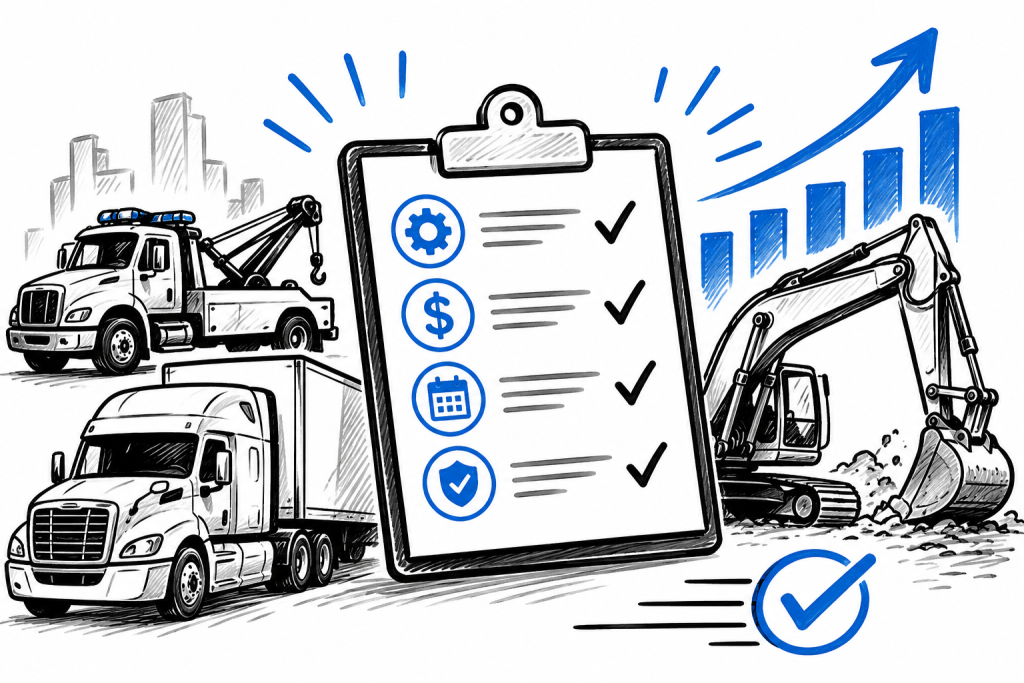
A truck that is waiting on repair parts, an excavator that cannot keep pace with a new contract, or a wrecker nearing the end of its reliable service life creates a capital decision before it becomes a finance decision. The equipment finance industry trends affecting established operators are putting more attention on that first question: whether the asset will improve uptime, add revenue capacity, or reduce operating risk enough to justify the payment.
For fleet owners, CFOs, and operations leaders, the market is not simply about finding the lowest stated rate. It is about matching the equipment, seller, borrower profile, and payment structure to a real operating plan. That calls for earlier planning and cleaner transaction files than many buyers needed in prior cycles.
Aging equipment has always carried repair risk, but higher labor costs, longer downtime, and tighter service capacity can make a delayed replacement more expensive than it looks on a maintenance report. A tractor that loses several working days can affect dispatch, customer service, driver retention, and revenue at once. The same applies to a construction company relying on a high-hour excavator or a medical transport operator managing an aging vehicle fleet.
As a result, more established businesses are evaluating replacement before a unit reaches failure. The decision is not always to buy new. A late-model used truck, trailer, rollback, forklift, or piece of yellow iron may be the right fit if its condition, remaining useful life, and price support the business case.
The tradeoff is that used equipment financing can require more scrutiny. Lenders may consider age, mileage or hours, maintenance history, serial number verification, equipment type, valuation, and expected resale market. A 3-year-old box truck with reasonable mileage and a documented commercial seller is generally a different credit proposition than an older specialty vehicle purchased from a private party.
Commercial equipment finance is not a one-size-fits-all category. A lender may view a new dry van trailer, a used Class 8 truck, a tow truck with specialized recovery equipment, and a high-hour excavator very differently. Each has a distinct resale market, useful life, title process, and risk profile.
This is why the equipment description matters. A complete file should identify the year, make, model, VIN or serial number, purchase price, seller, and any added components. For a wrecker or rollback, that may include the chassis and body details. For construction equipment, it may include attachments, hours, and condition. For a fleet addition, lenders may also want to understand how the unit fits into existing operations.
Borrower strength still matters just as much. Time in business, business and owner credit, operating history, existing fleet or equipment base, bank activity, debt obligations, and current revenue all influence available structures. Stronger profiles may have more flexibility, but no single characteristic determines an outcome.
Many qualified businesses want to preserve cash for payroll, fuel, insurance, repair reserves, or a contract ramp-up. That makes low-down-payment structures attractive when available. However, the right down payment is not automatically the smallest one.
A larger down payment can reduce the amount financed, improve the payment, and sometimes broaden lender options, especially on used assets or equipment with a narrower resale market. A lower down payment can preserve working capital but may require a stronger overall profile, a newer asset, or a structure that meets specific lender requirements.
The productive conversation is not “Can this be done with zero down?” It is “What structure keeps the business adequately capitalized while putting this asset into service?” The answer depends on the borrower, asset, transaction size, and documentation.
Rate matters, but payment timing and term length can matter more to an equipment-dependent business. A five-year structure on a revenue-producing truck may create a very different monthly obligation than a shorter term, even when the total financing cost is lower on the shorter option. The best choice depends on expected utilization, maintenance exposure, asset life, and the company’s planned replacement schedule.
Some businesses also need to consider seasonal revenue. Landscaping, construction, specialized hauling, and certain municipal or contract-driven operations may have uneven billing patterns. Not every lender offers the same flexibility, and a payment structure should be reviewed carefully before the purchase order is signed.
A finance lease, equipment finance agreement, or loan-style structure may each fit different circumstances. The terminology and ownership treatment can vary by program and lender, so buyers should focus first on payment, end-of-term expectations, and operating fit rather than assume one label is universally better.
Speed in equipment financing often comes from preparation, not shortcuts. When a vendor quote, business information, equipment specifications, and ownership details are ready at the start, a financing partner can present the transaction to the funding sources most likely to fit the deal.
For an established business, useful documentation often includes recent business bank statements, financial statements or tax returns when requested, an equipment quote or purchase agreement, and information about existing debt or fleet assets. The exact requirements vary with credit profile, equipment cost, time in business, and lender policy.
Seller type can also affect timing. A purchase from an established dealer or manufacturer typically has a more standardized invoice and title process than a private-party transaction. Private sales can still be financeable in some situations, but they may require additional verification regarding ownership, payoff status, liens, insurance, and the condition of the equipment.
This matters to vendors as well. Dealers and sellers who provide accurate quotes, complete specifications, and responsive payoff or title information can reduce avoidable friction. A customer who has selected the right unit but cannot provide a complete invoice may lose time that could otherwise be spent arranging insurance, delivery, and deployment.
The resale value of financed equipment remains central to lender analysis. That does not mean buyers should chase the most liquid asset regardless of operational need. It means the asset should make sense for both the company’s work and the financing structure.
A specialized vocational truck can be highly productive for the right operator, but it may have a smaller secondary market than a standard tractor. A custom body, unusual configuration, high mileage, or heavy wear may affect how a lender evaluates advance rate and term. Likewise, certain trailers, forklifts, and industrial equipment may retain value well when the specification is common and condition is documented.
Buyers can improve the finance conversation by looking beyond the sticker price. Ask whether the equipment is correctly spec’d for the work, whether its age and condition support the desired term, and whether the seller has complete records. A lower purchase price is not necessarily the lower-cost transaction if it brings higher downtime, repair exposure, or a shorter feasible finance term.
The most effective approach is to treat financing as part of procurement, not an administrative step after the equipment is chosen. Start with the operating need: replacement, capacity increase, contract fulfillment, or a move into a new service line. Then identify the equipment specifications, delivery timeline, expected utilization, and the cash contribution the business can comfortably make.
From there, compare structures using the payment and total operational impact, not rate alone. Consider insurance, licensing, maintenance, fuel or operating costs, and any time needed to place the asset in service. If a unit will not produce revenue for several weeks because of upfitting, permitting, or staffing, that should be part of the cash-flow plan.
A specialized equipment finance broker and financing partner such as Commercial Fleet Financing can help qualified businesses organize the transaction, coordinate with vendors, and evaluate options across multiple funding sources. Approval timing, terms, down payment, and funding speed depend on the credit profile, time in business, fleet history, asset, documentation, lender requirements, and deal structure.
The practical next move is to bring the equipment quote and a clear operating plan into the discussion early. The stronger the connection between the asset and the revenue it is expected to support, the easier it is to make a disciplined capital decision before an aging unit forces one.

Learn how to preserve working capital when replacing or adding commercial equipment, with practical financing and purchasing guidance for established fleets

Learn how to finance fleet trailers using structures, documentation, and asset factors that can protect cash flow and keep freight moving in service.
Compare the best ways to fund sprinter vans, from loans and leases to vendor programs, while protecting working capital and matching terms to use well.
This commercial vehicle lifecycle guide helps fleet leaders plan purchases, maintenance, replacement, and financing around uptime, cash flow, and asset value.
This commercial vehicle title guide explains liens, title transfers, VIN checks, and finance steps that help fleets put purchased equipment into service.