Truck Replacement Financing Guide for Fleets
A truck replacement financing guide for established fleets: compare structures, protect working capital, and put dependable equipment into service faster.

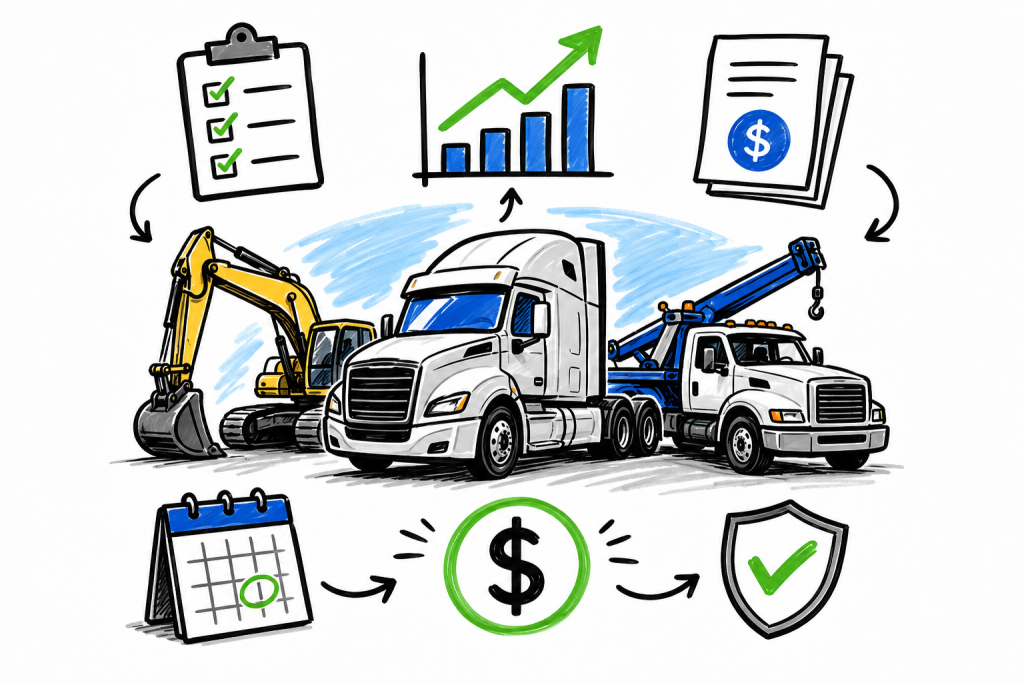
An established business equipment finance guide should begin with the operational question, not the application: what will this asset do for the business once it is in service? A replacement tractor that avoids recurring downtime, an excavator assigned to a signed project, or a rollback added to cover more calls can justify financing very differently. Established businesses generally have more options than first-time buyers, but the strongest structure still depends on the equipment, cash flow, credit profile, and documentation behind the transaction.
Commercial equipment financing works best when the asset has a clear role in producing revenue, protecting capacity, or reducing a measurable operating problem. That is why a fleet replacement plan should look beyond the monthly payment.
For example, a carrier replacing a high-mileage sleeper tractor may be balancing repair costs, driver retention, fuel efficiency, and service reliability. A towing company adding a wrecker may be responding to municipal rotation requirements, contracted accounts, or an expanding service area. A contractor purchasing an excavator may need the machine available before a project mobilizes rather than relying on rented equipment at unpredictable rates.
The lender or funding source will also view the equipment in context. New equipment from a recognized manufacturer, late-model used equipment from a reputable dealer, and an older unit purchased from a private seller can each require different underwriting. Asset age, mileage, condition, serial numbers, maintenance history, and resale value may affect available terms, advance rates, and documentation requirements.
The practical goal is to match the financing term to the useful life and revenue cycle of the asset. Extending payments can preserve monthly cash flow, but it may increase total financing cost and leave the business owing more than the asset is worth if replacement timing changes. A shorter term can reduce total cost but may place unnecessary pressure on working capital.
Time in business matters, but it is not the only measure of an established borrower. A funding source typically wants to see evidence that the company can operate and maintain the equipment it is acquiring.
That evidence can include consistent business bank activity, business and owner credit strength, filed tax returns or financial statements when requested, existing fleet or equipment history, insurance capability, and a credible explanation of the purchase. A company with several years of documented operations and a well-maintained fleet is generally evaluated differently from a new entity buying its first commercial unit.
Fleet history can be particularly helpful for transportation and vocational businesses. If a company has successfully operated similar trucks, trailers, forklifts, or construction equipment, the proposed purchase is easier to understand. The request looks like a planned capacity decision rather than an unfamiliar expansion.
That does not mean every established business needs the same documentation. A smaller transaction involving standard equipment may require a simpler package than a large multi-unit acquisition, specialized ambulance build, or used construction machine with an unusual ownership chain. The right approach is to prepare enough information to answer the real questions without delaying the deal through incomplete or inconsistent submissions.
The stated rate deserves attention, but it is only one part of an equipment finance proposal. Owners and CFOs should compare the complete structure: amount financed, term length, payment frequency, down payment, fees, end-of-term option, collateral requirements, and any conditions that must be met before funding.
A finance agreement may include a purchase option at the end, while a lease structure may have a different residual or return arrangement. The appropriate choice depends on whether the business expects to own the asset long term, rotate it on a regular replacement cycle, or preserve flexibility for a changing operation. The accounting and tax treatment of any structure should be reviewed with the company’s own tax and accounting advisors.
Payment timing matters as well. Monthly payments fit many operations, but seasonal businesses or companies with uneven contract billing may benefit from a structure that better reflects cash flow, where available. The key is not to force a payment schedule that looks attractive at signing but becomes disruptive during slower months.
Low-down-payment or zero-down structures may be available for some qualified businesses and assets. They are not automatic. Strong credit, time in business, asset type, existing debt obligations, fleet history, and the overall deal structure can all affect the required investment. Putting money down can improve the advance rate and payment, while preserving cash may be more valuable when the equipment needs initial repairs, permits, upfitting, insurance, or working capital support.
Used equipment can be a sound acquisition strategy, especially when a business needs a specific configuration quickly or wants to avoid a long factory order cycle. It also introduces details that can change a financing decision.
A late-model dump truck with clear maintenance records from a commercial dealer is a different proposition than an older truck bought through a private transaction. The same is true for yellow iron, forklifts, trailers, and specialized vocational units. Funding sources may examine the seller, purchase documentation, asset identification, age, hours or mileage, condition, and whether the stated value aligns with the market.
Before committing to a used asset, confirm that the configuration suits the work. Verify axle ratings, body and PTO specifications, emissions compliance where applicable, trailer capacity, required safety equipment, and any upfit needed before the unit can earn revenue. A lower purchase price does not help if the equipment spends weeks waiting for modifications or fails to meet a customer requirement.
Private-party purchases can be financeable in certain circumstances, but they commonly require additional verification. Clear title or ownership records, payoff information if there is a lien, a detailed bill of sale, and accurate serial or VIN information are essential. These details should be addressed early, not after the business has committed a deposit.
Equipment transactions often slow down because the equipment is ready while the paperwork is not. Established businesses can avoid much of that friction by keeping core information current before a replacement or expansion becomes urgent.
At a minimum, the buyer should be ready to provide a current equipment quote or purchase order, legal business name and address, federal tax identification number, ownership information, the intended use of the asset, and the seller’s contact details. Depending on the request, recent bank statements, financial statements, tax returns, insurance information, or an equipment schedule may also be needed.
The quote should accurately identify the unit and any included components. For a truck, that may mean the VIN, year, make, model, mileage, and body type. For a construction asset, it may mean the serial number, hours, attachments, and condition. If the purchase includes a trailer, hydraulic system, liftgate, specialized body, or other add-on, make sure it appears in the documentation and is reflected in the total acquisition cost.
A specialized equipment finance broker can help organize this process, identify likely documentation needs, and coordinate between the borrower, vendor, and funding source. Commercial Fleet Financing, Inc. works as a nationwide equipment finance broker and financing partner, helping established businesses present transactions clearly and evaluate available structures across multiple funding sources.
A fast decision or funding timeline is possible on some transactions, but it depends on the borrower profile, asset, seller, documentation quality, lender requirements, and deal structure. A standard late-model tractor from an established dealer with a complete file may move differently than a multi-unit used fleet acquisition, a private-party sale, or a highly specialized vehicle requiring inspection and title review.
Insurance is another common timing issue. The asset usually needs to be properly insured before it can be funded and put into service. Businesses should confirm coverage requirements early, particularly for high-value equipment, passenger vehicles, emergency equipment, or vehicles with specialized upfits.
Vendor coordination also matters. Dealers and manufacturers may have their own deposit policies, delivery schedules, titling processes, and payoff procedures. A finance partner familiar with commercial equipment transactions can help align those details, but the business should still verify when the unit will actually be released and what must happen before delivery.
When choosing between equipment options, compare the full operating picture. A newer truck with a higher price may offer better warranty coverage, lower expected maintenance, stronger fuel economy, and easier financing eligibility. An older truck may have a lower entry cost but require more cash for repairs, have tighter financing parameters, or face a shorter available term.
The same analysis applies to construction and industrial equipment. A machine with lower hours, documented service history, and attachments suited to the job may be more productive than a cheaper alternative that needs immediate work. The best purchase is not always the lowest-priced unit. It is the asset that can be financed responsibly and placed into profitable service with the fewest operational surprises.
Before requesting financing, put the purchase in operational terms: what the equipment replaces or adds, when it needs to be working, how it will generate or protect revenue, and what documentation is already available. That preparation gives the financing conversation a clear business case and helps move the transaction from quote to equipment in service.
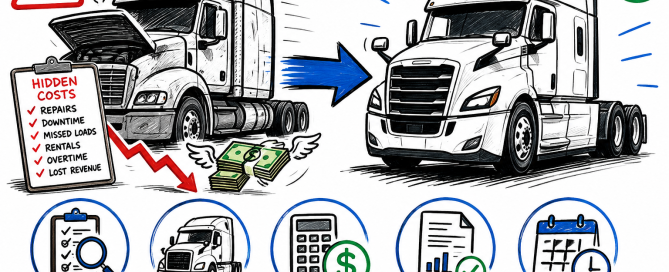
A truck replacement financing guide for established fleets: compare structures, protect working capital, and put dependable equipment into service faster.
Can businesses finance older equipment? See how asset age, mileage, condition, seller type, and borrower strength affect commercial financing options.
Learn how to finance multi-unit fleets with structures that protect working capital, fit replacement schedules, and support faster equipment deployment.
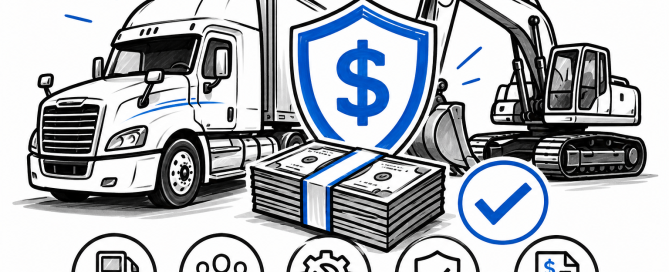
Learn how to preserve working capital for equipment purchases with financing structures that protect cash flow and keep revenue assets in service as planned.
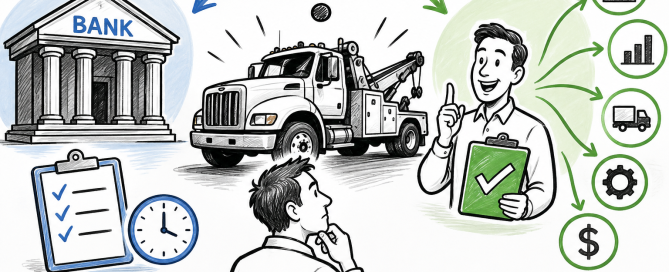
Compare an equipment finance broker versus banks for fleet and equipment purchases, including lender access, timing, terms, documentation, and needs.