Best Construction Equipment Financing Factors
Learn the best construction equipment financing factors, including asset age, cash flow, credit, vendor quality, down payment, and purchase timing now.

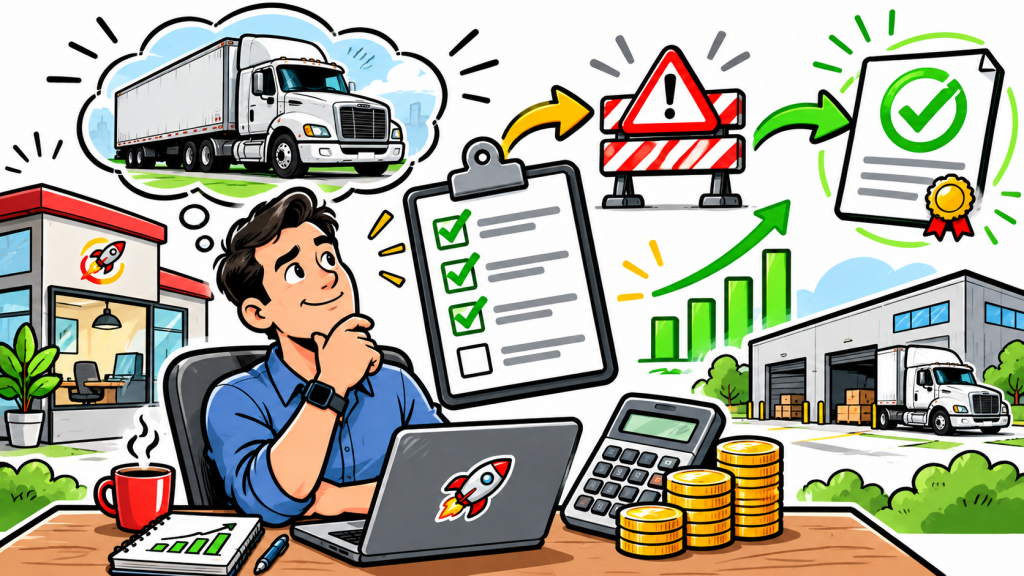
A truck sitting at a dealer is not producing revenue. But for a new business, that same truck can be difficult to finance because it represents both the company’s main earning asset and its largest immediate obligation. So, can startups qualify for commercial truck financing? Sometimes, but the available options, documentation standards, down payment expectations, and approval odds are typically very different from those available to established fleet operators.
For most commercial truck finance programs, proven operating history matters. Lenders want evidence that the business can put the asset to work, maintain it, insure it, and make payments through normal freight cycles, repair expenses, and seasonal changes in cash flow. A startup may have a strong owner and a good business plan, but it does not yet have the operating record that many commercial equipment lenders rely on.
Commercial truck financing is generally underwritten as a business transaction, not a consumer auto purchase. The lender evaluates the borrower, the equipment, and the transaction as a whole. The question is not simply whether a truck has collateral value. It is whether the business has a credible path to generating enough revenue from that truck to support the payment and the rest of its operating costs.
Established businesses can usually provide financial statements, business bank records, tax returns, insurance history, operating authority where applicable, customer contracts, and prior equipment payment history. A company replacing a five-year-old tractor or adding a unit to an existing fleet presents a clearer credit picture than a newly formed entity buying its first truck.
That does not mean every established company qualifies, or that every startup is automatically declined. It means lenders tend to view startup deals as higher risk. To offset that risk, they may require a stronger guarantor, more cash down, a newer or easier-to-value asset, shorter terms, or additional documentation.
A startup seeking truck financing should expect careful review of the owner’s experience and financial strength. Personal credit can matter substantially when the business itself has limited or no credit history. A strong personal profile may help, but it rarely replaces all the information a lender wants to see.
Relevant industry experience also carries weight. An owner with years of documented commercial driving, dispatch, maintenance, fleet management, towing, construction, or logistics experience may be viewed differently than someone entering the industry for the first time. Experience does not guarantee financing, but it helps support the case that the truck will be operated responsibly and used for a viable commercial purpose.
Documentation can also change how a transaction is evaluated. Depending on the equipment and lender, a startup may be asked for business formation documents, EIN information, business bank statements, proof of insurance, a purchase order, details on intended use, operating authority, contracts or letters of intent, and a resume or summary of industry experience. Requirements vary. Providing a complete file early can prevent avoidable delays.
Not all commercial trucks are equally financeable. A late-model sleeper tractor sold by a reputable commercial dealer is generally easier to evaluate than a high-mileage unit with an unclear maintenance history sold privately. That does not make older equipment impossible to finance, but asset age, mileage, condition, make, model, and resale value all influence lender appetite.
For example, a startup considering a newer day cab for dedicated regional work may have a more straightforward asset story than one seeking an older specialty truck with 700,000 miles and limited resale demand. Vocational units add another layer of review. A rollback, wrecker, dump truck, concrete mixer, or specialized body may be highly productive for the right operator, but the lender will consider body condition, chassis age, utilization, and how readily the equipment could be resold if necessary.
The seller matters too. A dealer invoice and detailed specifications usually create a cleaner transaction than a private-party purchase with incomplete records. Private sales can be financed in some circumstances, but they may involve more verification, title review, inspections, or restrictions.
Startups should be cautious about building a purchase around the assumption of zero-down financing. Low-down-payment or zero-down structures may be possible for some qualified commercial borrowers, but they depend on credit profile, experience, asset type, lender requirements, and overall deal structure. They should not be treated as a baseline expectation for a new company.
A meaningful down payment can reduce the lender’s exposure and lower the amount financed. More importantly, it can leave the business with a more manageable payment relative to projected revenue. The tradeoff is working capital. A new operation still needs cash for insurance deposits, permits, fuel, tires, repairs, payroll, telematics, registration, and the first weeks or months of operations before receivables are collected.
The right decision is not always to put every available dollar into the truck. A business that buys equipment with too little operating cash may face a greater problem than a business that finances a somewhat smaller portion of the purchase price. The payment must fit the company’s real cash flow, not only its optimistic revenue forecast.
There are situations where delaying a truck purchase can strengthen the eventual financing request. A company may benefit from first building several months of business bank activity, establishing a record of paid invoices, documenting contracts, improving personal credit, or accumulating a larger down payment.
Waiting can be especially sensible when the proposed truck is older, unusually expensive for the business’s current revenue, or intended for a line of work the owner has not previously performed. It can also make sense when the business needs a truck immediately but has not accounted for insurance availability or the cost of bringing the unit into service.
On the other hand, waiting is not always practical. An established company launching a separate entity, entering a documented contract, or adding equipment to support existing operations may have a stronger case than the word “startup” suggests. The legal age of the entity is only one part of the credit story. Related business history, fleet experience, and verified revenue can be relevant depending on the lender and structure.
Before shopping aggressively, define the equipment requirement. Determine whether the operation needs a sleeper tractor, day cab, box truck, dump truck, tow truck, or another commercial vehicle, then set workable limits on age, mileage, purchase price, and expected time in service. Equipment that matches the job is generally easier to justify than a truck chosen mainly because it appears inexpensive.
Next, prepare a realistic operating picture. Include expected weekly utilization, customer or lane information, insurance costs, fuel assumptions, maintenance reserves, driver costs, and the payment range the business can carry. A lender may not use the same assumptions, but a disciplined forecast shows whether the purchase is grounded in commercial reality.
It is also wise to get the vendor paperwork, equipment specifications, and available maintenance records organized before submitting the request. Changes to the truck, seller, price, or down payment after approval can require the transaction to be reworked. Clean information helps the process move more efficiently.
Startup truck requests often need more structuring than a standard replacement-fleet transaction. A specialized commercial equipment finance broker can review the borrower profile, asset, seller, cash contribution, and intended use before matching the request to potential funding sources. That approach does not remove lender requirements or create an approval where the fundamentals are weak. It can, however, help avoid submitting an ill-fitting deal to the wrong program.
Commercial Fleet Financing works with qualified businesses seeking revenue-producing commercial vehicles and equipment throughout the United States. For an established operator adding a truck, replacing an aging unit, or expanding a documented fleet, the discussion should begin with the business profile and equipment plan rather than a generic promise of terms.
A startup can qualify for commercial truck financing in certain circumstances, but the strongest path is usually the one built on relevant experience, a financeable truck, adequate working capital, complete documentation, and a payment structure the business can support when the truck is working – and when it is in the shop.
Learn the best construction equipment financing factors, including asset age, cash flow, credit, vendor quality, down payment, and purchase timing now.
Equipment acquisition examples show how established businesses can add trucks and machinery while protecting cash flow, uptime, and working capital wisely.
Can startups qualify for commercial truck financing? Learn why most programs favor established operators and what lenders review before approval decisions

Understand older equipment eligibility for commercial financing, covering asset age, mileage, condition, seller, documentation, and lender fit for business.
Construction financing can preserve working capital while putting excavators, loaders, trucks, and other revenue-producing equipment to work more quickly.