Commercial Financing Options for Working Fleets
Compare commercial financing options for trucks and equipment, protect working capital, and put revenue-producing assets into service with confidence.


A Sprinter van that sits waiting for financing is not an asset. It is a missed delivery route, an unfilled service territory, or a delayed replacement for a unit that is becoming expensive to maintain. The best ways to fund sprinter vans depend on how the van will earn revenue, how long you expect to keep it, the age and mileage of the asset, and how much working capital the business needs to retain.
For an established business, the goal is not simply to find an approval. It is to structure the acquisition so the payment, term, down payment, and ownership plan fit the operation. A courier adding routes, a medical transport provider buying a wheelchair-accessible van, and a contractor replacing a high-mileage service unit may all finance similar vehicles very differently.
Sprinter vans are used across last-mile delivery, HVAC, plumbing, electrical, restoration, passenger transport, mobile services, shuttle operations, and specialty vocational work. Before comparing financing products, define the vehicle’s operating role.
A new cargo van placed into a daily regional delivery route may justify a longer term because it has a predictable useful life and strong resale market. A used van with substantial mileage may require a shorter amortization period, a larger down payment, or a lender comfortable with older commercial assets. A van with shelving, refrigeration, wheelchair lifts, wrap graphics, or other upfits introduces another question: can the transaction include the installed equipment, and does the lender view the completed vehicle as suitable collateral?
The purchase source matters as well. New units from franchised dealers are generally easier to document than private-party transactions. A dealer invoice, vehicle identification number, build sheet, title status, and clear purchase order help move a deal forward. Used vehicles from independent dealers or private sellers can still be financeable, but asset condition, mileage, maintenance records, and seller documentation often receive closer review.
A commercial vehicle loan or equipment financing agreement is often the straightforward choice for businesses that intend to own the van after the final payment. The vehicle serves as collateral, and the borrower makes fixed monthly payments over an agreed term.
This structure can work well for companies replacing aging vans, building a long-term service fleet, or purchasing a unit with expensive upfits they expect to use for years. It gives the business a clear ownership path and can make sense when the van is likely to remain in service beyond the finance term.
The trade-off is that lenders will closely consider the asset and borrower together. Credit strength, time in business, existing fleet history, bank statements, financial performance, and the van’s age and mileage can all affect available terms. A newer, lower-mileage van acquired from a recognized dealer will generally present differently than a high-mileage vehicle purchased from an individual seller.
A finance lease can provide another path for a business that wants to preserve cash while maintaining a defined end-of-term ownership option. In a typical fixed purchase option structure, the business makes scheduled payments and may buy the vehicle for a predetermined amount at the end of the term.
For fleet operators, the appeal is often payment management rather than a different operating outcome. The business controls and uses the van as part of its fleet, while the financing structure can be tailored around the asset cost and expected service period. This may be particularly useful when a company is acquiring several vans and wants consistent payment planning across the purchase.
Lease terminology can be confusing because structures vary. Review the end-of-term purchase amount, early payoff provisions, insurance requirements, and any mileage or condition requirements before deciding. The right structure should support the planned use of the van, not create an avoidable surprise when the term ends.
An operating lease may fit a business that prefers to rotate vans on a planned schedule rather than keep each unit through the end of its useful life. This approach can be relevant for fleets where presentation, reliability, warranty coverage, or newer safety technology is central to the operation.
The lower monthly payment sometimes associated with an operating lease should be evaluated carefully. It can reflect a residual value assumption, meaning the vehicle’s projected value at lease end is part of the structure. Usage limits, vehicle condition expectations, and return obligations matter. A high-mileage delivery operation may not be a natural fit unless the anticipated utilization is accurately reflected from the start.
For businesses that run predictable annual miles and replace vehicles before maintenance costs rise, this can be a disciplined fleet-management tool. For companies that keep vans indefinitely or heavily modify them, ownership-oriented financing is often more practical.
Dealers and vehicle vendors frequently have financing channels available at the point of sale. These programs can be convenient when the dealer has the vehicle allocated, the equipment package is clearly identified, and the buyer wants to coordinate the purchase and financing process in one place.
Convenience does not eliminate the need to compare structure. Confirm the term length, payment, down payment, documentation requirements, prepayment language, and whether upfits are included. A dealer program may be the right answer for one transaction, while an independent equipment finance source may offer more flexibility for a multi-unit purchase, a specialized build, or a borrower whose transaction does not fit a single captive program.
Some established businesses use available working capital or a revolving credit facility for part of the acquisition, then finance the vehicle itself. This can be useful when the van purchase includes a modest cash component, equipment deposits, graphics, shelving, or items that may not be included in the main vehicle financing.
The caution is simple: do not use short-term capital to solve a long-term asset need without considering the cash flow impact. A line of credit tied up in vans can reduce flexibility for payroll, fuel, inventory, seasonal expenses, or emergency repairs. In many cases, financing the revenue-producing vehicle and retaining liquidity for operations is the more balanced approach.
A growing business may already own vans, trucks, trailers, or equipment free and clear. Depending on the assets, their condition, and available equity, refinancing existing equipment can sometimes create capital for expansion or replacement purchases.
This is not automatically the lowest-cost or best option. It replaces an unencumbered asset with a payment and may extend debt against equipment that is already working well. It can make sense when the released capital has a clear productive use, such as adding vehicles for contracted work or replacing units with escalating downtime. The business should compare the cost of the new obligation with the revenue and operational benefit expected from the expansion.
A specialized commercial equipment finance broker can be valuable when the transaction involves multiple vans, used assets, specialty conversions, uneven financials, dealer coordination, or a deadline tied to a vehicle allocation. Instead of presenting the deal to a single source, the broker can identify funding programs that may fit the borrower profile, asset type, and transaction structure.
Commercial Fleet Financing, Inc. works as an equipment finance broker and financing partner for established businesses, coordinating documentation, vendor information, and lender requirements across commercial vehicle transactions. That can be especially helpful when the van is not a basic cargo unit, such as a passenger shuttle, non-emergency medical transport vehicle, or a service van with material upfits.
Commercial van financing decisions are based on more than a personal credit score. Lenders typically evaluate the business’s time in operation, credit profile, revenue and cash flow, existing debt, fleet experience, and payment history. They also review the asset’s year, mileage, purchase price, seller type, and intended commercial use.
A company with years of documented operations and a well-maintained fleet may have more financing options than a business making its first commercial vehicle purchase. That does not mean every established borrower receives the same structure. A business buying three new cargo vans from a franchised dealer presents a different risk profile than one acquiring a single, heavily used converted van from a private seller.
For larger transactions, be prepared to provide recent business bank statements, financial statements, tax returns, debt schedules, fleet lists, proof of insurance, and a detailed purchase order. Requirements vary by lender and deal size, but complete documentation reduces avoidable delays.
It is easy to focus on the monthly number. A lower payment can be useful, but it may result from a longer term, a larger final purchase amount, or a structure that does not match the van’s actual use. The better question is whether the payment leaves enough room for fuel, insurance, driver costs, maintenance, and the working capital needed to run the business.
For example, a plumbing contractor replacing a van that has frequent repair downtime may reasonably prioritize quick deployment and long-term ownership. A delivery company adding seasonal capacity may place more value on a replacement cycle that avoids carrying older units. Neither approach is universally better. The operational plan should lead the financing decision.
Bring the vehicle quote, upfit details, business information, and target timeline into the conversation early. A well-prepared financing request gives the funding source a clearer picture of the asset, the revenue purpose, and the structure that may fit. That is how a Sprinter van moves from a purchase order to a productive unit in the fleet.

Compare commercial financing options for trucks and equipment, protect working capital, and put revenue-producing assets into service with confidence.
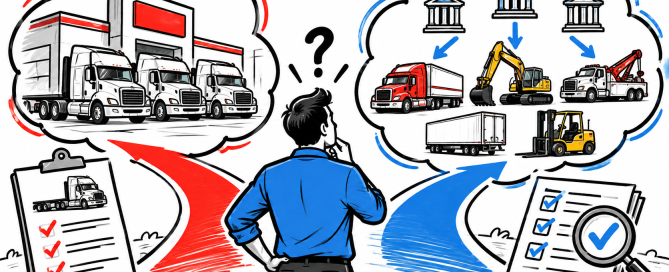
Finance broker versus captive financing: compare lender choice, equipment fit, approval variables, and cash flow before buying commercial assets today.
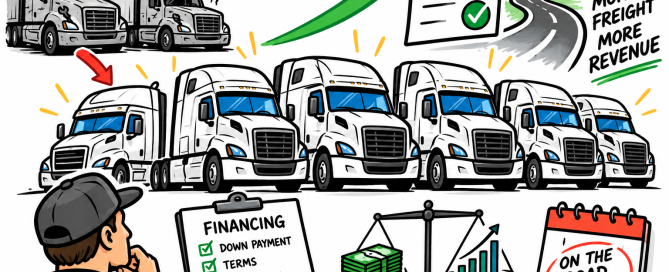
This multi unit fleet example shows how five commercial trucks can be financed while protecting cash flow, managing documents, and timing delivery well.
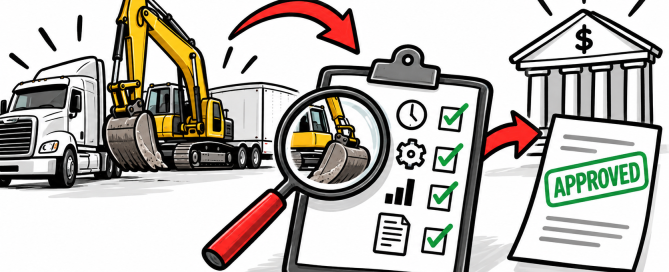
Learn how equipment collateral affects commercial financing, from asset value and condition to advance rates, documentation, and deal structure decisions.
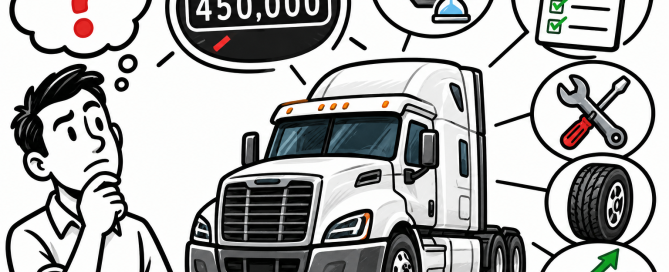
Learn how to evaluate commercial truck mileage before buying or financing, using engine hours, service records, asset age, and intended duty cycle needs.