Preserve Working Capital for Equipment Purchases
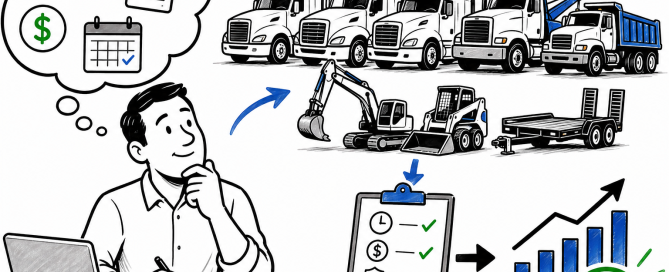
Learn how to preserve working capital for equipment purchases with financing structures that protect cash flow and keep revenue assets in service as planned.

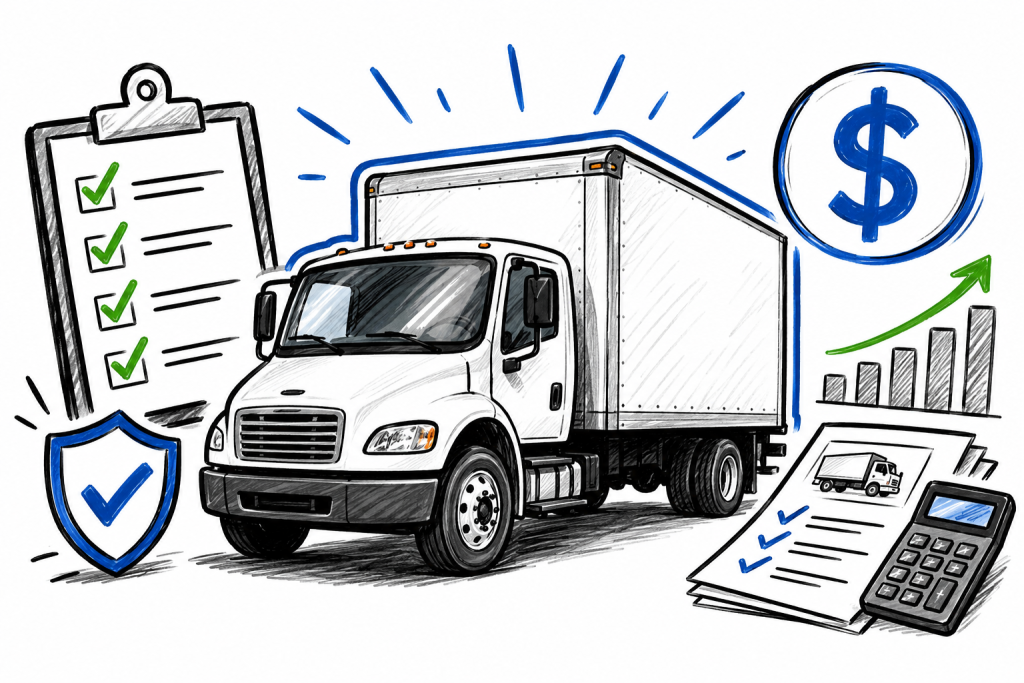
A used box truck can be a practical replacement when a delivery unit is becoming unreliable, or a faster way to add capacity when routes are already there. But used box truck financing requirements are more detailed than simply having a purchase price and a business name. The lender or funding source needs to see a financeable asset, a business with the capacity to repay, and a transaction that can be documented cleanly.
For an established business, preparation often determines whether the purchase moves efficiently from quote to funding. The key variables are the truck’s age, mileage, condition, seller, intended commercial use, business credit profile, operating history, and the cash required at closing.
A finance request is evaluated as both an equipment transaction and a credit transaction. A well-established company with strong financials may have more structure options than a newer company, but even a strong borrower can encounter limits when the truck is unusually old, high-mileage, or difficult to value.
Age and mileage affect collateral value, remaining useful life, and resale potential. A late-model medium-duty box truck with reasonable mileage, a documented maintenance history, and a standard body is generally easier to finance than an older unit with extensive wear or a highly specialized upfit.
There is no universal maximum age or mileage threshold. Each funding source has its own equipment guidelines, and those guidelines can vary by truck class, manufacturer, transaction size, and borrower strength. A 10-year-old truck with lower mileage and detailed service records may be more acceptable than a newer truck that has been run hard, shows corrosion, or needs immediate repairs.
The body matters as well. A standard dry van body is typically straightforward to evaluate. Refrigerated bodies, liftgates, shelving packages, ramps, custom interiors, or route-specific modifications can add business value, but they also require the lender to understand the complete asset and its marketability.
Dealer transactions are often simpler because the equipment description, invoice, title process, and payoff information are usually organized. Private-party purchases can be financeable, but they commonly require more review. The seller must be verifiable, the vehicle identification number must match the paperwork, and the title must be clear of unresolved liens.
For either type of purchase, expect to provide a detailed invoice or buyer’s order showing the year, make, model, VIN, mileage, sale price, and any applicable taxes, fees, warranties, or added equipment. If there is a lien payoff, accurate payoff information is essential. Missing details can delay final documentation even when the credit request itself is acceptable.
Lenders generally want a clear commercial purpose. A box truck used for established local delivery routes, furniture moving, restoration work, medical logistics, beverage distribution, field service, or last-mile freight has an identifiable business use. Explain whether the truck replaces a unit that is creating repair downtime, expands a contracted route, or supports a new service line within an existing operation.
The intended use should also align with the truck’s configuration. A 26-foot truck with a liftgate may fit appliance delivery or commercial moving. A smaller unit may be a better fit for urban route density and tighter loading areas. Buying more truck than the route can support can strain cash flow, while buying too little can limit revenue and create another replacement decision sooner than planned.
The business profile is usually as important as the truck itself. Established companies are evaluated on their ability to operate the equipment profitably and make the scheduled payments without disrupting working capital.
Time in business helps establish that the company has a track record beyond a projected business plan. Lenders may review how long the business has operated, its industry experience, current fleet size, and whether it has successfully managed comparable equipment.
A company replacing several aging delivery trucks has a different profile from a business adding its first commercial vehicle. Neither situation is automatically disqualifying, but fleet history and experience can influence available terms, documentation requests, and down payment expectations.
Commercial equipment finance decisions may consider business credit, the owner’s personal credit, or both. The exact approach depends on the entity, time in business, transaction size, financial strength, and funding source.
Good credit does not eliminate equipment review, and a desirable truck does not eliminate credit review. Payment history, existing debt obligations, recent credit activity, liquidity, and the company’s overall financial picture can all affect the structure. For larger purchases or more complex requests, lenders may ask for business bank statements, financial statements, tax returns, debt schedules, or interim operating results.
The payment needs to fit the business’s operating cycle. A contractor with seasonal revenue, for example, may need a structure that accounts for slower winter months. A delivery company with stable route revenue may prioritize a payment schedule that matches weekly or monthly billing patterns.
Lenders assess existing equipment debt, vehicle leases, lines of credit, and other recurring obligations. Be direct about those commitments. A complete debt picture helps the financing partner present the transaction accurately and avoid surprises later in underwriting.
Down payment requirements vary. Strong, established borrowers purchasing eligible equipment may have access to lower-down-payment structures, while older trucks, higher-mileage units, private-party sales, thin financial documentation, or a more leveraged balance sheet may require more cash down.
A larger down payment can reduce the amount financed and may improve lender comfort with an older asset. It also preserves less working capital for payroll, fuel, insurance, repairs, and growth. The right amount is not always the smallest possible down payment. It is the amount that makes the transaction workable without creating pressure elsewhere in the operation.
Term length presents a similar trade-off. A longer term can reduce the monthly payment, which may help cash flow. However, financing a used truck over too long a period can leave the business making payments as maintenance costs rise and the asset ages. A shorter term usually builds equity faster but increases the monthly obligation. The best structure depends on expected utilization, remaining useful life, and replacement plans.
Getting documents together before identifying a truck can reduce avoidable delays. Most established businesses should be ready to provide basic business formation information, ownership details, recent bank statements when requested, and information on existing commercial equipment or vehicle debt.
Once a truck is selected, the equipment package becomes equally important. Have the invoice or buyer’s order, VIN, mileage, truck specifications, seller contact information, photos when available, and any maintenance or inspection records. For a private sale, confirm title status early. If the truck needs a liftgate, refrigeration equipment, shelving, signage, or another upfit before it can enter service, make sure those costs are clearly shown and discussed before the request is submitted.
Insurance is another practical requirement. Before funding, the business will generally need commercial physical damage coverage that satisfies the finance agreement’s insurance provisions. Insurance availability and cost can be especially relevant for high-value units, specialized bodies, new operating territories, or companies with changing fleet exposure.
The most common delays are usually preventable: an invoice with incomplete truck details, title problems, an inaccurate lien payoff, a mismatch between the buyer’s legal entity and the application, or a truck condition that differs from the listing. A pre-purchase inspection can be worthwhile when the truck is older, has significant mileage, or comes from an unfamiliar seller.
Be cautious with a unit that appears inexpensive because it needs substantial tires, brakes, suspension work, body repair, or engine aftertreatment service. Financing the purchase price does not remove those near-term operating costs. A slightly higher-priced truck with documented maintenance and less deferred work can be the more economical decision once uptime is considered.
Used box truck financing is not a one-size-fits-all transaction. A specialized equipment finance broker and financing partner such as Commercial Fleet Financing can help qualified established businesses match the truck, seller, documentation, and business profile to appropriate funding sources. Available structures, terms, down payment, approval timing, and funding speed remain dependent on the borrower, asset, documentation, lender requirements, and overall deal structure.
Before making a deposit, review the truck’s condition, the seller’s paperwork, the all-in acquisition cost, and the monthly payment alongside expected route revenue and maintenance needs. That preparation gives your business a stronger basis for acquiring a truck that can go to work reliably rather than becoming the next source of downtime.
Learn how to preserve working capital for equipment purchases with financing structures that protect cash flow and keep revenue assets in service as planned.
Compare an equipment finance broker versus banks for fleet and equipment purchases, including lender access, timing, terms, documentation, and needs.
Use this fleet financing checklist to assess equipment, cash flow, documentation, and deal structure before adding or replacing commercial vehicles first.

Used versus new equipment financing affects cash flow, uptime, collateral value, and approval structure. Compare the right purchase for your commercial fleet.
A multi-unit acquisition financing guide for established businesses buying trucks or equipment while protecting cash flow, uptime, and expansion plans.