Commercial Vehicle Title Guide for Fleet Buyers
This commercial vehicle title guide explains liens, title transfers, VIN checks, and finance steps that help fleets put purchased equipment into service.

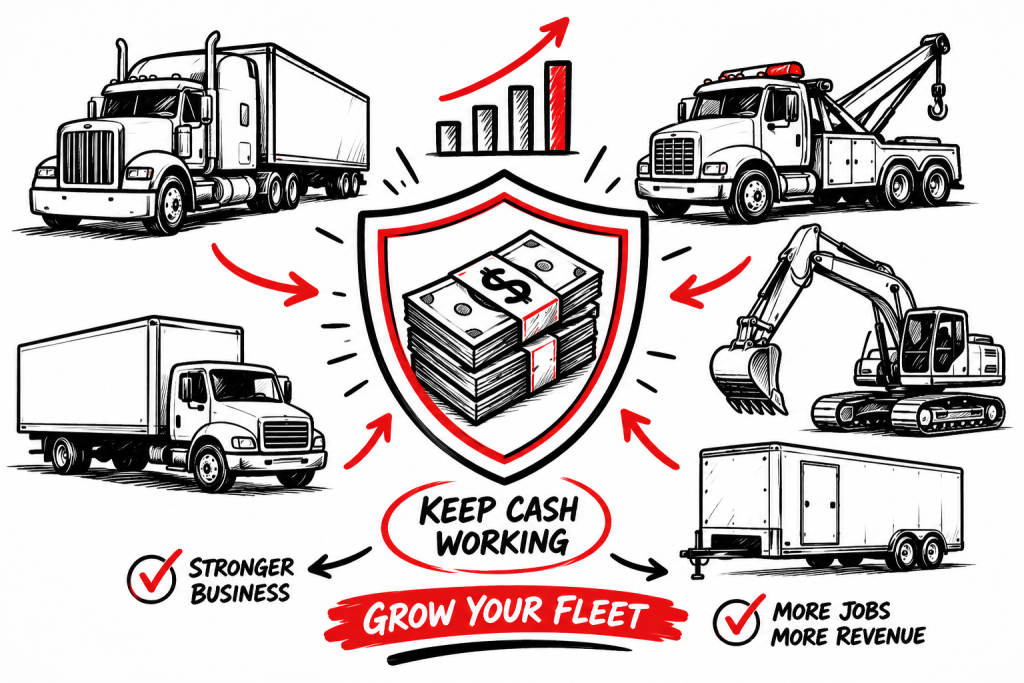
A truck sitting in a shop, an excavator that cannot handle the next contract, or a tow unit nearing the end of its useful service life creates a business problem before it becomes a financing question. The right fleet financing structure can help an established company put replacement or additional equipment into service while preserving cash for payroll, fuel, maintenance, insurance, and the work that follows the purchase.
For fleet operators, the decision is rarely just whether to buy. It is whether the asset will produce enough revenue, improve enough uptime, or reduce enough operating cost to justify the payment and the capital committed at closing. That is why the equipment, borrower profile, seller, and transaction timing all matter.
Fleet financing is commercial equipment financing used to acquire business-use vehicles and equipment that generate revenue or support revenue-producing operations. It may apply to semi-trucks and trailers, tow trucks, dump trucks, box trucks, sprinter vans, ambulances, buses, construction equipment, forklifts, and other commercial assets.
Depending on the transaction, financing may be structured as an equipment loan, lease, or other commercial installment arrangement. The practical objective is similar: spread the acquisition cost over a term that makes sense for the asset and the business’s expected use of it.
A company replacing three high-mileage tractors, for example, may want payments aligned with the remaining useful life of the replacement units. A contractor adding an excavator for a signed pipeline of work may focus more heavily on getting the machine delivered, insured, and deployed before the project schedule moves on. Neither situation is best handled by a generic consumer-style application or a one-size-fits-all term.
A lower monthly payment can be useful for working capital, but it is not automatically the best deal. Extending a term may reduce the payment while increasing total financing cost and leaving the business with a balance after the equipment has accumulated substantial age, mileage, or wear.
Start by defining what the asset needs to accomplish. Is it replacing an unreliable unit that is causing missed loads and repair bills? Is it an additional truck needed for a dedicated contract? Is the business standardizing the fleet around a preferred make, body configuration, or service platform? The answer affects the type of equipment that makes sense and the financing structure that may be appropriate.
For vocational equipment, the chassis is only part of the analysis. A rollback, wrecker, dump body, crane package, refrigeration unit, or other upfit can materially affect value, cost, delivery timing, and lender review. The same is true for a truck purchased with a specialized trailer. A lender may evaluate the whole package differently than a standard highway tractor.
New equipment often offers predictable specifications, warranties, and a longer expected service life. It can also involve longer order cycles, deposits, and higher acquisition costs. Used equipment may be available immediately and require less capital, but condition, mileage, maintenance records, and remaining useful life become more important.
Older assets can still be productive purchases for the right established operator. However, age and mileage may narrow available programs, shorten the term, increase the required down payment, or require closer review of the unit’s condition. A well-documented late-model truck from a reputable dealer is generally a different financing conversation than a high-mileage unit purchased through a private seller.
The seller matters as well. Dealerships and established vendors typically provide invoices, equipment specifications, serial numbers, titles or title documentation, and payoff information in a format that supports an efficient closing process. Private-party purchases may be financeable in some situations, but documentation, lien verification, and transaction controls can be more involved.
Commercial equipment transactions are underwritten around both the borrower and the collateral. Strong personal and business credit can help, but it is only one part of the file. Lenders generally want to see that the business has the operating history, cash flow, and equipment experience to support the obligation.
Key considerations often include time in business, financial strength, payment history, existing debt, current fleet size, and the intended use of the asset. A carrier with several years of documented operations and a stable customer base will usually present differently than a company making its first major equipment purchase. For an established owner-operator, commercial driving history, current contracts, equipment history, and business records may all help explain the transaction.
Documentation requirements vary by lender and deal size. A straightforward late-model truck purchase for a well-qualified business may require less than a larger fleet expansion or a specialized construction equipment package. Common items can include an equipment quote, application, business formation documents, bank statements, financial statements, tax returns, debt schedules, proof of insurance, and information on existing equipment or trade-ins.
The most efficient files are accurate from the beginning. A quote that clearly identifies the year, make, model, VIN or serial number, purchase price, and any upfits reduces avoidable questions later. If there is a payoff, trade, or delivery condition, disclose it early rather than trying to solve it at funding.
Using cash to buy equipment outright can eliminate a monthly payment, but it can also tie up capital needed for operating expenses or opportunities. Financing allows a business to retain more liquidity, which can be especially valuable when adding equipment also means hiring drivers, purchasing fuel, carrying receivables, or mobilizing to a new job.
That does not mean the lowest possible down payment is always the right objective. A meaningful down payment may improve the overall structure, reduce the financed amount, or help address a transaction where the equipment is older, highly specialized, or priced above a lender’s expected collateral value. In other cases, qualified businesses may have low-down or potentially zero-down options. Availability depends on credit profile, time in business, fleet history, asset type and age, documentation, lender requirements, and the complete deal structure.
A useful question is not simply, “How little can we put down?” It is, “What structure leaves the company able to operate the equipment profitably from day one?” That includes payment, insurance, licensing, maintenance reserves, and any cost required to put the asset into service.
Fleet managers often know the operational replacement cycle even if it is not written down. They can point to the mileage range where tractors become less dependable, the age at which liftgate repairs become frequent, or the point where a machine’s downtime begins disrupting crews.
Financing should support that operating reality. If a business typically trades equipment after four or five years, a structure that allows a manageable exit or trade cycle may be more useful than one designed only to produce the lowest initial payment. Conversely, a company that keeps well-maintained equipment for a long period may prioritize a fully amortizing structure and ownership at the end of the term.
There is no universal best term. A newer highway truck, a trailer, a rollback, and an excavator have different depreciation curves, service demands, and resale patterns. The business’s utilization and maintenance discipline matter just as much as the equipment category.
Equipment finance delays are often operational delays in disguise. A dealer may have the exact unit available, but the transaction can stall if the equipment quote changes, insurance is not in place, a title issue appears, or requested documents arrive late.
A specialized financing partner can help organize the transaction among the business, vendor, and appropriate funding sources. Commercial Fleet Financing, Inc. works as an equipment finance broker and financing partner, helping qualified established businesses evaluate structures, address lender requirements, coordinate documentation, and move from quote through funding.
Speed can be possible on well-prepared transactions, and some deals may fund in as little as 24 hours. That outcome is conditional on the borrower profile, asset, vendor documentation, lender requirements, and deal structure. A specialized or more complex purchase should be planned earlier, particularly when it involves custom upfits, multiple units, older collateral, or a delivery deadline.
Before seeking financing, decision-makers should be ready to explain the business case for the asset. What will it haul, build, tow, transport, or support? Is it a replacement or expansion? What is the expected utilization? Does the quoted price include bodies, attachments, delivery, taxes, or other costs? Is there a trade-in, existing payoff, or deposit already involved?
It also helps to decide which tradeoff matters most. Some businesses prioritize preserving cash. Others want the shortest reasonable term, ownership at the end, or a structure that fits a known replacement schedule. Clear priorities help prevent a financing decision from being driven by a single advertised payment.
The best fleet purchase is one that arrives ready to work, fits the company’s operating plan, and leaves enough financial capacity to support the work it is expected to produce. A practical financing discussion begins with that equipment plan, the business records behind it, and a realistic view of the transaction timeline.
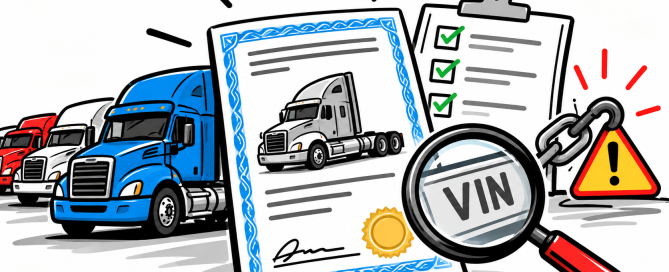
This commercial vehicle title guide explains liens, title transfers, VIN checks, and finance steps that help fleets put purchased equipment into service.
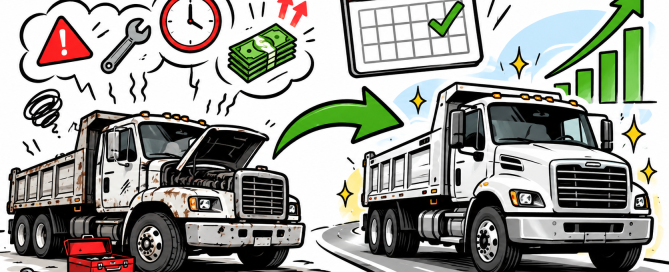
Fleet replacement trends are shifting toward uptime, lifecycle cost, and flexible financing. Learn how established businesses can plan asset upgrades.
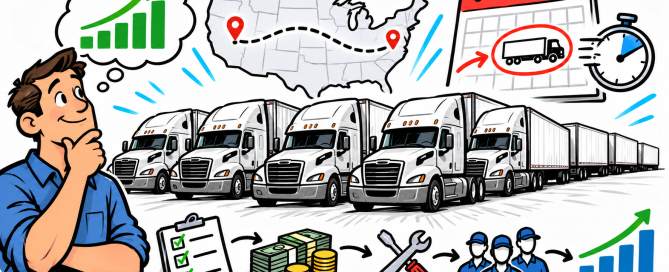
This fleet expansion case study shows how established businesses can structure truck financing, protect working capital, and put assets to work faster.
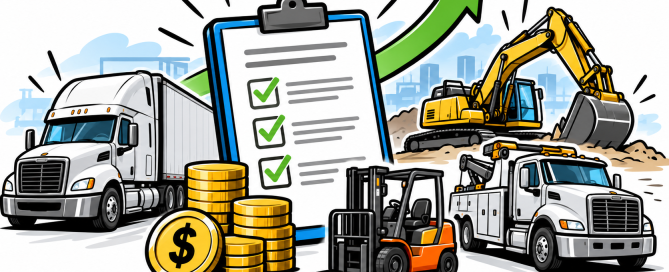
Compare commercial financing options for trucks and equipment, protect working capital, and put revenue-producing assets into service with confidence.
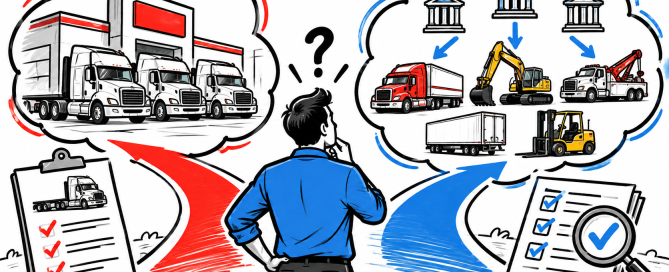
Finance broker versus captive financing: compare lender choice, equipment fit, approval variables, and cash flow before buying commercial assets today.