Seasonal Excavator Equipment Financing: Preparing for Your Business’ Busy Season
Seasonal Excavator Equipment Financing: Preparing for Your Business' Busy Season [...]


A truck can be working within days of delivery, but the payment will be part of the business long after the excitement of the purchase is gone. This owner operator truck financing example shows how an established carrier can evaluate the real cost of adding or replacing a tractor without treating the monthly payment as the only decision point.
The numbers below are illustrative, not a rate quote or approval scenario. Actual terms depend on the business and personal credit profile, time in business, operating history, cash flow, truck age and mileage, down payment, seller, documentation, and the requirements of the funding source.
Assume an established owner-operator business is replacing a high-mileage truck that is creating repair delays. The business has several years of documented operations, commercial insurance, recent bank statements, and a history of hauling under its own authority or through established carrier arrangements.
The operator finds a 2022 sleeper tractor at a reputable commercial truck dealer for $120,000. The truck has acceptable mileage, service records, and specifications suited to the operator’s lanes and freight profile. The business puts 20% down, or $24,000, and finances the remaining $96,000.
For illustration, assume a 60-month term and a 10% fixed annual finance rate. The estimated principal-and-interest payment would be about $2,040 per month. Over 60 months, total scheduled payments would be roughly $122,400, including about $26,400 in finance charges.
That payment does not necessarily represent the entire acquisition cost. Depending on the transaction and state, the operator may also need to account for sales or use tax, title and registration costs, documentation fees, insurance changes, dealer-installed equipment, and any delivery or inspection expense. Some costs may be financed in certain structures, while others may need to be paid at closing. The right approach depends on available working capital and the funding source’s guidelines.
The useful question is not simply, “Can the business make a $2,040 payment?” It is whether the replacement truck can support that payment while leaving room for fuel, maintenance, insurance, payroll or owner draws, taxes, and unexpected downtime.
A tractor payment needs to be viewed as one part of a monthly operating budget. An owner-operator with consistent gross revenue can still feel pressure if fuel costs rise, a major repair hits, a customer pays slowly, or the truck loses productive days.
For this example, suppose the business expects the replacement truck to generate $22,000 in monthly gross revenue under normal utilization. That figure should be based on the operator’s own lanes, contracts, settlement history, load mix, and realistic available driving time, not an optimistic market estimate.
From that revenue, the operator would subtract recurring operating costs. Those may include fuel, insurance, maintenance reserve, tires, permits, tolls, dispatch expense, trailer expense if applicable, electronic logging and communications services, and driver wages if the truck will not be owner-driven. The new truck payment is then added to that cost structure.
A practical review also includes a maintenance reserve. A newer used truck may reduce immediate repair exposure compared with an aging unit, but it does not eliminate it. Engine aftertreatment components, tires, brakes, suspension work, and roadside events can affect cash flow. If the transaction uses most of the company’s available cash for a down payment, the business may be better served by preserving more liquidity, even if that produces a higher monthly payment.
This is one of the central tradeoffs in commercial truck financing: a larger down payment can reduce the amount financed and monthly payment, while a smaller down payment can preserve cash for fuel, repairs, insurance deposits, and day-to-day operations. Neither choice is automatically better.
Consider the same $120,000 tractor, but assume the business puts $12,000 down instead of $24,000. The amount financed becomes $108,000. Using the same illustrative 10% rate over 60 months, the estimated payment rises to about $2,295 per month.
The business preserves an additional $12,000 in cash at closing, but takes on roughly $255 more in monthly payment. Over the life of the agreement, it would generally pay more in finance charges because it financed more principal.
Now consider a 72-month term on the original $96,000 financed amount, using the same illustrative rate. The estimated payment falls to about $1,780 per month. That lower payment may improve monthly cash flow, particularly if the truck is replacing a unit with frequent repair expenses. However, the business would carry the obligation longer and generally pay more total interest than it would under a 60-month term.
A longer term is not automatically a problem, especially when it aligns with the truck’s expected useful life and the company’s replacement cycle. The concern is financing a truck beyond a period when its mileage, maintenance needs, or resale value make the structure uncomfortable. A strong transaction considers both payment affordability and the condition of the asset near the end of the term.
For an established owner-operator, the truck matters, but the underwriting review is about more than the truck. Funding sources commonly examine whether the business has a stable record of commercial operations and whether the requested equipment is appropriate for its intended use.
A typical file may include a completed application, business information, recent business bank statements, identification of the truck, a dealer quote or purchase order, and proof of commercial insurance before funding. Depending on the size and structure of the request, financial statements, tax returns, debt schedules, operating authority information, or additional documentation may be requested.
Credit strength remains important, but lenders and funding sources also look at practical details. A clean late-model tractor sold by an established dealer is often easier to evaluate than an older unit with high mileage from a private seller. A business with several years of verifiable operations and a documented maintenance history generally presents differently than a newly formed entity, even if both are buying the same truck.
Existing fleet obligations matter as well. If the business already has financed trucks, the reviewer will consider whether those payments are current and whether the fleet’s revenue supports another obligation. A replacement truck can be easier to explain when it removes an unreliable unit and improves uptime. An expansion truck may require a clearer case for additional freight volume, driver availability, and operating capacity.
The strongest financing request is specific. Rather than submitting only a truck listing and asking for terms, explain what the truck will do for the operation. Is it replacing a 2016 tractor with rising repair costs? Is it adding capacity for a contracted lane? Does the sleeper configuration support longer routes that the current day cab cannot cover? Will a particular engine, transmission, or wheelbase fit the freight and maintenance strategy?
That context helps identify a structure that fits the transaction. It can also prevent avoidable delays when the truck’s age, mileage, seller type, or invoice details require additional review.
Before committing to a truck, compare the total delivered cost with the available cash, expected payment, insurance requirement, and likely maintenance needs. Review the truck’s VIN, mileage, service records, specifications, and any warranty information. For a used truck, an independent inspection may be worth considering, especially when the asset will be the primary revenue-producing unit.
Commercial Fleet Financing, Inc. works as a specialized equipment finance broker and financing partner, helping qualified established businesses present truck transactions to appropriate funding sources and coordinate documentation with dealers and sellers. Approval timing and available structures depend on the full file, the equipment, and lender requirements.
A financing payment should support a truck that is ready to earn, not strain the operation before it gets on the road. Start with the truck’s role in the business, model the payment against conservative cash flow, and keep enough working capital available to operate through the normal surprises of trucking.
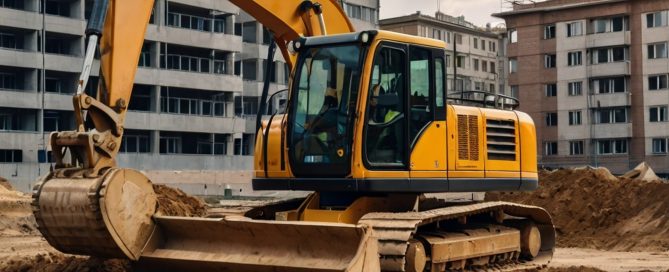
Seasonal Excavator Equipment Financing: Preparing for Your Business' Busy Season [...]

Common Mistakes to Avoid When Financing a Skid Steer [...]
How Financing Construction Equipment Helps You Take Advantage of [...]

Is Tow Truck Leasing a Cost-Effective Solution for Your [...]

How to Choose a Rollback Tow Truck Lease That [...]