How to Preserve Working Capital for Fleet Growth
Learn how to preserve working capital when replacing or adding commercial equipment, with practical financing and purchasing guidance for established fleets

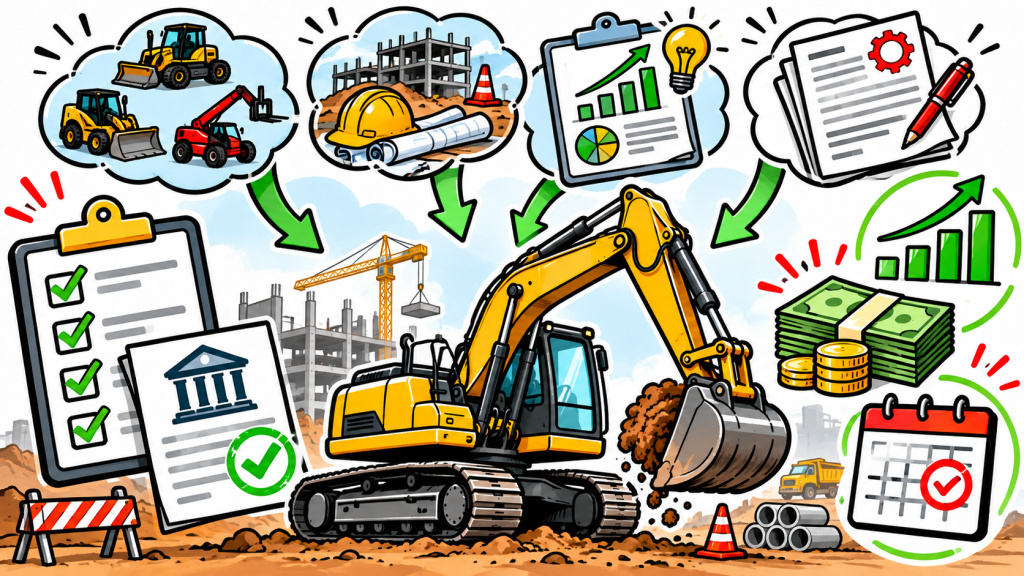
A well-maintained 12-year-old excavator or a high-mileage vocational truck can still be a productive business asset. The question is whether it fits lender guidelines, supports the requested term, and has enough remaining useful life for the work ahead. That is the practical core of older equipment eligibility: age matters, but it is only one part of the financing decision.
For established businesses, used equipment can be a sound way to add capacity, replace an unreliable unit, or preserve cash for payroll, fuel, materials, and other operating needs. Financing an older asset is often possible, but it generally requires a closer look at condition, value, seller, documentation, and the business buying it.
Older equipment eligibility refers to whether a finance source is willing to consider a used asset that falls outside its standard age, mileage, or term guidelines. Those guidelines vary materially by equipment category and lender program. A late-model sleeper tractor with documented maintenance is evaluated differently from a 20-year-old crane, a used rollback, or a skid steer purchased through a private seller.
The equipment itself is collateral. If a borrower stops making payments, the finance source needs confidence that the asset can be located, resold, and valued with reasonable certainty. As equipment ages, resale markets may narrow, repairs may become less predictable, and values can be harder to verify. That does not automatically make the transaction unfinanceable. It does mean the deal needs to be structured around realistic collateral risk.
For the borrower, the main issue is equally practical: will the payment term align with the asset’s expected working life? Financing a machine for longer than it can reliably produce revenue creates a cash flow problem even if the initial payment looks attractive.
There is no universal cutoff for equipment age. Some programs may consider equipment that is 10, 15, or more years old, while others focus on the asset’s age at the end of the proposed term. A lender might be comfortable with a 2018 box truck on a 48-month structure but not a 2008 truck on the same term. The difference is the projected condition and marketability when the financing term ends.
Mileage and hours often matter as much as model year. A 2015 day cab with 350,000 documented miles may present differently from the same truck with 850,000 miles and no maintenance records. For construction equipment, engine hours, undercarriage wear, hydraulic performance, attachment condition, and service history can be more relevant than the calendar year alone.
Certain asset types tend to receive closer review as they age. Examples include high-mileage Class 8 trucks, older ambulances, specialty recovery units, concrete equipment, cranes, and machines with expensive or difficult-to-source components. By contrast, common equipment with an established secondary market, such as forklifts, trailers, excavators, and skid steers, may have broader financing interest when condition and value support the transaction.
A lender does not need the equipment to be new. It needs a credible reason to believe the equipment will remain serviceable and retain enough value throughout the requested term.
Maintenance records can make a meaningful difference. For trucks, that may include engine rebuild history, service intervals, DOT inspection records, and repair invoices. For yellow iron, buyers should be prepared to discuss recent repairs, operating hours, inspection findings, and major component condition. A current inspection from a qualified technician is not required on every transaction, but it can help when an asset is older, specialized, or priced near the top of the market.
The intended use also matters. A low-hour excavator going into a contractor’s established fleet for routine site work presents a different risk than the same excavator being purchased for unusually demanding demolition work. A used tow truck that will be dispatched around the clock may need a different maintenance reserve than one used as a backup unit.
Businesses should avoid treating an older asset as inexpensive simply because the purchase price is lower. Deferred maintenance, downtime, insurance, tires, emissions components, and replacement parts can change the true cost of ownership quickly. Financing can preserve working capital, but it cannot correct a poor equipment purchase.
Where the equipment is being purchased is often part of the underwriting review. Dealership and established vendor transactions are generally easier to document because the seller can provide a formal invoice, vehicle identification number or serial number, lien information, and sometimes condition details or warranty information.
Private-party transactions can be financeable, but they often require more diligence. The seller must be verifiable, ownership must be clear, and the equipment description, purchase price, serial number, and payment instructions must be consistent. A lien search, payoff documentation, inspection, or appraisal may be requested depending on the equipment and transaction structure.
For titled vehicles, title status is critical. A clean, transferable title and accurate VIN are basic requirements. For non-titled equipment, serial-number verification and proof of ownership take on greater importance. If the seller cannot document ownership or the equipment’s identification is unclear, financing may not be viable regardless of the buyer’s credit strength.
Strong collateral helps, but lenders also evaluate the operating business. Established companies with documented revenue, commercial experience, and a track record of maintaining similar assets generally have more options than buyers entering a new equipment category.
Time in business, business and personal credit profile, existing debt, cash flow, fleet history, and liquidity can all shape the available structures. A company replacing a worn-out unit with a comparable truck is usually easier to assess than a company making a large move into an unfamiliar line of work. A contractor with several financed machines and a proven backlog may be viewed differently than a business purchasing its first piece of heavy equipment.
A down payment may be useful when equipment is older, the purchase price exceeds supportable value, or the borrower wants a longer repayment term. It can reduce the amount financed and demonstrate commitment to the transaction. However, down payment expectations are deal-specific. They depend on the borrower, asset, seller, requested term, and requirements of the financing source.
The lowest monthly payment is not always the best outcome for older equipment. Extending the term may improve near-term cash flow, but it can leave the business making payments after the equipment’s productive life or resale value has declined. A shorter term may raise the payment while reducing total financing cost and limiting the period of equipment risk.
A practical structure considers how the asset earns revenue. A dump truck with a predictable contract, for example, may support a different payment approach than a seasonal landscaping machine. Some businesses prefer to make a larger down payment on an older unit and keep the term conservative. Others may finance a more recent asset with better expected uptime, even if its purchase price is higher.
The asset’s purchase price also needs to make sense against market value. If an older unit is priced well above comparable equipment, the finance source may limit the advance or request additional cash from the buyer. An independent valuation, equipment appraisal, or comparable listings can help clarify the issue, especially for specialty units with limited resale data.
The cleanest transactions begin with complete information. Before seeking financing, assemble the seller’s quote or purchase agreement, equipment year, make, model, VIN or serial number, mileage or hours, purchase price, and any available maintenance or inspection records. Be ready to explain the asset’s intended use and whether it replaces an existing unit or adds capacity.
The business side should be equally clear. Recent bank statements, financial statements, tax returns, debt schedules, and proof of insurance may be requested based on the transaction. Not every request needs every document, but delays often occur when basic equipment or business information is incomplete.
For businesses purchasing older commercial assets, it is useful to involve a specialized equipment finance partner before committing to a seller. Commercial Fleet Financing can review the equipment, borrower profile, seller type, and proposed structure against multiple potential funding sources. That early review can identify age, term, valuation, or documentation issues while there is still time to adjust the purchase or structure.
An older asset can be a productive addition to a commercial fleet when its condition, price, and expected service life support the plan. The right question is not simply whether the equipment is too old to finance. It is whether the transaction is built around an asset that can keep earning, a payment the business can support, and documentation that gives the finance source confidence to move forward.
Learn how to preserve working capital when replacing or adding commercial equipment, with practical financing and purchasing guidance for established fleets
Learn how to finance fleet trailers using structures, documentation, and asset factors that can protect cash flow and keep freight moving in service.
Compare the best ways to fund sprinter vans, from loans and leases to vendor programs, while protecting working capital and matching terms to use well.
This commercial vehicle lifecycle guide helps fleet leaders plan purchases, maintenance, replacement, and financing around uptime, cash flow, and asset value.
This commercial vehicle title guide explains liens, title transfers, VIN checks, and finance steps that help fleets put purchased equipment into service.