Commercial Financing Options for Working Fleets
Compare commercial financing options for trucks and equipment, protect working capital, and put revenue-producing assets into service with confidence.

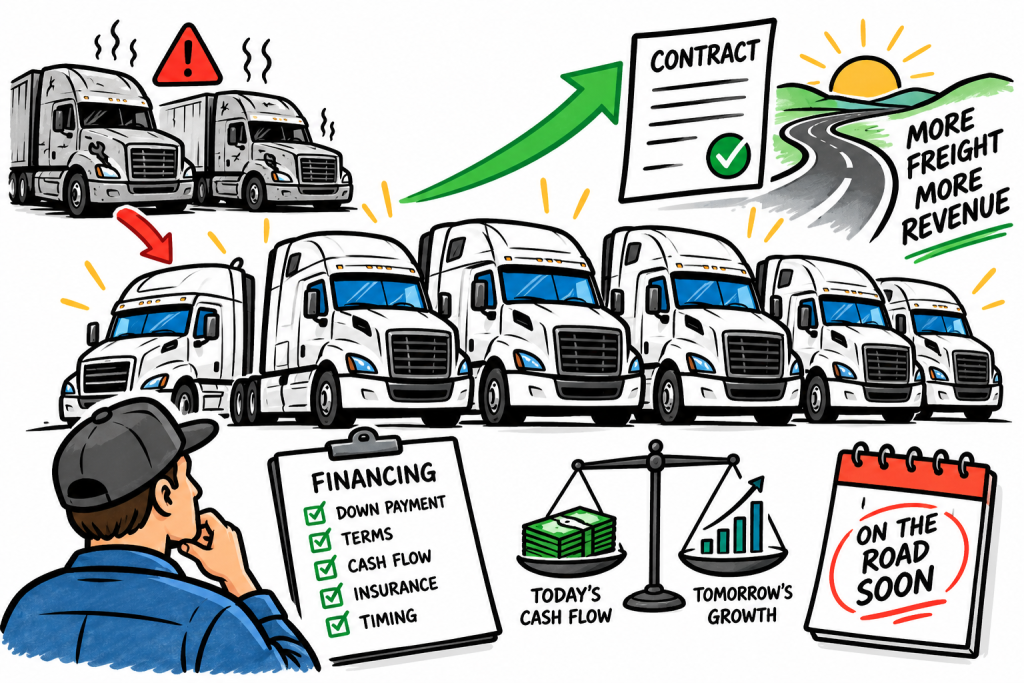
A five-truck purchase can solve an uptime problem or create a cash-flow problem, depending on how it is structured. This multi unit fleet example follows an established carrier replacing two aging tractors and adding three units for new contracted freight. The point is not that every fleet should finance five trucks the same way. It is to show the information, tradeoffs, and timing that matter before a purchase order becomes a monthly obligation.
Assume a regional carrier has operated for eight years, runs 14 power units, and has documented revenue from dedicated and spot freight. Two older tractors are spending more time in the shop, while a new customer contract requires additional capacity within 60 days. The company decides to acquire five late-model sleeper tractors from a commercial dealer.
The replacement units address maintenance exposure and driver complaints. The three expansion units are expected to support revenue already tied to a contract, not speculative growth. That distinction matters. Lenders generally want to understand whether added equipment is replacing revenue-producing assets, supporting known demand, or being purchased ahead of an uncertain opportunity.
For planning purposes, the dealer quote is $155,000 per tractor, or $775,000 before any applicable taxes, fees, warranties, or add-ons. The actual request may include physical damage insurance requirements, titling costs, extended coverage, GPS equipment, or delivery charges. A clean quote that separates the truck price from optional items makes underwriting and closing easier.
A fleet manager may begin with a target monthly payment. That is understandable, but the equipment itself drives much of the financing analysis. On a multi-unit transaction, lenders may review model year, mileage, engine and aftertreatment history, specifications, expected useful life, and the reputation of the seller.
In this example, the carrier chooses five 2023 tractors with consistent specifications and mileage ranges. Buying similar units can simplify maintenance, parts inventory, driver assignment, and resale planning. It can also make the finance request easier to document than a mixed group of older trucks from multiple private sellers.
New equipment, late-model used equipment, and higher-mileage units can all be financeable in the right situation, but they do not present the same underwriting profile. A lower purchase price on older tractors may reduce the initial outlay, yet maintenance risk and lender restrictions can increase. New trucks may offer warranty coverage and longer available terms, but their higher price can create more monthly payment pressure.
The seller also affects the process. A franchised dealer or established commercial equipment seller usually provides a detailed buyer’s order, vehicle identification numbers, titles or title status, and payoff information when applicable. Private-party purchases can be workable, but they often require more verification and may take longer to close.
The carrier has several ways to approach the $775,000 purchase. The right structure depends on its financial statements, liquidity, fleet history, credit profile, and the age and value of the trucks. It also depends on whether the business needs to preserve cash for payroll, fuel, repairs, insurance, or the startup costs associated with the new freight contract.
A straightforward equipment finance agreement or loan with a fixed term is one option. The business makes regular payments and typically owns the equipment after satisfying the agreement. A lease structure may fit other situations, especially where the company wants different end-of-term options or a payment structure aligned with expected asset use. The terminology and ownership treatment should be reviewed carefully with the business’s accounting and tax advisers, since those considerations are outside a financing decision alone.
A down payment can reduce the amount financed and may improve lender comfort, but the lowest upfront contribution is not always the best operational choice. If a carrier uses too much cash at closing, it may have less room for tires, driver onboarding, fuel deposits, or an unexpected repair on a unit still in service. On the other hand, putting more cash into the deal can lower the payment and reduce overall financing cost.
For example, the carrier might choose to contribute $75,000 rather than use all available cash. That leaves a $700,000 base amount to finance before any approved additions. Whether that down payment is sufficient, higher than needed, or unavailable depends on the complete file. Some qualified businesses may have low-down-payment options, while other transactions require a larger investment because of asset age, leverage, credit, or operating history.
A five-unit request should tell a commercial story. Underwriting is stronger when the file explains what the equipment will do on day one.
In this case, the carrier provides a current fleet schedule, recent business bank statements, financial statements, and details on the new contract. It identifies which two current tractors are being replaced, their maintenance costs and downtime concerns, and how the three additional units will be dispatched. The company does not need to claim that every truck will operate at maximum utilization immediately. It does need a credible plan for drivers, insurance, lanes, and revenue.
A lender may also compare the requested equipment count with the business’s existing fleet. Adding five units to a 14-truck operation is different from adding five units to a two-truck operation. Neither request is automatically approved or declined based on fleet size, but the increase should make operational sense. A significant expansion may call for stronger documentation of contracts, management capacity, available drivers, and working capital.
Many multi-unit deals slow down after conditional approval because information arrives in pieces. For a carrier, a complete package often includes the equipment quote or buyer’s order, an application, business formation information, recent bank statements, financial statements or tax returns when requested, proof of insurance or an insurance contact, and details about existing debt.
The exact requirements vary by funding source and transaction size. A lender may ask for an accounts receivable aging, an interim balance sheet, proof of the customer contract, fleet lists, or copies of registration documents. Existing liens and payoffs deserve attention as well, especially when replacement units are tied to trade-ins or when the business plans to sell older trucks after delivery.
Insurance should be addressed early. The policy must meet the lender’s requirements and accurately reflect the new units, garaging locations, drivers, and intended use. A carrier that waits until the final day to add five tractors to its policy can delay closing even if the credit and equipment portions are complete.
The best approval is of limited value if the trucks cannot be delivered and put into service when needed. A multi-unit purchase involves dealer inventory, vehicle inspections, title work, insurance, lender documentation, and often scheduling across several drivers and locations.
The carrier in this example asks the dealer to confirm vehicle availability by VIN before submitting the final package. It also confirms whether the dealer can hold units until documents are complete, whether warranties are transferable, and whether any tractors have pending repairs or emissions-system work. If the fleet needs the units for a contract start date, management should build a buffer rather than assume every administrative step will occur on a specific day.
A specialized equipment finance broker such as Commercial Fleet Financing, Inc. can help qualified businesses present the transaction to appropriate funding sources, coordinate with the vendor, and identify documentation issues early. Timing, available terms, and funding speed remain conditional on the borrower, asset, lender requirements, seller documentation, and final deal structure.
The carrier could buy all five tractors at once, or stage the purchase. Buying together may create operational consistency and reduce repeated administrative work. Staging may preserve flexibility if driver hiring or contract volume is still developing. The better choice depends on certainty of demand and the cost of leaving capacity unavailable.
It could also refinance existing equipment to create liquidity, use cash for a larger down payment, or retain cash and finance more of the purchase. Each path changes the balance between monthly obligations and working capital. The financing decision should be measured against fuel exposure, payroll timing, insurance costs, maintenance reserves, and the expected margin on the freight the trucks will haul.
The practical next step is to gather the dealer quote, fleet list, recent financial information, and a concise explanation of how each unit supports operations. A five-truck acquisition is easier to evaluate when the equipment, revenue plan, and cash-flow strategy all point in the same direction.

Compare commercial financing options for trucks and equipment, protect working capital, and put revenue-producing assets into service with confidence.
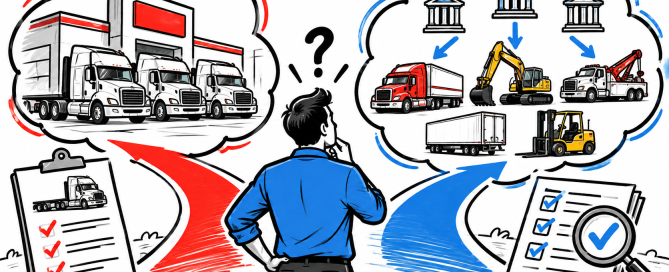
Finance broker versus captive financing: compare lender choice, equipment fit, approval variables, and cash flow before buying commercial assets today.
This multi unit fleet example shows how five commercial trucks can be financed while protecting cash flow, managing documents, and timing delivery well.
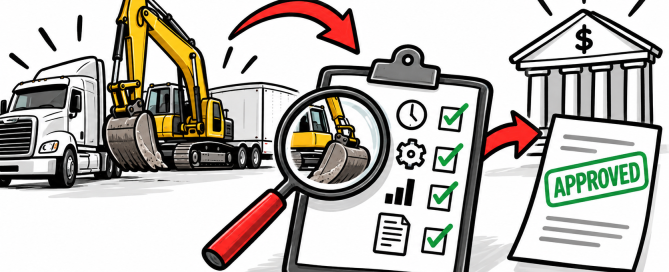
Learn how equipment collateral affects commercial financing, from asset value and condition to advance rates, documentation, and deal structure decisions.
Learn how to evaluate commercial truck mileage before buying or financing, using engine hours, service records, asset age, and intended duty cycle needs.