Advantages of Financing a Dump Trailer for Your Business
Advantages of Financing a Dump Trailer for Your Business [...]

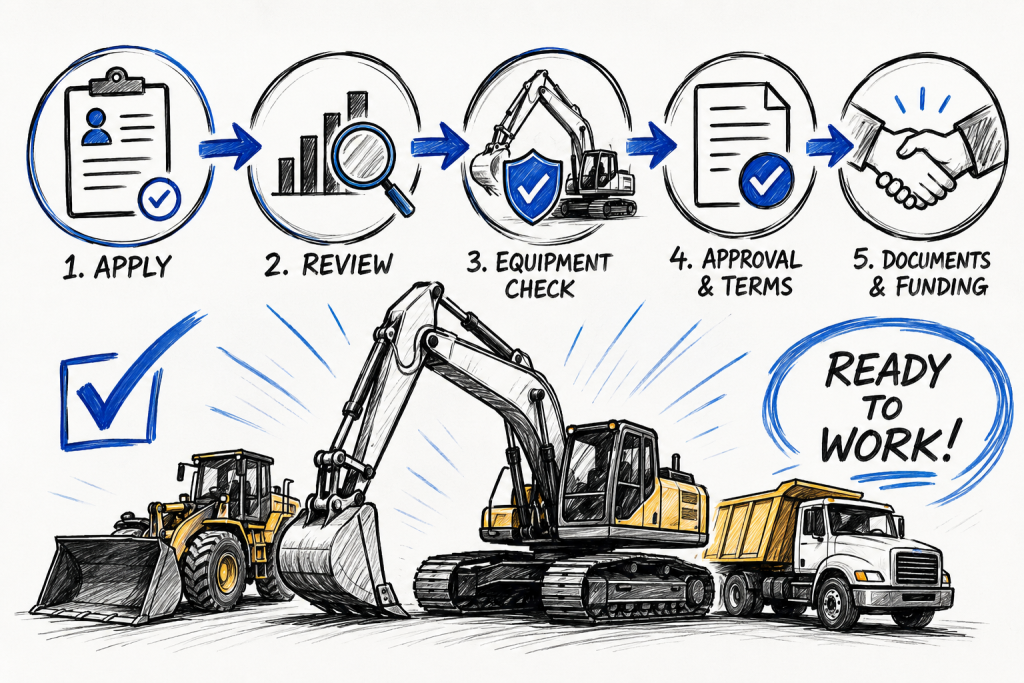
A machine can be ready to ship, a job can be scheduled, and a crew can be standing by – but the deal still stalls if the financing file is incomplete or structured poorly. That is why the heavy equipment approval process explained in plain business terms matters to contractors, fleet operators, and equipment sellers. Approval is not just about credit. It is about the borrower, the equipment, the deal structure, and how well the file supports a revenue-producing purchase.
When a financing source reviews a heavy equipment request, the question is simple: does this transaction make sense, and does the borrower look able and likely to perform as agreed? That review usually starts with the business itself. Time in business, industry experience, revenue trends, cash flow, existing debt, and payment history all help shape the file.
The equipment matters just as much. A late-model excavator from a known manufacturer used in normal commercial service is usually easier to place than highly specialized equipment with a narrow resale market. New and used units can both be financeable, but age, condition, hours, mileage where relevant, and equipment type affect risk.
Then there is the structure of the deal. The amount financed, requested term, down payment, collateral position, and whether the payment fits the business model all influence the approval path. A deal that matches the expected useful life and earning capacity of the equipment is generally stronger than one that stretches terms too far or leaves too little borrower equity in the transaction.
Most transactions move through a predictable sequence, even though the speed can vary by borrower profile, documentation quality, and equipment type.
The process starts with basic borrower and equipment information. That usually includes business name, entity type, time in business, ownership details, requested amount, equipment description, and seller information. For established companies buying common construction or industrial equipment, this first step can move quickly if the application is complete.
What slows things down early is missing context. If the borrower is expanding into a new line of work, buying older equipment, or requesting an aggressive structure, the file may need a stronger explanation from the start.
Commercial financing sources typically review both business and, in many cases, principal credit. They may also look at bank statements, financials, equipment schedules, or invoices depending on the size and profile of the request. Strong credit helps, but it is not the only factor. A borrower with decent but imperfect credit and solid industry experience may present better than a startup with high scores but no operating history.
This is where context matters. A single past issue may be workable if the business has recovered and current performance supports the purchase. On the other hand, frequent recent delinquencies, unresolved tax issues, or thin cash flow can create additional conditions even when the equipment itself is desirable.
Lenders do not approve in a vacuum. They want to know what is being financed, who is selling it, and whether the price aligns with market reality. For new equipment, that may be straightforward. For used heavy equipment, underwriters often pay close attention to age, hours, condition, and source.
A clean invoice from a reputable dealer is usually easier to work with than a vague private-party listing with limited documentation. If the equipment is older, highly specialized, rebuilt, or priced above expected market value, the approval may require more support or a different structure.
Once the file is reviewed, the financing source may issue an approval with terms and conditions. This is where borrowers see the practical side of underwriting. The approval may call for a specific down payment, limited term, additional financial documents, proof of insurance, or confirmation of equipment details.
This stage is also where flexibility can make a difference. Not every lender views every deal the same way. A specialized commercial financing partner can often help match the transaction to a program that better fits the borrower, equipment category, and risk profile.
After approval, the focus shifts to closing the file correctly. That can include finance documents, business formation documents, seller invoices, insurance certificates, and any other stipulations required before disbursement. Funding does not happen just because the deal was approved. It happens when the approval conditions are satisfied and the package is complete.
For borrowers and vendors, this is often where experienced coordination matters most. A missing serial number, insurance mismatch, unsigned document, or title issue can delay an otherwise solid transaction.
Borrowers often assume approval depends almost entirely on credit score. In commercial equipment finance, that is too narrow a view. Approval strength usually comes from a combination of factors.
Time in business can help because it gives the financing source more operating history to review. Still, newer businesses are not automatically excluded. A startup with strong owner experience, meaningful cash injection, and a well-documented equipment purchase may still have viable options.
The use of the equipment also matters. Revenue-producing assets tend to be easier to justify because the lender can see how the unit supports business operations. A dump truck, excavator, forklift, or loader tied directly to contracts, job capacity, or fleet replacement generally tells a stronger story than a marginal or speculative purchase.
What hurts approvals is often preventable. Incomplete applications, inconsistent financials, unrealistic price expectations, and poor communication with the seller are common issues. So is requesting a structure that does not match the file. If a borrower wants the longest term, lowest down payment, and fastest turnaround on older equipment with limited documentation, the deal may need to be adjusted before it works.
An established business buying a standard piece of equipment from a recognized dealer can move much faster than a first-time buyer purchasing an older unit from a private seller. The first file is easier to verify. The second may require more back-and-forth, more documentation, and more risk review.
Some equipment categories are easier to finance because they have broader demand and more predictable resale value. Others are more niche. A common piece of yellow iron may move through review faster than a specialized machine built for a narrow application.
Fast approvals are possible, but speed usually follows preparation. If financials are current, the invoice is clean, the business entity documents are available, and insurance can be bound quickly, the path is smoother. If the file comes together in fragments, delays are more likely.
The strongest applicants think about approval before they submit the file. They know what they are buying, why they are buying it, and how the payment fits cash flow. They also make sure the seller paperwork is accurate and complete.
It helps to have recent business financial information ready, along with basic details about ownership, operating history, and existing equipment. If the business has a seasonal revenue pattern or is coming off a major growth phase, explaining that early can prevent confusion later in underwriting.
Borrowers should also be realistic about structure. Sometimes a larger down payment improves the approval path. Sometimes choosing a newer unit or a better-documented seller makes the transaction easier than pushing for a more complicated purchase. Approval is not only about whether the equipment can be financed. It is about whether the deal can be financed cleanly.
Heavy equipment transactions are rarely one-size-fits-all. A contractor replacing an aging excavator, a site development company adding loaders, and a vendor trying to close a time-sensitive machine sale may all need different solutions. That is where specialization matters.
A commercial financing partner that works with business-use vehicles and equipment every day can often identify issues before they become delays. That may mean helping structure the request properly, gathering the right documentation upfront, or aligning the file with a financing source that understands the asset class. Commercial Fleet Financing works in that practical lane – focused on getting commercial equipment transactions properly packaged, reviewed, and moved toward closing based on the borrower, equipment, and documentation in front of it.
The best approval process is not the one with the most paperwork or the most aggressive promise. It is the one that fits the asset, supports the business, and gets the equipment into service without unnecessary friction. If you approach the file with clear numbers, complete documentation, and a realistic structure, approval becomes much more than a waiting game. It becomes part of a smart equipment acquisition plan.
Advantages of Financing a Dump Trailer for Your Business [...]

How to Choose the Right Dump Trailer Finance Plan [...]
Should You Lease or Finance a Dump Trailer? Adding [...]
How Fleet Owners Can Upgrade to Newer Models With a [...]
How Dump Trailer Financing Helps Contractors and Hauling Businesses [...]