Equipment Collateral: What Lenders Evaluate
Learn how equipment collateral affects commercial financing, from asset value and condition to advance rates, documentation, and deal structure decisions.

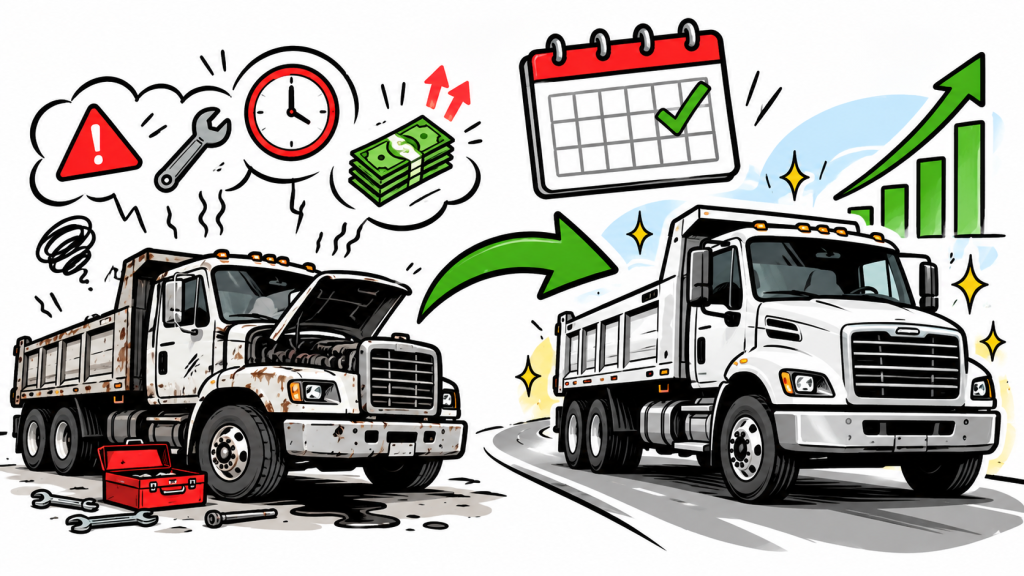
A truck that still runs is not necessarily a truck that still earns its keep. When missed dispatches, repeat shop visits, driver complaints, and emergency rentals begin to stack up, the replacement decision has already become an operating-cost issue. Current fleet replacement trends reflect that reality: established businesses are looking beyond purchase price and focusing more closely on uptime, usable life, maintenance exposure, and the cash flow required to put replacement assets into service.
For a carrier, towing company, contractor, medical transport operator, or delivery fleet, the right replacement timing is rarely based on age alone. A five-year-old vocational truck with well-documented service history may remain productive, while a newer unit with high idle time, harsh-duty use, or recurring emissions-system repairs may be a stronger replacement candidate. The practical question is whether the asset can continue producing predictable revenue without consuming disproportionate management attention and repair dollars.
Mileage and model year still matter, particularly to equipment buyers and financing sources, but they are not the complete story. Fleet managers are paying more attention to total cost of ownership – the combined cost of acquisition, scheduled maintenance, unscheduled repairs, fuel, downtime, and eventual resale or trade value.
This is especially clear in equipment that works under demanding conditions. A rollback may have moderate mileage but extensive PTO use. A dump truck may face heavy loads and jobsite wear. An ambulance or non-emergency medical transport vehicle may require dependable availability to meet service schedules. Construction equipment can accumulate expensive wear based on operating hours, attachment use, and site conditions rather than road miles.
Replacement planning therefore starts with a maintenance and utilization review. Look at repair frequency, days out of service, cost per mile or operating hour, utilization by unit, and whether the equipment is limiting the work the business can accept. If one aging truck repeatedly forces dispatchers to reshuffle routes, its cost is larger than the repair invoice.
There is a tradeoff. Replacing too early can leave useful value on the table, particularly when a fleet has already absorbed the steepest portion of depreciation. Waiting too long can turn a manageable planned transaction into a rushed purchase after a major failure. The best interval differs by asset class, maintenance discipline, duty cycle, and the availability of suitable replacement equipment.
Many businesses are not replacing like for like. They are reassessing what the next unit needs to do for the next several years.
A regional trucking company may move from older sleepers to newer day cabs if its freight mix has changed. A towing business may replace two light-duty units with a heavier wrecker or rollback that can serve more calls. A contractor may select an excavator with different hydraulic capacity because its job mix now includes more utility or site-prep work. These are operating decisions first and equipment-finance decisions second.
The specification should match the revenue plan. Before requesting quotes, clarify payload or towing needs, body configuration, axle ratings, engine and transmission requirements, expected annual mileage or hours, geographic service area, and any customer or regulatory requirements. A lower-priced unit that cannot handle the work is not a bargain. Neither is an overbuilt unit that ties up capital without producing additional revenue.
Used equipment remains an important replacement option, particularly when it is available quickly or when the business wants to control acquisition cost. However, condition, age, mileage, hours, seller type, and documentation become more consequential. A late-model used semi-truck sold by an established dealer with service records is a different financing conversation than an older truck sold privately with incomplete history. The same applies to used yellow iron, trailers, cranes, and specialty vehicles.
A replacement purchase competes with payroll, inventory, insurance, fuel, and project expenses. That is why many established businesses evaluate monthly payment alongside the asset’s expected revenue contribution rather than simply paying cash for every unit.
Financing can preserve working capital for the operating needs that equipment alone cannot cover. Depending on the borrower profile, asset, term, down payment, and lender requirements, a structure may be available that aligns payments with the expected useful life of the equipment. Longer terms can lower the monthly payment, but they may increase total financing cost and can create a mismatch if the business intends to trade the asset sooner. A larger down payment may improve the structure, but it also reduces cash on hand.
For example, a landscaping company replacing several aging dump trucks before its busiest season may prioritize lower monthly obligations and reliable delivery dates. A well-capitalized carrier purchasing a high-demand late-model tractor may prefer a shorter term that builds equity faster. Neither approach is automatically better. The right structure depends on utilization, margins, replacement plans, and the condition of the fleet already in service.
Businesses should also avoid treating a quoted payment as the only decision point. Ask whether the term fits anticipated ownership, whether a balloon or residual structure is appropriate for the asset, and whether the payment leaves room for insurance, upfitting, registration, and initial maintenance. Specialty equipment often has costs beyond the base chassis or machine price.
Availability has made vendor coordination a larger part of replacement planning. A unit may be located, but not ready for work. It might need a body installation, liftgate, towing equipment, refrigeration unit, decals, safety equipment, auxiliary power system, or inspection before it can generate revenue.
The replacement timeline should account for the complete path from quote to deployment. That includes the purchase order, equipment specifications, insurance requirements, title or registration process, lender documentation, delivery, and any upfit work. A fleet that waits until a unit fails may have little flexibility if the preferred configuration is unavailable or requires weeks of preparation.
Dealers and sellers can reduce friction by providing a detailed quote that identifies the equipment clearly, including VIN or serial number when available, year, make, model, price, and relevant attachments or installed equipment. For used assets, maintenance records, photos, and condition details may also help support a cleaner underwriting review.
For established businesses, replacement financing is generally stronger when the story is clear: an existing revenue-producing asset is being replaced with equipment that supports documented operations. Still, every transaction is evaluated on its own facts.
Common considerations include time in business, business and personal credit strength, fleet history, financial statements or bank activity when required, existing debt, cash flow, down payment, equipment age and condition, seller type, and intended commercial use. A business with several years of profitable operations and a consistent fleet history may have more options than a company seeking to finance a highly specialized older asset from a private seller.
Documentation matters because it helps the financing source understand the transaction quickly. Depending on the deal, that can include the equipment quote, business formation documents, tax identification information, recent financials, bank statements, insurance details, and information on existing equipment. Providing complete, consistent documents early can help avoid preventable delays, although approval timing and final terms remain dependent on the full credit and equipment profile.
The most useful replacement schedule is not a rigid calendar. It is a rolling forecast that identifies units approaching higher repair risk, units with weakening resale value, and equipment that no longer matches the work being performed.
Start by ranking assets into three groups: equipment that can remain in service with normal maintenance, equipment that should be monitored closely, and equipment that should be quoted for replacement. Then compare expected repair and downtime exposure against current market availability and the monthly cost of a replacement. This gives management time to evaluate multiple vendors and financing structures rather than accepting the first option available during a breakdown.
A specialized equipment finance broker such as Commercial Fleet Financing can help qualified established businesses organize the financing side of that process, coordinate with vendors, and present a replacement transaction to appropriate funding sources. Available programs, advance rates, terms, and speed depend on the business profile, asset, documentation, and lender requirements.
The strongest replacement plans give the fleet a choice before the equipment forces one. When a business knows which units are nearing the edge of dependable service, it can replace them on its own timetable and keep revenue-producing assets where they belong: on the road, on the jobsite, and working.
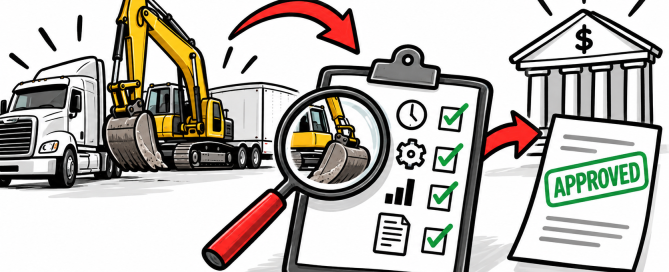
Learn how equipment collateral affects commercial financing, from asset value and condition to advance rates, documentation, and deal structure decisions.
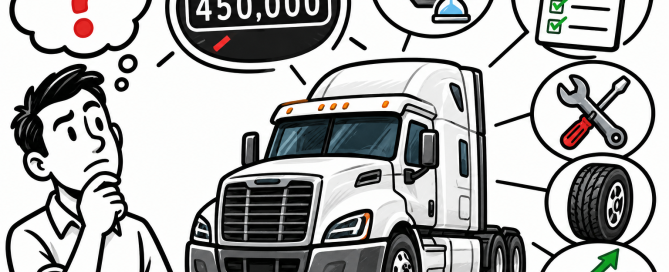
Learn how to evaluate commercial truck mileage before buying or financing, using engine hours, service records, asset age, and intended duty cycle needs.
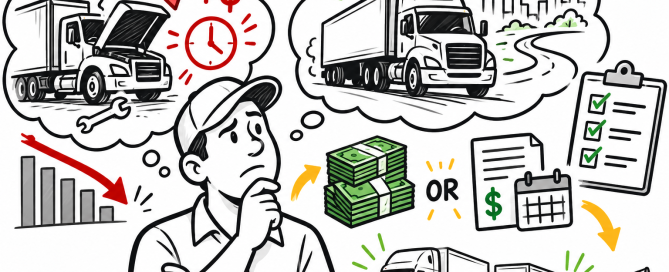
Fleet cash flow affects uptime, buying power, and growth. Learn how established businesses can plan equipment purchases while protecting working capital.
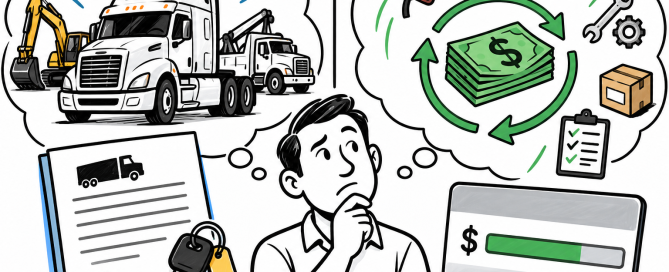
Compare fleet loans versus credit lines for equipment purchases, repairs, and expansion. See how terms, collateral, cash flow, and timing shape the choice.
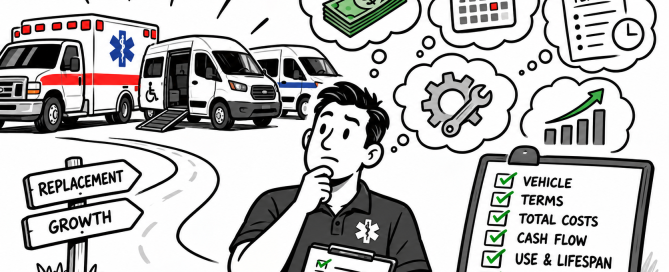
This medical transport financing review explains how established operators can compare terms, protect cash flow, and put the right vehicle in service.