Fleet Replacement Trends Shaping 2026 Decisions
Fleet replacement trends are shifting toward uptime, lifecycle cost, and flexible financing. Learn how established businesses can plan asset upgrades.

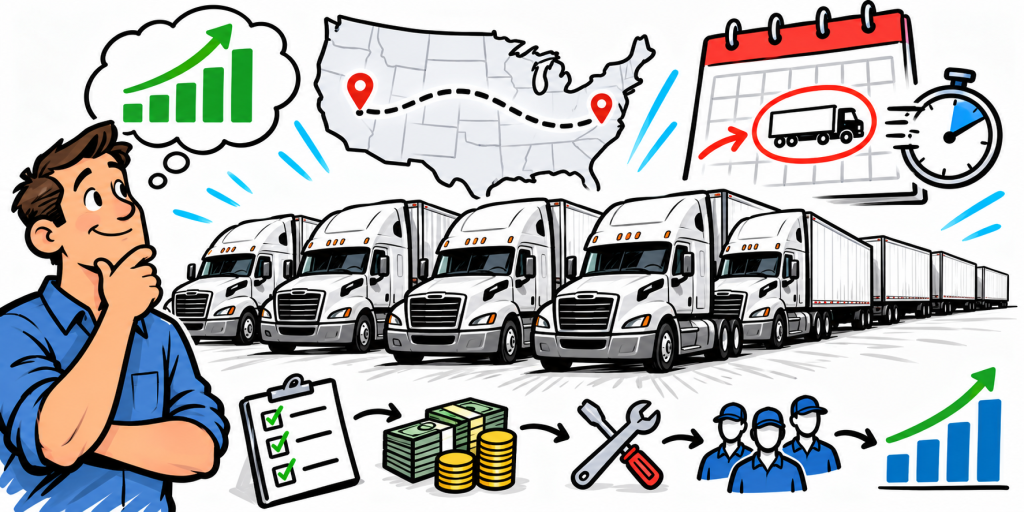
A fleet expansion case study is most useful when it looks beyond the approval itself. The real question is whether the added equipment can enter service on schedule, produce enough revenue to support its payment, and leave the business with adequate cash for payroll, fuel, insurance, repairs, and the next opportunity.
Consider a common situation: an established regional carrier has eight late-model tractors, consistent contract freight, and a chance to add a dedicated lane. The customer requires more capacity within 60 days. The carrier needs four additional sleepers and eight dry van trailers, but paying cash would tie up capital needed for driver onboarding, permits, insurance deposits, and operating reserves.
This example is illustrative, not a description of a specific customer transaction. It shows the questions a well-structured commercial equipment financing request should answer before the business commits to equipment.
The carrier did not start with, “How much can we finance?” It started with a service commitment. The new lane called for four tractors with specifications appropriate for the route, driver availability, and maintenance plan. The trailers needed to meet the shipper’s loading requirements and be available close enough to the tractor delivery date to avoid paying for idle power units.
That distinction matters. A fleet expansion should be tied to a clear revenue plan, whether that is a signed contract, recurring demand from existing customers, a backlog of jobs, or a documented capacity shortfall. Lenders and financing sources generally want to understand the intended commercial use because equipment that supports a proven operation is easier to underwrite than equipment acquired on speculation.
The company had operated for six years, showed profitable tax returns, maintained a solid payment history, and could provide recent bank statements and interim financials. Those facts did not guarantee any particular terms, but they gave the financing request a foundation. The carrier also had a demonstrated record of keeping its current fleet utilized and maintaining equipment rather than deferring repairs until replacement became unavoidable.
The carrier considered new tractors, low-mileage used tractors, and a mix of both. New units offered factory warranty coverage and predictable specifications, but delivery timing was uncertain for some builds. Used units could be available immediately, but mileage, maintenance records, engine configuration, and remaining useful life required closer review.
The trailers presented a different decision. New dry vans gave the company matching specifications and a longer anticipated service life. However, a package of late-model used trailers from a reputable dealer could reduce the initial equipment cost and better match the length of the customer contract.
There is no automatic right answer. A five- or six-year financing term may fit new equipment with a long expected revenue life. For older used assets, a shorter term may be more appropriate, depending on age, mileage, condition, lender guidelines, and inspection results. Stretching the term simply to lower the monthly payment can create problems if the equipment’s useful operating life or resale value does not support the structure.
The company ultimately modeled two scenarios: four new tractors with eight late-model used trailers, and four late-model used tractors with eight new trailers. It compared not only monthly payments, but also warranty coverage, anticipated maintenance, delivery timing, insurance cost, and the risk of equipment being out of service during the first year.
A financing partner’s role is not limited to submitting an application. In a multi-unit transaction, deal structure often determines whether a request fits a funding source’s guidelines and the business’s operating needs.
For this example, the financing package would typically identify the exact equipment, purchase prices, sellers, serial or VIN information when available, and the business purpose of the expansion. It should also explain the carrier’s current fleet, customer concentration, utilization, management experience, and how the new lane supports projected revenue.
The request may be structured as one transaction or separated by asset type. Combining tractors and trailers can simplify administration, while separate schedules may provide more flexibility if the assets have different values, ages, or useful lives. The better approach depends on the funding source, the collateral mix, the seller arrangement, and the borrower’s financial profile.
Down payment is another practical decision rather than a slogan. A stronger established borrower may have options that require a smaller upfront investment, subject to the asset, credit profile, time in business, fleet history, documentation, and lender requirements. In other cases, a down payment can improve the overall structure, reduce the payment, or help address a higher-mileage asset. The carrier compared preserving cash against the benefit of putting more equity into the equipment at closing.
The carrier’s operations manager wanted the equipment delivered quickly. The potential bottleneck was not necessarily the credit decision. It was getting complete and consistent documentation from multiple parties.
A twelve-unit purchase can involve tractor dealers, trailer dealers, insurance agents, title work, invoices, wire instructions, signed finance documents, and proof of entity authority. If equipment is purchased from a private seller, financing sources may require additional verification of ownership, payoff status, condition, and lien position. Dealer transactions are often more straightforward, but they still require accurate invoices and equipment details.
The company reduced friction by assigning one internal point person to collect documents and confirm each unit’s status. It also avoided scheduling drivers around unconfirmed delivery dates. That discipline matters because a verbal equipment hold, an incomplete purchase order, or a delayed insurance endorsement can move a planned closing.
Commercial Fleet Financing, Inc. can help qualified businesses organize a transaction, coordinate with vendors, and present the equipment and business profile to appropriate financing sources. Actual approval and funding timing depend on the borrower, asset, documentation, seller, lender requirements, and transaction structure.
A payment that looks manageable on an annual forecast can still strain operations during a slow collection cycle. The carrier tested the expansion against more than its best-case revenue estimate. Management reviewed fuel, driver wages, maintenance reserves, tolls, insurance, registration, and the delay between delivering a load and receiving payment.
It also considered utilization. Four tractors only add productive capacity when qualified drivers are available and trailers are positioned where the freight requires them. If two units sit waiting for drivers or assignments, the financing payment continues while revenue does not. For that reason, fleet growth should be coordinated with recruiting, dispatch, maintenance staffing, parking, and customer onboarding.
The company set a practical threshold: the projected lane revenue needed to cover the incremental equipment payment and direct operating costs with room for normal volatility. That is not a lender formula, and every business should use its own financial analysis. It is a sound management test, especially when expansion depends on one customer or one contract.
The equipment purchase was not just a financing event. It was a capacity decision, a cash-flow decision, and an uptime decision. The best structure would be the one that aligned asset life, payment level, delivery schedule, and working-capital needs without forcing the carrier to compromise on equipment suitability.
For established businesses, preparation creates options. Before requesting financing, identify the equipment and seller, document the operating reason for the purchase, review recent financial information, and decide how much cash should remain in the business after closing. Be ready to discuss time in business, existing fleet size, equipment age and mileage, intended use, and any unusual aspects of the transaction.
A well-prepared request does not eliminate underwriting questions. It gives the financing process the commercial context needed to address them efficiently and helps the business focus on the outcome that matters most: equipment that is properly matched to the work and ready to generate revenue.

Fleet replacement trends are shifting toward uptime, lifecycle cost, and flexible financing. Learn how established businesses can plan asset upgrades.

This fleet expansion case study shows how established businesses can structure truck financing, protect working capital, and put assets to work faster.

Compare commercial financing options for trucks and equipment, protect working capital, and put revenue-producing assets into service with confidence.
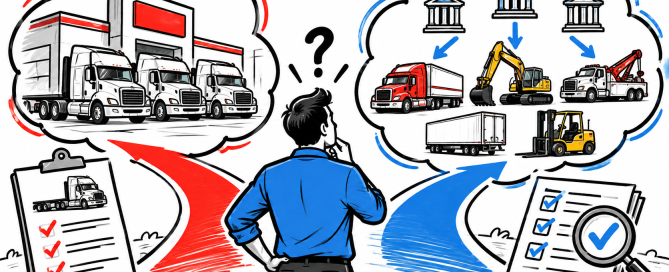
Finance broker versus captive financing: compare lender choice, equipment fit, approval variables, and cash flow before buying commercial assets today.
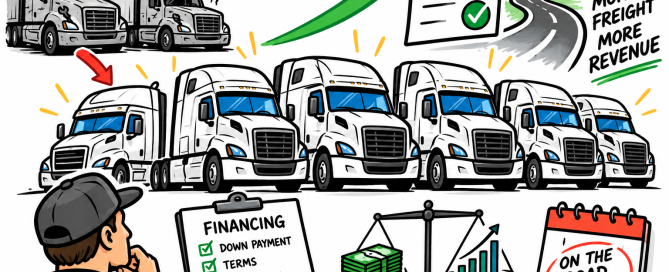
This multi unit fleet example shows how five commercial trucks can be financed while protecting cash flow, managing documents, and timing delivery well.