Fleet Financing Partner Review: What to Check
A fleet financing partner review helps established businesses compare lender access, equipment knowledge, terms, timing, and support before they commit.

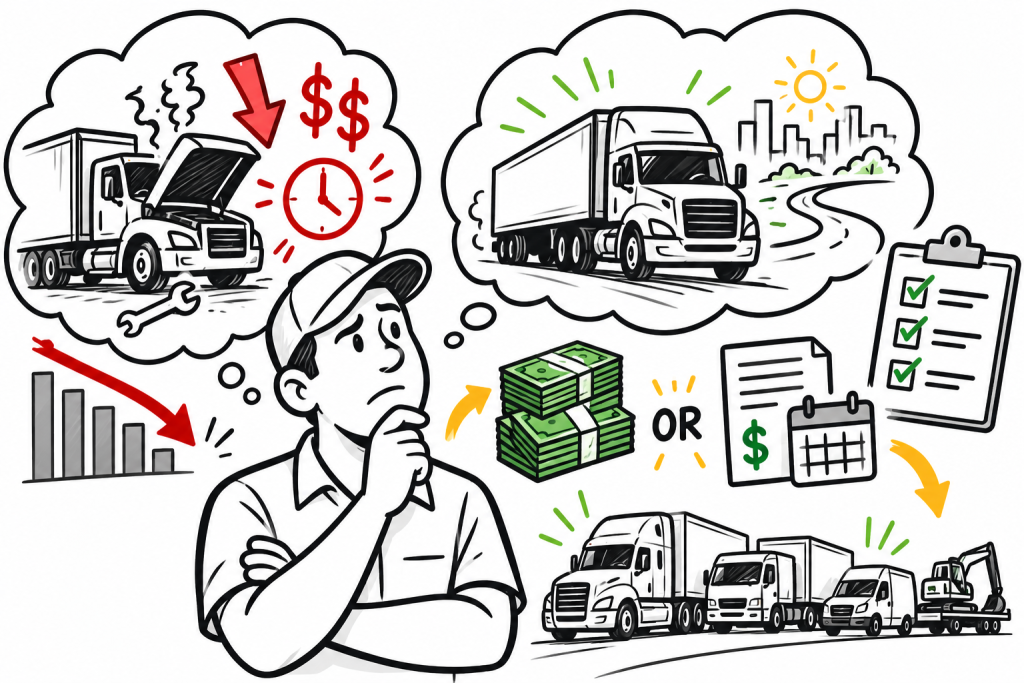
A truck that sits waiting for repairs can drain fleet cash flow twice: first through the repair bill, then through missed revenue. Yet buying a replacement outright can create a different problem if it pulls too much cash from payroll, fuel, insurance, parts, or a busy season’s operating reserve. For established fleet-dependent businesses, the issue is not simply whether a vehicle is affordable. It is whether the timing and structure of the purchase leave the company positioned to operate.
Fleet cash flow is the movement of money into and out of the business as vehicles and equipment produce revenue, consume operating capital, and require replacement. It includes customer payments, fuel, maintenance, driver payroll, insurance, permits, tires, debt service, taxes, and the cash required to acquire the next asset.
A profitable company can still have a cash flow problem. A paving contractor may have signed work and substantial receivables but need several dump trucks before the project begins. A towing company may have a dependable rollback that suddenly needs a major transmission repair during its busiest period. A medical transport operator may win a service contract that requires adding compliant vehicles before revenue from that contract starts arriving.
In each case, the purchase decision has to fit the operating cycle. Cash on hand is valuable because it absorbs delays, repairs, seasonality, and unexpected opportunities. Deploying all of it into equipment can make a balance sheet look cleaner while leaving operations exposed.
Before comparing a cash purchase with financing, start with the asset’s job. What revenue will it produce, what costs will it avoid, and how quickly can it enter service?
For a revenue-producing asset, the relevant question is often whether the expected monthly contribution comfortably supports the payment and related operating costs. A new tractor may reduce downtime and maintenance volatility, but it could also carry higher insurance costs and require a larger initial investment. A used unit may have a lower acquisition cost, but age, mileage, warranty coverage, and maintenance history matter more than the sticker price alone.
Consider a fleet replacing an aging box truck that has become unreliable. The business should estimate the monthly payment, insurance change, fuel impact, preventive maintenance, registration, and driver availability. It should also estimate avoided repair expense and the revenue protected by more dependable service. Those are planning estimates, not lender approval criteria, but they help management decide whether the transaction makes commercial sense.
This analysis is especially important for specialized equipment. A wrecker, excavator, car hauler, ambulance, or refrigerated trailer may earn strong revenue when deployed correctly, but it may not be as easy to substitute, resell, or keep busy during slower periods. The more specialized the asset, the more carefully utilization and exit value should be considered.
A cash purchase can be sensible when the business has excess liquidity after reserving for normal operating needs, the equipment cost is modest relative to available cash, and the asset is not likely to disrupt the replacement schedule. Paying cash also avoids a recurring payment obligation and can simplify a smaller transaction.
The trade-off is concentration. A company that uses $250,000 of working capital to purchase several trailers may have less flexibility to cover a large deductible, take advantage of a bulk tire purchase, bridge slow-paying receivables, or put a newly awarded contract into service. The decision becomes more consequential when multiple assets need replacement within a short period.
Financing spreads the acquisition cost across the period in which the asset is expected to generate revenue. That can preserve liquidity, but the payment must fit the company’s actual cash flow, not an optimistic projection. Financing also adds documentation, lender requirements, and potentially a down payment or advance payment depending on the borrower, asset, seller, and structure.
There is no universal answer. A mature company with strong cash reserves may pay cash for lower-cost support equipment and finance higher-value trucks. Another business may finance a larger share of its acquisition plan to retain cash for expansion, inventory, labor, or seasonal demand.
Reactive replacement usually costs more. When a truck fails unexpectedly, the business may face lost work, rental expense, expedited repairs, higher freight costs, or pressure to buy whatever is available rather than the asset that best fits the operation.
A practical replacement schedule tracks each unit’s age, mileage or hours, maintenance trend, utilization, expected resale value, and service criticality. A high-mileage tractor on a dedicated route may remain productive longer than a lower-mileage vocational truck with severe stop-and-go use. The relevant measure is not age alone. It is the asset’s reliability, operating cost, and role in the fleet.
Reviewing this schedule at least annually gives management time to compare vendors, evaluate new versus used equipment, and line up documentation before the need becomes urgent. It also helps avoid stacking too many replacements into one quarter, which can place unnecessary strain on fleet cash flow.
Term length is a cash flow lever, but stretching a payment as far as possible is not always the best move. A longer term may lower the monthly payment and preserve near-term liquidity. However, it can leave the business making payments after the asset has become costly to operate or difficult to keep in service.
A shorter term generally increases the payment but may align better with a faster replacement cycle or equipment that will be sold before it ages out. The appropriate structure depends on asset type, anticipated use, condition, expected holding period, and the company’s broader capital plan.
For used equipment, asset age and mileage often influence available structures. A late-model truck with documented service history may be viewed differently from an older unit with high mileage, even if both appear suitable on a vendor listing. Buyers should provide accurate year, make, model, VIN, mileage or hours, purchase price, seller information, and intended business use early in the process.
The purchase price is only part of the capital requirement. A fleet adding a truck may also need cash for upfitting, decals, telematics, plates, insurance deposits, driver onboarding, repairs identified at delivery, or a body installation. A construction business acquiring an excavator may need attachments, transport, site preparation, and additional labor before the machine produces revenue.
Build these costs into the project budget instead of treating them as afterthoughts. A transaction that appears manageable on a monthly payment basis can still squeeze operating cash if the first 30 days require substantial out-of-pocket spending.
Timing also matters. If the vendor requires a deposit, the equipment is being purchased from a private seller, or a body builder must complete work before delivery, the funding sequence may differ from a straightforward dealer purchase. Clear coordination among the buyer, seller, insurer, and financing partner reduces avoidable delays.
Established businesses can improve the process by preparing for the questions a funding source is likely to ask. Credit strength matters, but so do time in business, fleet history, existing debt, bank statements or financial statements, recent revenue, equipment details, and the purpose of the acquisition.
A replacement unit for an established operator with documented revenue and a well-maintained fleet presents a different profile than a large expansion involving unfamiliar equipment or a new operating segment. A business adding five tractors may need to show how it will staff, insure, dispatch, and keep those units productive. Lenders may also consider the asset’s age, mileage, resale market, and whether the seller is an established dealer or a private party.
A specialized equipment finance broker such as Commercial Fleet Financing can help qualified businesses present the transaction to appropriate funding sources, evaluate structure options, coordinate with vendors, and work through documentation requirements. Approval, down payment, terms, and funding timing remain dependent on the full credit profile, asset, documentation, lender requirements, and deal structure.
The best fleet acquisition plan protects the company’s ability to serve customers. That may mean financing a replacement before repair costs and missed work become disruptive. It may mean keeping more cash available for operating needs while adding equipment tied to contracted demand. Or it may mean delaying an expansion until utilization, staffing, and customer commitments support it.
The useful next step is not to chase the lowest possible payment in isolation. Review the replacement schedule, cash reserve, equipment quote, projected operating costs, and expected revenue together. When the equipment, structure, and operating plan are aligned, the asset has a better chance of strengthening the business from its first day in service.
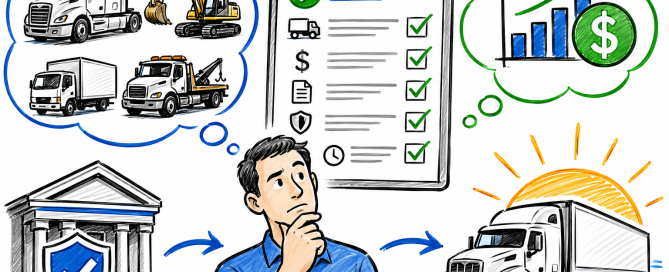
A fleet financing partner review helps established businesses compare lender access, equipment knowledge, terms, timing, and support before they commit.

Learn how to finance ambulances with terms that protect cash flow, fit vehicle specifications, and help qualified medical fleets stay ready for service.
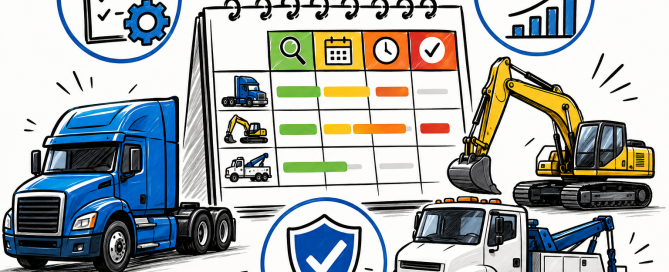
Learn how to plan equipment replacements around uptime, cash flow, resale value, and financing so your fleet stays productive as assets age and costs rise.
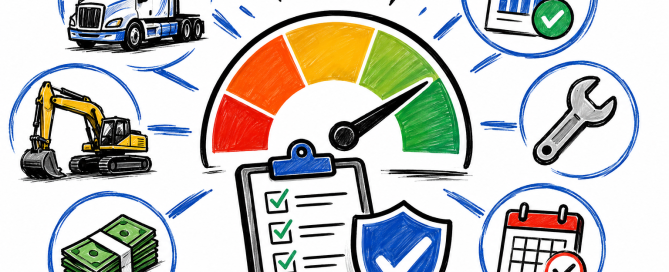
What credit score matters in commercial equipment financing? Learn how business and personal credit, asset quality, and deal structure affect options.
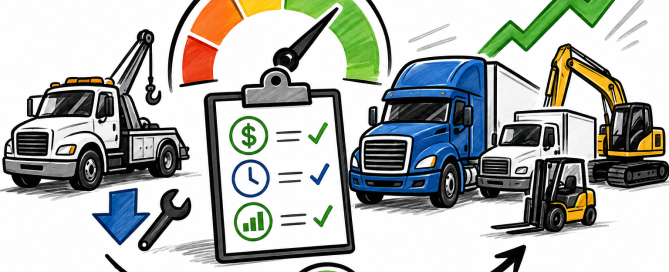
Learn when fleet financing makes sense for replacing aging equipment, preserving working capital, and adding capacity without disrupting daily operations.