Fleet Replacement Trends Shaping 2026 Decisions
Fleet replacement trends are shifting toward uptime, lifecycle cost, and flexible financing. Learn how established businesses can plan asset upgrades.

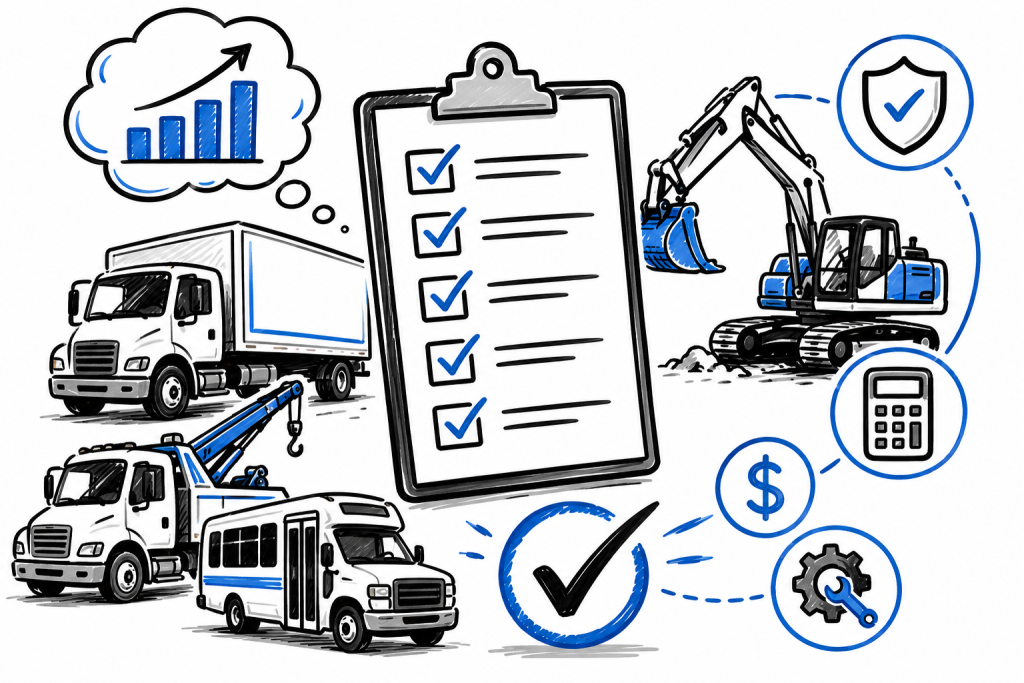
A truck, trailer, rollback, excavator, or shuttle bus only earns its keep when it is correctly specified, available for work, and affordable within the operating plan. A disciplined fleet acquisition checklist helps purchasing teams avoid a familiar problem: buying an asset that looks right on a quote but creates preventable downtime, cash flow pressure, or operational constraints after delivery.
For an established business, equipment acquisition is not simply a purchasing decision. It is a capacity decision, a maintenance decision, and often a financing decision. The checklist below is designed for fleet managers, owners, CFOs, and operations leaders who need to put revenue-producing assets into service without losing sight of total cost or lender requirements.
Begin with the work, not the unit. Define the routes, payload, duty cycle, jobsite conditions, driver or operator requirements, and customer commitments the equipment must support. A regional delivery operation may need a box truck with a specific cargo configuration and liftgate capacity. A towing company may need a wrecker with the right boom rating, wheel-lift configuration, and chassis setup for its service territory. A contractor may need an excavator that can access constrained jobsites without sacrificing production.
This step protects against both underbuying and overbuying. An underspecified asset can limit revenue, increase wear, and create safety or compliance issues. An oversized or overly specialized unit may cost more to acquire and operate without producing a proportional return.
Ask whether the purchase is a replacement, an expansion, or a new service line. Replacement equipment should be measured against the operating cost and downtime of the asset it will retire. Expansion equipment should have a clear utilization plan: projected work, anticipated hours or miles, staffing, insurance, and expected revenue. For a new service line, be more conservative. The equipment may be financeable, but the business case still needs to support the payment and operating costs during ramp-up.
A fleet acquisition checklist should include a written specification sheet before quotes are requested. This reduces back-and-forth with vendors and helps ensure that comparable quotes are actually comparable.
For commercial vehicles, review the model year, engine, transmission, axle configuration, gross vehicle weight rating, mileage, maintenance history, tire condition, body or upfit details, and emissions equipment. On vocational units, the chassis is only part of the evaluation. The body, hydraulic system, PTO, winch, crane, lift, or recovery equipment must also match the intended work.
For construction and industrial equipment, document hours, service records, undercarriage or tire condition, attachments, hydraulic performance, serial number, and any planned reconditioning. A used excavator with reasonable hours and a complete maintenance record may be a better operational choice than a newer machine with uncertain service history. Conversely, very old equipment or high-hour assets can narrow financing options and increase repair exposure, even if the cash price is attractive.
New equipment generally offers predictable specification and warranty coverage, but delivery lead times can matter. Used equipment may be available sooner and cost less upfront, yet condition verification becomes more important. Neither choice is automatically better. The right answer depends on utilization, budget, replacement urgency, and the business’s maintenance capability.
The purchase price is only the first number. Before approving an acquisition, estimate the asset’s all-in monthly and annual cost, including insurance, fuel or energy use, scheduled maintenance, repairs, permits, registration, telematics, tires or tracks, operator wages, and storage where applicable.
For financed equipment, separate the equipment price from the complete transaction amount. Taxes, delivery, installation, upfits, warranty packages, dealer documentation charges, and eligible soft costs can affect the amount financed. Whether these items can be included depends on the asset, transaction structure, and lender requirements.
A useful internal test is to compare the expected monthly payment and operating cost with the gross profit the unit must generate. If a rollback is expected to add emergency towing capacity, estimate the realistic number of calls, average revenue per call, staffing cost, and utilization needed to carry the unit. Do not use best-case dispatch volume as the baseline.
Also consider residual value and replacement timing. Equipment with strong resale demand can provide more flexibility at the end of its useful fleet life. Specialized bodies, uncommon configurations, or assets with accelerated wear may have a narrower resale market. That does not make them poor purchases, but it should influence the expected holding period and financing structure.
Seller type affects documentation, inspection options, timing, and sometimes financing availability. A franchised dealer, established commercial vendor, auction, manufacturer, or private seller can each require a different process.
Confirm the seller has clear title or authority to sell, accurate VIN or serial-number information, payoff details if there is an existing lien, and a formal buyer’s order or invoice. For used assets, request maintenance records, inspection reports, and photos that show the actual unit, not a similar stock image. If the asset is being purchased from a private party, additional verification may be required before a finance source can proceed.
Delivery timing should be discussed early. A unit that is supposedly available may still need body installation, reconditioning, inspections, title work, or transport. If replacing a down unit, factor the gap between order, funding, delivery, and commissioning into the operating plan.
Financing works best when the business, asset, and transaction are presented clearly from the start. Established businesses should be ready to provide basic company information, ownership details, equipment quotes, and supporting financial documentation when requested. Depending on the request, finance sources may also review time in business, commercial credit strength, bank activity, fleet history, existing debt, utilization, and the business purpose of the equipment.
Asset age, mileage, condition, and seller type can influence available terms. A late-model semi-truck purchased from a recognized dealer may be evaluated differently than an older specialized truck bought from a private seller. The same is true for a new forklift versus a high-hour machine with limited resale support.
Down payment requirements also vary. Some well-qualified transactions may support lower down payment structures, while others require meaningful equity because of the asset, credit profile, business history, or requested term. Preserve working capital where possible, but do not force a structure that leaves the transaction undercapitalized or creates an unnecessarily high payment.
A specialized equipment finance broker such as Commercial Fleet Financing can help qualified businesses compare available structures through multiple funding sources, coordinate with vendors, and identify documentation issues before they delay closing. Approval timing and funding speed always depend on the borrower profile, asset, documentation, seller readiness, lender requirements, and deal structure.
An approved purchase is not yet a productive asset. Before delivery, confirm insurance requirements, licensing, registration, permits, driver qualification, operator training, parking, fuel access, maintenance scheduling, and dispatch or telematics setup.
This is especially relevant for specialized units. An ambulance or non-emergency medical transport vehicle may need additional compliance and interior-equipment review. A dump truck may require site-specific safety planning and body inspection. A new trailer may require compatible tractors, correct hitching equipment, and an updated maintenance program.
Assign ownership for the delivery process. One person should confirm the final inspection, documents, serial numbers, title or registration items, insurance evidence, and any required acceptance paperwork. This reduces the chance that a unit sits idle because a final administrative detail was missed.
The strongest acquisition decisions are not the ones made fastest. They are the ones where the equipment, revenue plan, seller documents, operating budget, and financing request all support the same conclusion. If one area is weak, address it before signing rather than expecting it to resolve after delivery.
A good fleet acquisition checklist gives the team a practical pause point: Does this specific asset solve a defined operating need, fit the budget, meet lender and vendor requirements, and have a clear path to productive service? When the answer is yes, the purchase can move forward with far fewer surprises.
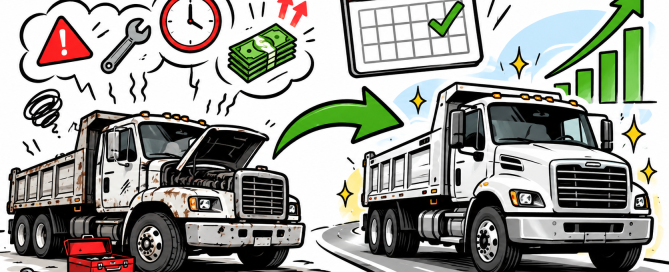
Fleet replacement trends are shifting toward uptime, lifecycle cost, and flexible financing. Learn how established businesses can plan asset upgrades.
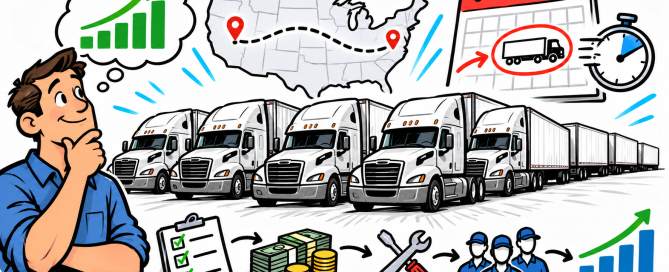
This fleet expansion case study shows how established businesses can structure truck financing, protect working capital, and put assets to work faster.
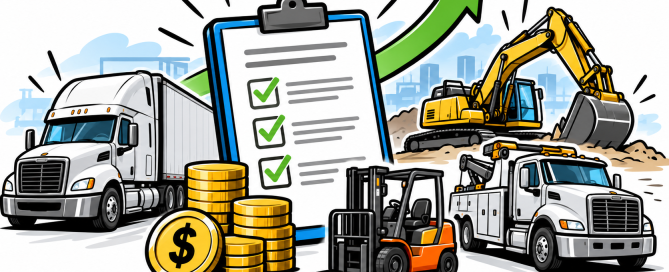
Compare commercial financing options for trucks and equipment, protect working capital, and put revenue-producing assets into service with confidence.
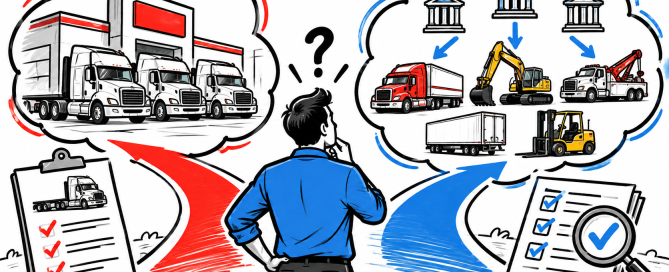
Finance broker versus captive financing: compare lender choice, equipment fit, approval variables, and cash flow before buying commercial assets today.
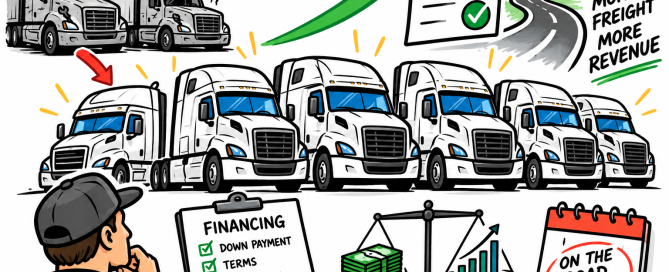
This multi unit fleet example shows how five commercial trucks can be financed while protecting cash flow, managing documents, and timing delivery well.