New Versus Used Excavator Financing
Compare new versus used excavator financing, including approval factors, down payment, terms, uptime risk, and total cost for buyers.


A replacement tractor sitting at a dealer does not produce revenue. Neither does an excavator awaiting delivery, a rollback needed for a new towing contract, or a box truck held up by incomplete financing documents. The finance broker versus direct lender decision affects more than the interest rate shown on a proposal. It can affect how many financing options are considered, whether the structure fits the asset and business, and how quickly the equipment can be put into service.
For established businesses, the better route depends on the transaction. A direct lender can be efficient when its credit box, asset preferences, and program terms match the deal. A specialized equipment finance broker can be valuable when the transaction needs lender selection, practical structuring, or coordination across the buyer, seller, and funding source.
A direct lender makes credit decisions and funds transactions through its own lending program or balance sheet. This may be a bank, an equipment finance company, a captive finance company affiliated with a manufacturer, or another institution that lends directly.
The main advantage is a more direct credit path. If a lender already knows your company, has financed your fleet before, and is comfortable with the equipment being purchased, the process may be straightforward. Your existing bank relationship can also matter when the lender understands your deposit history, operating cycle, and broader borrowing needs.
Direct lending is often worth considering when you are buying new equipment from a manufacturer with a captive finance program. A fleet purchasing several identical new trailers, for example, may find that a manufacturer-supported program aligns well with the transaction. The same can be true for a business buying equipment that fits a lender’s standard asset, age, mileage, and term guidelines.
The tradeoff is that one lender offers one credit policy and a limited set of structures. A lender may like the borrower but decline the specific asset because it is older, specialized, high-mileage, titled in a particular way, or purchased through a private seller. Another lender may be open to that same transaction. A direct lender is not necessarily less flexible, but its flexibility is bounded by its own underwriting requirements and programs.
An equipment finance broker does not replace underwriting. Instead, the broker helps place a transaction with a funding source whose program may fit the borrower, asset, and requested structure.
That distinction matters in commercial equipment financing because equipment is not interchangeable. A late-model sleeper tractor, a 12-year-old wrecker, a specialized ambulance conversion, and a used excavator each raise different questions. Lenders may evaluate resale value, remaining useful life, mileage, condition, title status, seller type, intended use, and the business’s experience operating that asset.
A broker’s role is to understand those variables before presenting the deal. For a qualified business, access to multiple funding sources may create more than one path to approval or more practical choices around term length, advance rate, residual assumptions, payment timing, and documentation. It does not guarantee an approval or a specific rate. It gives the transaction a chance to be evaluated against more than one lender profile.
Commercial Fleet Financing, Inc. operates in this role as a specialized commercial equipment finance broker and financing partner. That means helping established businesses match their truck, trailer, vocational vehicle, or equipment purchase with appropriate financing programs while supporting the documentation and funding process.
A broker is especially useful when a transaction has moving parts. Consider a towing company replacing two aging wreckers while adding a new rollback. The company may have strong operating history and good credit, but the purchase involves different equipment ages, multiple invoices, trade payoffs, and delivery timing. The question is not simply whether the company qualifies. It is whether one lender will handle the entire package on workable terms or whether the transaction should be structured differently.
The same applies to used equipment. A lender may have a maximum age at maturity, which means a 2018 truck financed over 60 months could be treated differently from a 2022 truck over the same term. Mileage can also affect lender appetite for highway equipment. For construction equipment, lenders often focus on condition, hours, model type, and the borrower’s experience in the trade rather than mileage alone.
Broker support can also be practical at the seller level. Dealers and vendors need accurate buyer information, complete invoices, serial numbers or VINs, payoff details when applicable, and clear delivery arrangements. Missing items can delay closing even after a credit decision is issued. A financing partner who understands the paperwork sequence can help keep the transaction moving.
Businesses often assume the fastest option is always a direct lender. Sometimes it is. If the lender has an established relationship with the borrower and the request fits a standard program, direct processing may be efficient.
But speed is not only about how quickly an application is reviewed. It is about avoiding a late decline, a structure that does not fit the equipment, or a documentation issue discovered after a vendor has reserved the asset. A broker may save time by identifying likely lender requirements early and directing the deal to suitable programs rather than sending it through an unfocused process.
Fast decisions or funding in as little as 24 hours can be possible in certain transactions, but they depend on the credit profile, time in business, fleet history, asset, seller, documentation quality, lender requirements, and deal structure. A clean purchase from an established dealer with complete information is generally easier to process than an older unit from a private seller with title issues or incomplete maintenance records.
A low monthly payment can be useful for cash flow, but it does not tell the whole story. When comparing direct-lender and broker-arranged proposals, look at the full structure: amount financed, term, payment frequency, down payment, advance rate, fees, end-of-term options, collateral requirements, and any conditions that must be met before funding.
Payment timing matters for seasonal or contract-driven businesses. A landscaping company may prefer a structure that reflects its operating cycle. A carrier adding units for a signed lane may prioritize preserving working capital for insurance, drivers, fuel, and maintenance. A contractor buying yellow iron may need a term that matches the expected productive life of the machine and the duration of its work backlog.
Ask whether the proposal requires a personal guaranty, whether additional collateral is involved, and whether the lender expects financial statements, tax returns, interim statements, debt schedules, fleet lists, or bank statements. Established businesses with organized records typically move through underwriting with less friction because the lender can verify capacity and operating history more clearly.
Going direct can make sense when you already have a lender that knows your business and offers a competitive, workable structure for the exact asset. It can also be a logical choice for a standardized new-equipment purchase through a manufacturer program, especially when the program is designed for the equipment and the borrower meets its guidelines.
There is no advantage in adding another party simply for the sake of it. If the direct lender provides a clear approval, acceptable terms, responsive communication, and a closing process that fits your delivery schedule, it may be the right answer.
The practical question is whether you are comparing a real financing solution or merely a familiar source. Familiarity is valuable, but it should not prevent a business from assessing asset restrictions, term options, required cash down, and the effect on available bank credit.
A broker may be the stronger choice when lender fit is uncertain, the asset is specialized, or the purchase requires a more deliberate structure. This often includes used trucks with meaningful mileage, mixed fleets, vocational bodies, older but well-maintained equipment, private-party purchases, multi-unit acquisitions, refinance-and-purchase scenarios, or transactions that need to preserve a bank line for operating needs.
The broker relationship should be transparent. Ask how the process will work, what documentation is needed, whether your credit will be submitted to one or multiple lenders, and who will coordinate with the vendor through funding. A capable broker should be able to explain why specific information is being requested and what issues could affect the lender’s review.
Before choosing either path, gather the equipment quote, year, make, model, VIN or serial number, mileage or hours, seller information, intended use, and a clear picture of your business financials. The financing route that serves your operation best is the one that gets the right asset into service on terms your business can support – without creating avoidable delays or tying up capital needed to keep the rest of the fleet moving.
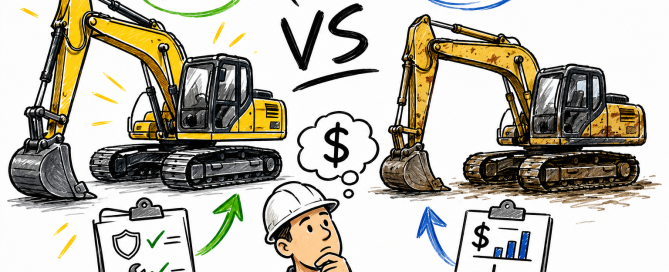
Compare new versus used excavator financing, including approval factors, down payment, terms, uptime risk, and total cost for buyers.
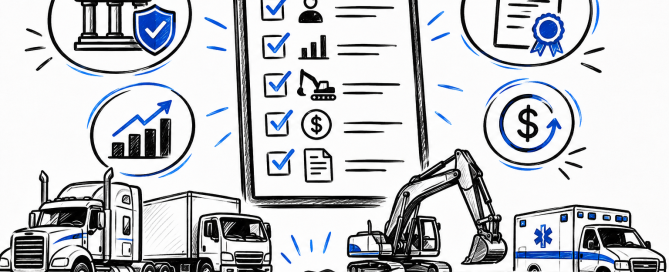
Commercial equipment financing requirements guide for U.S. businesses. Learn credit, cash flow, documents, down payment, and equipment factors.
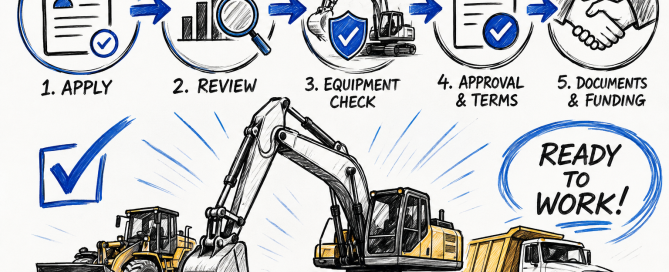
Heavy equipment approval process explained for contractors and fleets. Learn what lenders review, what slows approvals, and how to prepare.
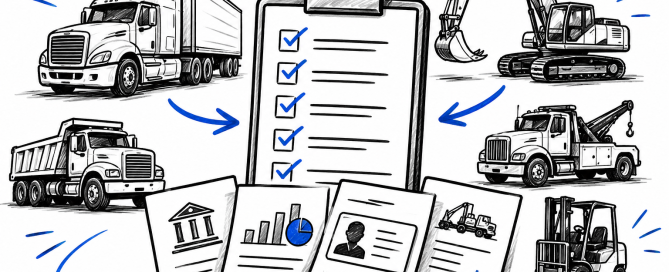
Learn what documents are needed for equipment financing, why lenders ask for them, and how to prepare a cleaner, faster commercial approval file.
Learn how to finance medical transport vehicles with practical guidance on terms, down payments, approvals, vehicle types, and deal structure.