Commercial Financing Options for Working Fleets
Compare commercial financing options for trucks and equipment, protect working capital, and put revenue-producing assets into service with confidence.


A truck with 450,000 miles can be a sensible acquisition for one fleet and an expensive mistake for another. To evaluate commercial truck mileage properly, look beyond the odometer. The truck’s application, engine hours, maintenance history, idle time, component condition, and remaining useful life matter as much as the mileage figure itself.
For an established business replacing a unit or adding capacity, the real question is not whether the mileage is high. It is whether the truck can perform its intended work reliably enough to support the payment, keep drivers productive, and avoid pulling cash out of operations for preventable repairs.
Commercial trucks are built to accumulate miles, but not all miles create the same wear. A highway tractor running long, steady interstate routes may have 600,000 well-managed miles and still be a reasonable candidate for continued service. A comparable truck with 300,000 miles of heavy urban stop-and-go work, extended idling, rough jobsite travel, or overloaded operation may have substantially more wear on its drivetrain, suspension, brakes, and emissions equipment.
Start by identifying the truck’s prior duty cycle and the job it will perform in your operation. A regional dry-van carrier, a construction contractor, a towing company, and a last-mile delivery fleet place very different demands on equipment.
A truck that is acceptable for occasional local use may not be the right fit for a high-utilization route where a missed delivery or roadside breakdown creates immediate revenue loss. Likewise, a higher-mileage sleeper tractor may be more appropriate for a lower-mileage annual-use plan than for a fleet that expects to run 120,000 miles per year.
Mileage makes more sense when viewed against model year and average annual use. Divide the odometer reading by the truck’s age to understand whether it has been worked lightly, consistently, or unusually hard.
For example, a five-year-old Class 8 tractor with 500,000 miles has averaged roughly 100,000 miles per year. That can be normal for a long-haul operation. A five-year-old vocational dump truck with the same mileage deserves closer review because its operating environment, loaded miles, idle time, PTO use, and jobsite exposure may be much more demanding.
Very low mileage is not automatically a positive sign. A truck that sat unused for long periods may have deteriorated tires, seals, hoses, batteries, fuel-system components, or aftertreatment parts. Low miles paired with high engine hours can also reveal extensive idling or PTO operation. The truck may look lightly used on paper while its engine and supporting systems have seen significant service.
Engine hours provide necessary context, particularly for vocational trucks, tow trucks, wreckers, rollbacks, utility vehicles, and units with hydraulic or PTO-driven equipment. Divide mileage by engine hours to calculate average miles per hour.
A highway truck should generally show a higher average than a truck operating in congested urban service. A low miles-per-hour result can indicate idling, but it is not inherently negative. It may be expected for a service truck, crane body, bucket truck, or recovery unit. What matters is whether the hour count aligns with the truck’s stated application and maintenance records.
Ask for idle hours when the truck’s system can provide them. High idle hours can add wear to the engine, emissions system, and auxiliary components without increasing the odometer reading. For a diesel-powered truck, this is particularly relevant when estimating future maintenance needs.
The odometer cannot tell you whether major service has been completed or deferred. A well-maintained truck near a planned overhaul interval may be more predictable than a lower-mileage unit with incomplete records and obvious neglected maintenance.
Review the condition of the engine, transmission, axles, suspension, brakes, tires, cooling system, electrical system, and emissions equipment. On used Class 8 trucks, pay close attention to the diesel particulate filter, diesel exhaust fluid system, exhaust gas recirculation components, turbocharger, sensors, and fault-code history. These systems can affect uptime and repair costs even when the truck appears clean and runs well during a short test drive.
A qualified third-party inspection is often worthwhile, especially on an out-of-state purchase, a private-party transaction, or a truck with higher mileage. The inspection should be matched to the asset. A tractor inspection is different from evaluating a rollback with a hydraulic bed, a wrecker with recovery gear, or a dump truck with a hoist and PTO.
Service documentation is one of the strongest indicators of how mileage has been managed. A seller should be able to provide at least some support for the truck’s operating and maintenance history. Useful records include:
Records do not need to be perfect to be useful. However, a material gap in documentation should affect the purchase price, warranty decision, reserve for repairs, or all three. If a seller cannot explain a major repair, repeated fault code, title issue, or period of inactivity, treat that uncertainty as part of the truck’s cost.
A purchase decision should include a practical estimate of how long you expect to keep the truck and what it will cost to operate during that period. That estimate does not need to be overly precise. It does need to account for planned maintenance, likely wear items, insurance, fuel efficiency, downtime exposure, and eventual resale value.
Consider a fleet choosing between a lower-mileage late-model tractor at a higher price and an older unit with more miles at a lower price. The older unit may produce a lower monthly payment, but it could require more maintenance reserve and carry a shorter useful life in the fleet. The newer truck may preserve uptime and resale value better, but the larger acquisition cost can affect working capital.
Neither choice is automatically right. The appropriate structure depends on utilization, route profile, shop capacity, driver retention, cash flow, and how quickly the business needs the asset to produce revenue.
For a vocational truck, body and equipment condition may be as important as chassis mileage. A 2018 rollback with a sound chassis but a worn bed, weak winch, leaking hydraulic system, or outdated controls can require significant capital after purchase. Evaluate the complete revenue-producing asset, not just the cab and engine.
Mileage can influence equipment-finance options because funding sources assess collateral value, age, condition, expected useful life, and resale market alongside the borrower’s credit profile and operating history. Higher mileage does not necessarily prevent financing, but it can affect term length, advance rate, down payment requirements, documentation, and which funding source is appropriate.
A strong established business with solid credit, consistent revenue, and a documented fleet may have more flexibility than a buyer with limited financial information or an asset outside typical age and mileage parameters. Lenders and financing sources may also look at the seller type. A purchase from a recognized dealer can be easier to document than a private-party sale, although private-party transactions can be workable when title, payoff, condition, and seller documentation are clear.
Before applying, organize the truck quote or purchase agreement, VIN, year, make, model, mileage, seller information, and any inspection or maintenance records. Be prepared to explain how the truck will be used, whether it replaces an existing unit or expands capacity, and how it supports revenue. Those details help an equipment finance broker present the transaction accurately to appropriate funding sources.
Commercial Fleet Financing, Inc. works with established businesses on commercial vehicle and equipment transactions where the asset, borrower profile, and deal structure need to fit lender requirements. For qualified transactions, available options and timing can vary based on credit strength, time in business, fleet history, asset age and mileage, documentation, and the seller involved.
Before committing to a used commercial truck, compare the asking price with its maintenance position rather than its mileage alone. Confirm the VIN and title status, review fault codes, inspect for fluid leaks and uneven tire wear, verify maintenance history, and test the truck under conditions close to its intended use when possible.
Then ask a harder operational question: if this unit needs a major repair within the first six months, can your company absorb the downtime and expense without disrupting customers or delaying other fleet investments? If the answer is no, a newer truck, stronger warranty position, larger repair reserve, or different financing structure may be worth considering.
The best used-truck purchase is rarely the one with the lowest miles or lowest price. It is the unit whose condition, duty cycle, expected service life, and financing structure fit the way your business actually makes money.

Compare commercial financing options for trucks and equipment, protect working capital, and put revenue-producing assets into service with confidence.

Finance broker versus captive financing: compare lender choice, equipment fit, approval variables, and cash flow before buying commercial assets today.
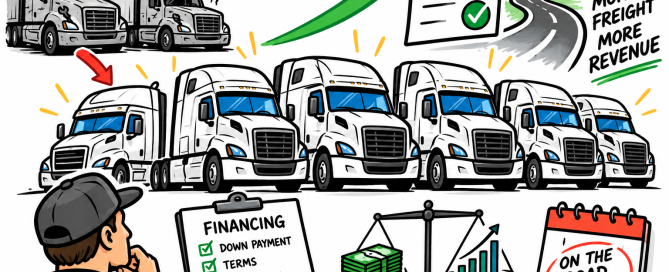
This multi unit fleet example shows how five commercial trucks can be financed while protecting cash flow, managing documents, and timing delivery well.

Learn how equipment collateral affects commercial financing, from asset value and condition to advance rates, documentation, and deal structure decisions.
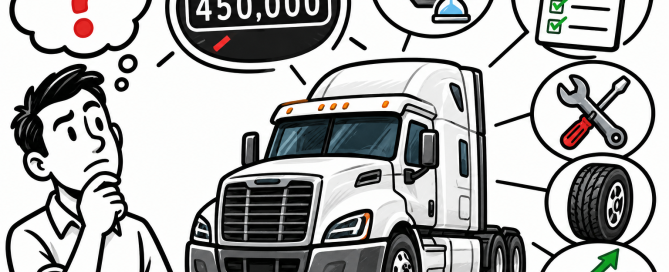
Learn how to evaluate commercial truck mileage before buying or financing, using engine hours, service records, asset age, and intended duty cycle needs.