Why Equipment Age Matters in Equipment Financing
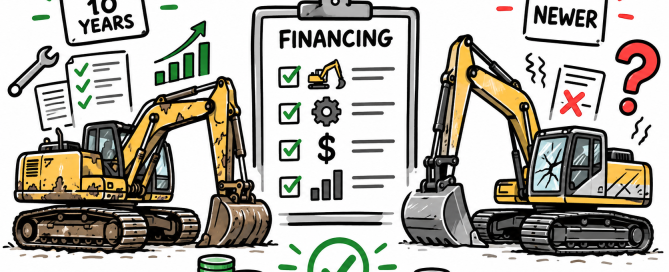
Why equipment age matters in financing: learn how model year, hours, mileage, condition, and seller type can shape terms and approval options on deals.


A truck that is sitting in a shop, an excavator that cannot keep pace with production, or a trailer fleet that has become a maintenance drain creates a more expensive problem than the monthly payment on replacement equipment. The right equipment financing questions help established businesses determine whether a proposed purchase supports cash flow, uptime, and revenue before they commit to a unit or sign a purchase order.
For a qualified commercial borrower, financing is not just a question of getting approved. It is a question of matching the asset, seller, business profile, term, and documentation to a structure that makes operational sense.
Start with the operational case, not the payment. A new rollback may allow a towing company to take on higher-value recoveries. A replacement day cab may reduce breakdowns and keep a dedicated route covered. A compact excavator may let a contractor self-perform work that was previously subcontracted.
Estimate the equipment’s expected utilization, revenue contribution, fuel and maintenance impact, insurance cost, operator needs, and downtime reduction. The answer does not have to be perfect, but it should be grounded in actual operating history. Lenders and financing sources are more comfortable when the equipment has a defined commercial purpose and the borrower can show how it fits the business.
A purchase can still make sense when it does not directly create a new revenue line. Replacing a high-mileage truck before recurring repairs disrupt customers may protect existing revenue and preserve service capacity. The tradeoff is that replacement equipment should solve a real reliability or capacity problem, not simply add debt to an underused fleet.
The asset itself influences available financing structures. New and late-model equipment from recognized manufacturers is generally easier to finance than older, specialized, or heavily modified equipment because its value and resale market are easier to assess.
For used commercial trucks, lenders may consider model year, mileage, engine, maintenance history, title status, and whether the vehicle meets the intended application. An older dump truck with documented maintenance and a clear commercial use may be financeable, but it may require a shorter term or more money down than a newer unit. Similar issues apply to yellow iron, forklifts, trailers, and industrial machinery.
Ask whether the equipment’s remaining useful life supports the proposed term. Financing a unit for longer than the business can reasonably operate it without major expense can create a problem later. A lower monthly payment is useful only if the equipment remains productive through the payment period.
Seller type affects both documentation and funding flow. A dealership or established vendor can usually provide a formal quote, serial or VIN information, equipment specifications, and title or ownership documentation with less friction. A private-party transaction may need additional verification, including proof of ownership, payoff information if a lien exists, photos, inspection details, and a clear purchase agreement.
That does not mean a private-party purchase is automatically unsuitable. It means the transaction must be documented well enough for the financing source to verify the asset, seller, and lien position. Businesses should avoid sending deposits or releasing funds before they understand what documentation their financing structure will require.
Established businesses are generally evaluated on more than a credit score. Common considerations include time in business, business and principal credit strength, annual revenue, bank activity, existing debt, fleet or equipment history, and the relationship between the equipment cost and the company’s size.
A carrier adding its tenth tractor presents a different profile from a contractor purchasing its first large piece of equipment. Neither situation is decided by one factor, but documented operating history and a clear ability to support the payment matter. For transportation businesses, current fleet size, operating authority where applicable, maintenance practices, and the role of the new unit can also be relevant.
Prepare recent business bank statements, basic company information, equipment quotes, and ownership details early. Depending on the request, financial statements, tax returns, debt schedules, proof of insurance, or additional asset documentation may also be needed. Having accurate documents ready can prevent avoidable delays once a unit is located.
There is no responsible universal answer. Down payment requirements can vary based on credit profile, time in business, asset age, seller type, equipment category, transaction size, and the overall structure. Some well-qualified transactions may support low-down-payment or, in limited cases, zero-down options. Other deals may require a meaningful equity contribution.
Instead of treating down payment as a pass-or-fail issue, evaluate it against working capital. Putting more down can reduce the payment and total financing cost, but it also ties up cash that may be needed for payroll, fuel, repairs, permits, inventory, or mobilization. A business replacing several trailers before peak season may choose to preserve liquidity even if it could put more cash into the purchase.
Ask for the payment impact of more than one structure. Comparing a modestly higher down payment with a longer or shorter term gives decision-makers a clearer view of the cash-flow tradeoff.
Many commercial equipment transactions, particularly for closely held companies, may require one or more owners to provide a personal guaranty. That means the guarantor may be responsible if the business does not meet its repayment obligation. Requirements depend on the business, credit profile, financing source, transaction amount, and structure.
This question should be addressed early, especially when ownership is shared. It is better to understand who needs to sign and what information is required before the equipment is scheduled for delivery.
The labels can be misleading because commercial equipment finance programs vary. A loan typically has the business purchasing the equipment and making scheduled payments, while a lease structure may offer different end-of-term options. The practical question is which structure fits the company’s ownership plans, accounting approach, replacement cycle, and cash flow.
A business that intends to keep a specialized wrecker or a well-maintained trailer for many years may prioritize an ownership-oriented structure. A company with a defined replacement cycle for late-model tractors may place more value on payment flexibility or end-of-term options. Tax and accounting treatment should be reviewed with the company’s qualified tax and accounting advisers rather than assumed from a financing proposal.
Longer terms can lower the monthly payment, which may help preserve cash during an expansion. Shorter terms can reduce total financing expense and build equity more quickly. Neither is automatically better.
The right term depends on the equipment’s useful life, expected annual usage, maintenance outlook, and replacement plan. A five-year term may be reasonable for one late-model vocational truck and less suitable for an older, high-mileage unit. For construction equipment, projected hours, job pipeline, and seasonal utilization should be part of the discussion.
Ask whether there are prepayment provisions, end-of-term obligations, documentation fees, or other costs that affect the total transaction. The monthly payment matters, but it is not the whole cost picture.
A financing decision and a completed funding are not the same event. Timing can depend on how quickly the application is completed, whether financial information is requested, the asset’s age and type, the seller’s documentation, insurance requirements, title work, and any lien payoff or inspection needs.
Straightforward transactions involving qualified borrowers, standard equipment, and complete documents may move quickly. More complex deals – such as private-party purchases, older trucks, specialized machinery, or multi-unit acquisitions – often need more review. If a customer contract, seasonal project, or delivery date is driving the purchase, communicate that timeline at the start rather than after approval.
Vendor coordination is easy to overlook until an invoice is missing a VIN, a serial number does not match the quote, or a payoff is needed before title can transfer. A specialized equipment financing partner can help organize the flow of information among the borrower, vendor, and financing source, but the business should still designate one internal contact who can answer operational and documentation questions promptly.
Commercial Fleet Financing, Inc. works as an equipment finance broker and financing partner, helping qualified businesses evaluate available structures and coordinate transaction details across multiple funding sources. The strength of that approach is not a promise of a particular approval or term. It is the ability to consider the full transaction rather than forcing every truck, trailer, or equipment purchase into one program.
Before committing to equipment, put the operating need, asset details, seller documents, available cash, and desired timing on the same page. That conversation usually reveals whether the purchase is ready to move forward, what tradeoffs are worth making, and what needs attention before the equipment is expected to earn its first dollar.
Why equipment age matters in financing: learn how model year, hours, mileage, condition, and seller type can shape terms and approval options on deals.

Learn how to fund equipment upgrades while protecting cash flow, comparing structures, preparing documentation, and putting productive assets to work now.

US fleet financing helps established businesses replace, add, or upgrade revenue-producing equipment while protecting cash flow and planning fleet uptime.

Get clear answers to equipment financing questions about terms, down payments, collateral, documentation, and funding timelines for commercial assets.
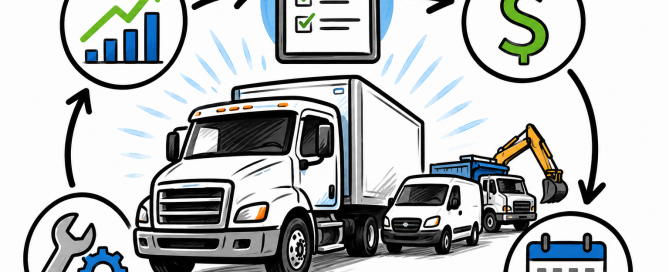
Compare top fleet acquisition strategies for replacing, expanding, and financing commercial vehicles while protecting cash flow and uptime with confidence.