Tow and Recovery Fleet Financing Decisions
Tow and recovery fleet financing helps established operators replace critical trucks, protect cash flow, and put the right equipment into service reliably.

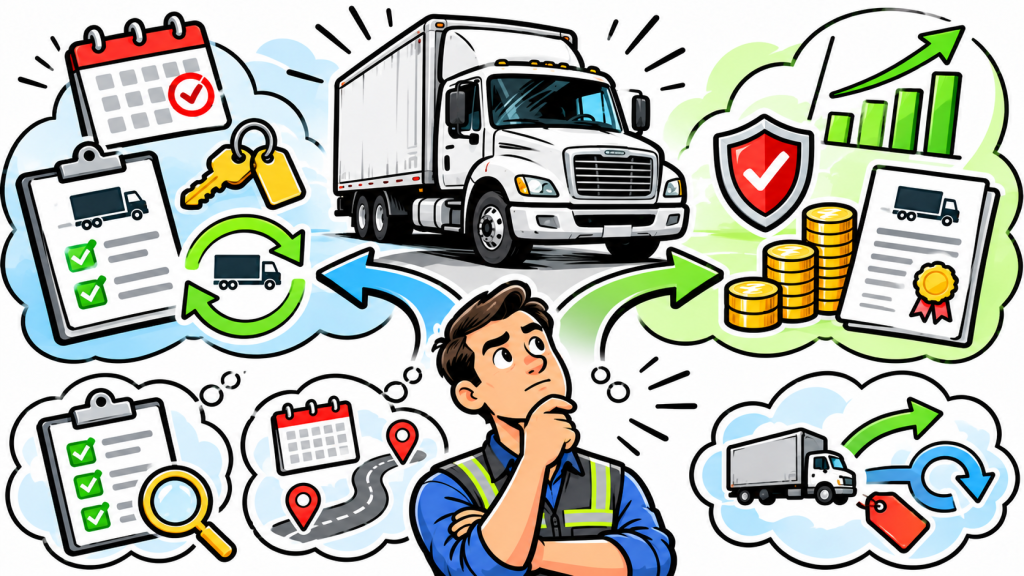
A diesel replacement is usually judged by purchase price, fuel use, maintenance history, and expected service life. An electric truck adds another operational question before the finance application is ever submitted: can the truck reliably complete its route and return to a charging plan that works for the business? Electric truck financing is most effective when the asset, duty cycle, charging infrastructure, and payment structure are evaluated as one operating decision.
For an established fleet, the goal is not simply to acquire an electric vehicle. It is to put a revenue-producing asset into service without tying up more working capital than the transaction requires or creating an avoidable uptime problem.
Electric trucks are not interchangeable with diesel units just because their gross vehicle weight ratings appear similar. A local box truck on predictable urban routes may be a very different finance and operating case than a Class 8 tractor running variable regional miles, or a medium-duty chassis carrying a refrigeration unit, liftgate, towing body, or other power-consuming upfit.
Before requesting quotes, define the truck’s real assignment. Document average and maximum daily miles, idle time, route elevation, weather exposure, payload, trailer use, overnight parking location, and whether drivers can return to a fixed depot. Also account for auxiliary loads. HVAC, refrigeration, hydraulic equipment, power take-off systems, and repeated stop-and-go operation can affect usable range.
This information helps management determine whether the unit fits the operation. It also makes the financing request easier to present clearly. Lenders and funding sources commonly want to understand the asset, seller, purchase price, intended commercial use, and the borrower’s ability to support the obligation. A well-defined replacement or expansion plan is more persuasive than a request built around a vehicle specification alone.
A replacement transaction can be straightforward when a fleet is retiring an aging truck with rising maintenance costs and has documented work for the replacement unit. The business can explain how the new vehicle protects route capacity, driver productivity, and customer service.
An expansion requires a different discussion. The borrower may need to show that added routes, contracted work, utilization trends, or customer demand support another truck and its charging requirements. Neither situation automatically produces a particular approval or term, but the business case matters when a lender evaluates the transaction.
The truck itself is usually the center of the transaction, whether it is a new straight truck, electric tractor, cargo van, or vocational unit. Depending on the seller, equipment package, and funding source, the financed amount may also involve certain permanently installed equipment or vehicle-related costs. The exact treatment of chargers, site work, taxes, delivery, and upfits varies by transaction.
That distinction deserves attention. A truck purchased from an established dealer with a clear invoice and serial-numbered equipment is often simpler to underwrite than a project with several vendors, custom body work, electrical upgrades, and installation milestones. That does not make a more complex project impossible. It means the deal should be structured early, with complete vendor documentation and a clear view of what is being financed by whom.
Charging infrastructure is frequently the dividing line. A fleet may purchase chargers outright, use separate financing for eligible equipment, pay for site work from cash flow, or combine funding sources where the structure permits. Utility upgrades, permits, civil work, and demand charges can sit outside a conventional vehicle financing request. Treating all charging costs as if they will be rolled into the truck payment can create a budget gap late in the process.
The lowest monthly payment is not always the best electric truck financing structure. A longer repayment term may improve monthly cash flow, but it can also increase total financing cost and may not align with the fleet’s expected replacement cycle, warranty coverage, or technology plan. A shorter term can build equity faster but puts more pressure on monthly operating cash.
Down payment is another tradeoff. A stronger business profile, established fleet history, suitable asset, and complete documentation may support more flexible structures in some cases. Other transactions may require more money down because of the vehicle, asset age, concentration risk, mileage expectations, credit profile, or lender policy. The correct question is not, “Can this be done with zero down?” It is, “What structure leaves enough cash available for charging, insurance, payroll, and the first months of operation?”
Payment timing matters as well. A monthly payment is common, but certain businesses have seasonal revenue patterns that warrant a broader discussion. Landscaping, construction, municipal contracting, and specialized hauling do not always generate cash evenly through the year. Any requested payment structure still depends on the credit file, operating history, asset, and participating lender’s requirements.
Established businesses should expect a commercial equipment finance review, not a consumer auto-loan process. Requirements vary, but decision-makers generally evaluate the business and the transaction together.
Credit strength and payment history remain central. So do time in business, annual revenue, debt obligations, bank activity, profitability or cash flow where required, and the company’s experience operating comparable equipment. A fleet with verifiable utilization and a history of managing commercial vehicles presents a different risk profile from a company entering an unfamiliar service category.
The equipment itself also affects the review. Lenders may consider manufacturer, model, purchase price, new versus used condition, mileage, battery and warranty information where available, seller type, and resale considerations. For a used electric truck, documentation becomes even more important. Confirm the vehicle’s condition, remaining warranty coverage, charging compatibility, maintenance records, and whether the truck’s range still fits the assigned work.
A complete file reduces back-and-forth. Common requests can include a detailed equipment quote, business formation information, recent business financials or bank statements when applicable, identification for guarantors, debt schedules, and proof of insurance before funding. A dealer invoice should clearly separate the truck, upfits, freight, taxes, and any non-financeable charges when possible.
An electric truck that cannot charge when it needs to is an expensive parked asset. Fleet managers should verify charging capacity before committing to delivery dates and payment obligations. This is not limited to the charger purchase. It can involve electrical service capacity, utility coordination, installation lead times, permits, parking layout, driver procedures, and backup plans if a charger is unavailable.
Consider the operating schedule in practical terms. If several trucks return at 6 p.m. and must depart at 5 a.m., can the site charge all of them within that window? If the fleet uses public charging, are locations compatible with the vehicle, accessible to larger commercial units, and dependable enough for the route? If a truck is dispatched unexpectedly, does the battery state of charge leave enough operating margin?
These are operating questions, but they influence financing risk and cash flow. A delayed charger installation can leave a financed truck underutilized. A conservative deployment plan may be preferable to replacing an entire route group at once, particularly when the fleet is still validating range and charging assumptions.
Electric truck proposals can look attractive when compared only against diesel fuel expense. A disciplined evaluation includes the complete operating picture: vehicle price, financing cost, electricity pricing, charging hardware, site work, insurance, maintenance, tires, expected downtime, driver training, and residual-value exposure.
Some costs can be estimated with confidence from existing routes and utility bills. Others require assumptions. Electricity rates may vary by time of use, and demand charges can materially change depot-charging economics. Residual values for newer electric truck models may be less predictable than for long-established diesel configurations. The right approach is to label assumptions clearly and test them against conservative and high-utilization scenarios.
Incentives can also affect the project economics, but they should not be treated as guaranteed funding for the purchase. Programs, eligibility rules, application windows, and tax treatment can change. Confirm current details with the relevant program administrator and qualified tax or legal advisers before including an incentive in a capital plan.
Begin with the vehicle quote and a route-level operating plan, then identify every cost needed to put the unit into service. Decide which costs belong in the equipment request and which must be paid separately. Gather business and equipment documentation before a delivery deadline creates pressure.
A specialized equipment finance broker can help organize the request, identify likely lender considerations, coordinate with the dealer or vendor, and compare available structures across multiple funding sources. Commercial Fleet Financing, Inc. works with established businesses to evaluate the equipment, business profile, and transaction details before presenting a financing path.
The strongest electric truck transaction is usually the one built around a proven job, a realistic charging plan, and a payment structure the business can carry through normal operating variation. Start the financing conversation early enough to solve those details before the truck arrives.
Tow and recovery fleet financing helps established operators replace critical trucks, protect cash flow, and put the right equipment into service reliably.
Compare the best trailer financing companies by lender fit, trailer type, asset age, terms, documentation, and funding support for established U.S. businesses.
Use this commercial equipment approval guide to prepare your file, address lender criteria, and keep qualified fleet purchases moving toward funding now.
Compare an equipment lease versus loan for commercial trucks and machinery. See how ownership, cash flow, terms, and asset life shape the right fit today.
Used box truck financing requirements vary by truck age, mileage, seller, credit, and operating history. See what lenders review before you buy for work.