Why Equipment Age Matters in Equipment Financing
Why equipment age matters in financing: learn how model year, hours, mileage, condition, and seller type can shape terms and approval options on deals.

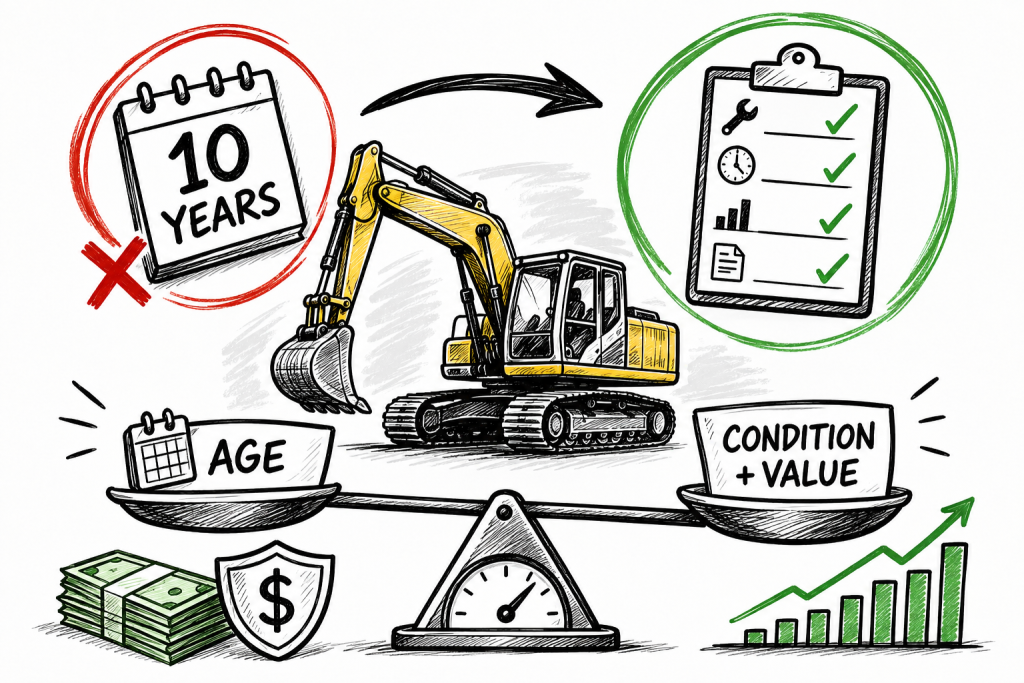
A 10-year-old excavator can be the right purchase for a contractor with a strong maintenance program and a dependable pipeline of work. The same machine can be difficult to finance if its hours are high, service records are thin, and its remaining useful life is unclear. So, does equipment age matter? Yes – but age is only one part of the underwriting picture.
For established businesses, the better question is whether the asset can reliably produce revenue for longer than the financing term. Lenders and funding sources look at the equipment, the borrower, and the transaction together. A newer truck is not automatically an easier approval, and an older unit is not automatically unfinanceable.
Commercial equipment is collateral. If a business cannot meet its obligations, the funding source needs to understand the asset’s resale value, market demand, condition, and likely useful life. Newer equipment often presents fewer valuation questions because it has a clearer market, more predictable depreciation, and more remaining service life.
Older equipment can bring more variables. A 2014 rollback, for example, may have substantial value and years of productive work left when it is well maintained and appropriately priced. But it may also have high mileage, obsolete emissions components, a limited resale market, or a shorter remaining life than the requested term. Those factors can affect the amount financed, required down payment, term length, and available program options.
Age limits vary by funding source and equipment category. A lender that is comfortable with a late-model over-the-road tractor may take a more conservative view of an older specialized crane, ambulance, or piece of yellow iron. The equipment’s ability to perform its intended job and retain value matters more than a single calendar-year cutoff.
A five-year-old dump truck that has worked daily in severe conditions may warrant more scrutiny than an eight-year-old truck with documented maintenance, sensible mileage, and a clean inspection history. For construction and industrial equipment, operating hours, component rebuilds, undercarriage condition, attachments, and service records may be more meaningful than the model year alone.
This is especially true for vocational assets. A wrecker body can have a different useful life and value profile than the chassis beneath it. A trailer may remain productive for many years if its frame, floor, brakes, tires, and maintenance history are sound. A medical transport vehicle may require careful review of mileage, conversion quality, safety equipment, and compliance with the buyer’s operational requirements.
Buyers should not assume an inspection is only for their own protection. Clear evidence of condition can also support a cleaner financing file. Maintenance logs, recent repair invoices, photographs, serial numbers, hour-meter readings, VIN details, and an accurate equipment description help funding sources assess the collateral without unnecessary back-and-forth.
The equipment review is usually tied to the full credit request. Four areas often receive attention:
None of these factors stand alone. A mature company with strong financials, established fleet history, and a meaningful down payment may have more options on a used asset than a newer business buying the same unit with limited documentation.
It often does. On-highway trucks are commonly evaluated through model year, mileage, engine and emissions configuration, maintenance history, and current market value. A used semi-truck with 500,000 miles may still fit a financing program when the purchase price, borrower profile, and requested term are reasonable. At higher mileage, the pool of available structures may narrow, and a shorter term or additional cash investment may make the request more workable.
For trailers, age can be less decisive than structural condition and market demand. Dry vans, reefers, flatbeds, lowboys, and specialized trailers each have their own value considerations. A reefer unit’s operating condition can be particularly relevant because the refrigeration system is central to the trailer’s revenue-producing purpose.
Construction equipment is often evaluated through hours and condition as much as year. An older excavator or loader with a documented rebuild, good undercarriage, and strong local demand may be a more financeable transaction than a newer machine with excessive wear or an inflated purchase price. Specialized attachments should be included in the quote and described correctly, since they may materially affect value.
For specialty vehicles such as tow trucks, car haulers, ambulances, buses, and limousines, underwriting may also separate the chassis from the conversion or body. The conversion quality, title status, intended commercial use, and availability of replacement parts can influence both value and lender appetite.
The tension in used-equipment financing is straightforward: buyers often want the longest payment term possible to preserve monthly cash flow, while funding sources want a term that reflects the asset’s remaining useful life. Stretching payments too far on an older asset can create a poor operating position. The business may still owe a meaningful balance just as repairs, downtime, or replacement needs increase.
That does not mean the shortest term is always best. A shorter term raises the monthly payment and can put pressure on working capital. The right structure weighs payment comfort against repair exposure, utilization, expected revenue, and the company’s replacement cycle.
Consider a landscaping company buying an older skid steer for a dependable seasonal contract. If the machine is priced correctly and has a solid service history, financing may help the company retain cash for payroll, materials, and transportation. But if the payment term extends beyond the likely life of the machine’s major components, the apparent monthly savings may not justify the risk.
A useful internal question is this: if the equipment requires a significant repair six months from now, can the business keep the asset working, make the payment, and protect its operating cash? That answer should shape the purchase price, down payment, warranty decision, and financing request.
The first step is to buy the right asset, not merely the lowest-priced one. An unusually low price may reflect mechanical issues, title problems, missing components, or a seller who cannot provide adequate records. A sound acquisition at a fair market price is generally easier to explain than a bargain that requires extensive assumptions.
Provide a complete package early. That typically includes the vendor quote or purchase agreement, equipment specifications, VIN or serial number, year, mileage or hours, seller information, and current payoff information when a lien is being released. For private-party purchases, additional ownership and title documentation may be necessary.
The business profile also matters. Established time in business, positive operating history, business and owner credit strength, bank statements or financial statements when requested, and prior equipment-payment experience can improve the overall presentation. A down payment or trade-in may help address a higher advance-rate concern, but the need for one depends on the complete transaction rather than age alone.
It also helps to be realistic about intended use. Equipment assigned to a known contract, an expanding route, or a documented replacement need is easier to evaluate than equipment purchased without a clear operating plan. Explain what the asset will do, how often it will run, and whether it replaces a unit with rising maintenance costs or adds capacity to meet demand.
Financing availability should not be the only reason to choose newer equipment. A late-model truck, trailer, forklift, or excavator may offer better uptime, safety features, fuel efficiency, warranty coverage, operator acceptance, and resale value. Those benefits can outweigh the higher purchase price when downtime is expensive or the asset is central to a customer commitment.
On the other hand, newer is not automatically more profitable. A company that understands its maintenance costs and has skilled technicians may produce strong returns from well-selected used equipment. The key is to compare total operating cost, not just the financed payment. Include expected maintenance, insurance, fuel, registration, warranty expense, utilization, and the revenue lost when a unit is unavailable.
Good used equipment can move quickly, particularly common trucks, trailers, and well-maintained construction machines. That makes preparation valuable. Before committing to a purchase, gather the basic business information, identify the seller, confirm the exact asset details, and decide what payment range fits the company’s cash flow.
A specialized equipment finance partner can help an established business present the transaction to appropriate funding sources, identify documentation gaps, coordinate with the vendor, and evaluate structures that fit the asset’s age and intended use. Commercial Fleet Financing works with qualified businesses nationwide on these practical details, but approval, terms, down payment, and funding timing will always depend on the borrower, equipment, documentation, and program requirements.
The goal is not to prove that an older asset is financeable. It is to make sure the equipment can do profitable work long enough for the purchase and payment structure to make business sense.
Why equipment age matters in financing: learn how model year, hours, mileage, condition, and seller type can shape terms and approval options on deals.

Learn how to fund equipment upgrades while protecting cash flow, comparing structures, preparing documentation, and putting productive assets to work now.

US fleet financing helps established businesses replace, add, or upgrade revenue-producing equipment while protecting cash flow and planning fleet uptime.

Get clear answers to equipment financing questions about terms, down payments, collateral, documentation, and funding timelines for commercial assets.
Compare top fleet acquisition strategies for replacing, expanding, and financing commercial vehicles while protecting cash flow and uptime with confidence.