Established Business Equipment Finance Guide
An established business equipment finance guide for evaluating terms, preserving working capital, and putting revenue-producing assets into service now.

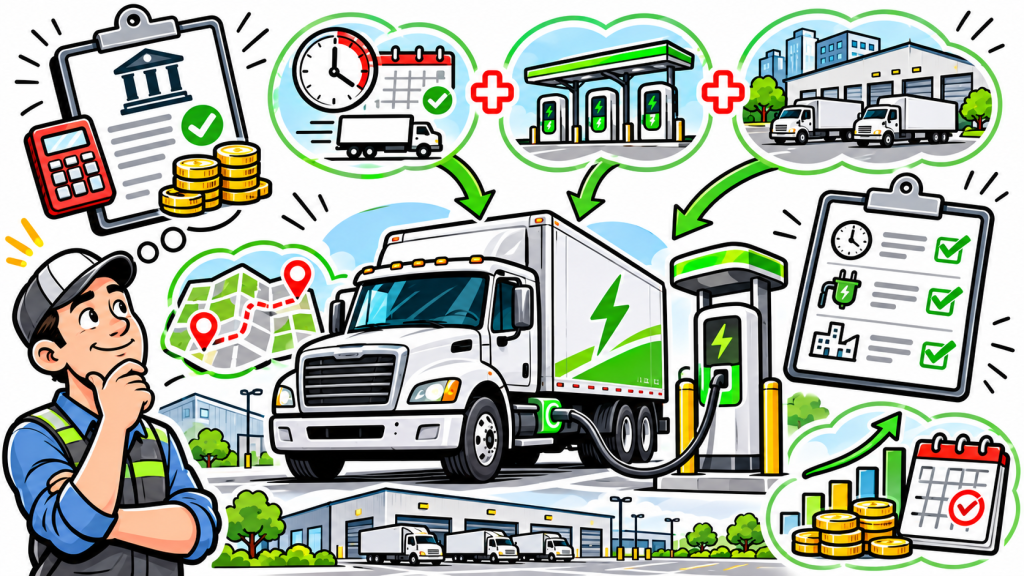
A late-model excavator with documented hours, a clean-title tractor, and a well-maintained rollback do more than support daily operations. They can materially influence how a financing request is structured. So, does collateral affect equipment terms? In most commercial equipment transactions, yes. The equipment being financed is often a central part of the lender’s risk assessment, alongside the strength of the business buying it.
That does not mean a strong asset automatically produces the lowest rate, longest term, or no down payment. A lender still evaluates the borrower, cash flow, time in business, fleet history, existing debt, and the details of the purchase. But equipment that is easy to value, insure, title, and resell usually gives a financing source more flexibility than a specialized or aging asset with a narrow resale market.
In a typical equipment finance transaction, the financed truck, trailer, machine, or industrial asset serves as collateral. The financing source records a lien or security interest in the asset until the obligation is paid according to the agreement. If the borrower defaults, the lender may have rights to recover and sell the equipment, subject to the contract and applicable law.
Because the collateral provides a potential recovery path, its quality affects risk. A new tandem-axle dump truck from an established manufacturer, for example, is generally easier to evaluate than a 15-year-old custom-built specialty unit with incomplete service records. That difference can affect the advance amount, required down payment, repayment term, documentation requests, and which financing programs are available.
The key point for established businesses is that collateral is one factor, not the entire credit decision. A company with strong commercial credit, consistent deposits, and a proven operating history may have more options for an older asset than a newer business with limited financial documentation. Conversely, a high-value asset does not necessarily offset weak repayment capacity or an unresolved tax lien.
Collateral can affect terms in several practical ways. The first is the loan-to-value relationship, often called LTV. This compares the financing amount to the equipment’s supported value or purchase price. When the requested amount is comfortably supported by the collateral, a lender may be more open to financing taxes, delivery, installation, or certain soft costs. When the request exceeds the asset’s supportable value, a larger down payment or additional collateral may be needed.
Term length is another consideration. A financing source generally wants the repayment period to make sense relative to the equipment’s expected useful life, age, utilization, and resale value. A new over-the-road tractor may support a longer term than a high-mileage unit already near the end of its intended fleet cycle. A used excavator with reasonable hours and strong demand may still finance well, but the available structure can differ from a new machine.
Collateral also influences pricing, although it is rarely the only driver. Equipment with broad market demand and predictable values can reduce risk. Common examples include late-model semi-trucks, trailers, forklifts, construction equipment, box trucks, and recognized vocational truck chassis. Highly modified, obsolete, or niche assets can be harder to remarket, which may lead to more conservative terms.
Finally, collateral can shape the approval process itself. Clear title, a reliable serial number or VIN, a detailed invoice, photographs, maintenance history, and a reputable seller all make it easier for a financing source to verify what it is funding. Missing documentation does not always end a transaction, but it can slow the review or narrow lender options.
Lenders do not evaluate every asset the same way. A financed asset is generally more financeable when its value can be supported by reliable market data and it can be resold without unusual complications.
New and late-model equipment often performs well because its age, specifications, and condition are easier to document. Brand recognition matters too. A common manufacturer with an established dealer network, available parts, and an active secondary market is usually simpler to finance than a lesser-known brand with limited service support.
For vehicles, mileage, engine configuration, title status, maintenance records, and intended use can matter. A 2022 sleeper tractor with reasonable mileage and complete records will normally be viewed differently from a heavily used unit with accident damage or an unclear title history. For yellow iron, lenders commonly focus on hours, service history, attachments, emissions configuration, and whether the machine has a market beyond one specialized job.
Seller type also matters. Purchases from an established dealer or manufacturer are often easier to document than private-party transactions. Private sales can be financeable, but lenders may require a title search, payoff verification, equipment inspection, proof of ownership, or additional information before funding.
Some transactions need more support than the equipment alone can provide. This can happen when the purchase includes a substantial amount of non-financeable soft cost, the equipment is older, the requested amount is above supported value, or the business has a credit issue that requires a stronger structure.
Additional collateral may include other unencumbered business assets, but the value of offering it should be weighed carefully. Pledging a paid-off truck, trailer, or piece of machinery can improve the overall risk position, yet it also places another operating asset under a lien. For a business that depends on that asset every day, preserving flexibility may be more valuable than obtaining a marginally better structure.
A larger down payment can be a cleaner alternative. It lowers the financed balance, gives the borrower immediate equity in the equipment, and may expand program availability. The trade-off is working capital. If a growing carrier uses too much cash for the down payment, it may have less available for insurance, tags, payroll, repairs, fuel, and the first weeks of operating expense.
In some cases, a personal guaranty may also be requested for a closely held business. That is different from collateral. A guaranty adds a repayment commitment from an owner, while collateral gives the financing source a security interest in identified property. Established businesses should understand both obligations before choosing a structure.
For revenue-producing equipment, lenders typically want to see that the borrower can operate and pay for the asset. The business profile often carries as much weight as the collateral.
A fleet adding two tractors may present a strong request when it has several years in business, consistent revenue, a documented maintenance program, stable insurance, and contracts or operating history that support added capacity. A towing company replacing an aging wrecker may benefit from a similar track record, especially when the replacement improves uptime and reduces repair exposure.
Useful documentation often includes recent business bank statements, financial statements when requested, a completed credit application, equipment invoice, insurance information, and details on existing liens or trade-ins. The exact requirements depend on the transaction size, credit profile, equipment type, seller, and financing source.
It is also worth matching the payment structure to how the asset earns revenue. A construction company with seasonal billing may need a different payment pattern than a medical transport provider with steady contracted routes. The best structure is not simply the longest term or lowest initial payment. It is the one that supports cash flow without keeping debt on an asset longer than its economic usefulness.
Consider two established companies buying comparable $150,000 used rollbacks. Company A buys a late-model unit from a reputable dealer, with a clean title, documented service records, reasonable mileage, and a strong resale market. The company has several years of profitable operations and a history of managing comparable trucks.
Company B is purchasing from a private seller. The truck has higher mileage, customized equipment, incomplete maintenance records, and a payoff that must be resolved before title can transfer. Its operating history is solid, but the asset documentation creates more work and uncertainty.
Both companies may be financeable. Company A is more likely to receive a straightforward review because the collateral and transaction documentation are easier to verify. Company B may still have options, but a lender could request a down payment, inspection, additional title work, or a shorter term. The difference is not simply the truck price. It is the total risk picture.
Before requesting equipment financing, gather the information that lets a financing partner present the asset accurately: the purchase order or invoice, year, make, model, VIN or serial number, mileage or hours, detailed specifications, seller contact information, and any available maintenance or title records. If there is a trade-in or an existing payoff, document that early.
It also helps to be direct about intended use. A box truck used for regional delivery, an ambulance configured for emergency service, and a heavy wrecker each have different operating and resale considerations. Clear information helps avoid a structure that looks acceptable at application but cannot meet a lender’s equipment guidelines later.
Commercial Fleet Financing can help established businesses evaluate how the equipment, seller, and borrower profile may fit available financing programs. A productive first conversation starts with the asset details and the business purpose behind the purchase. When the collateral is well documented and the financing structure reflects the equipment’s real operating life, the transaction has a better chance of moving from quote to equipment in service with fewer surprises.
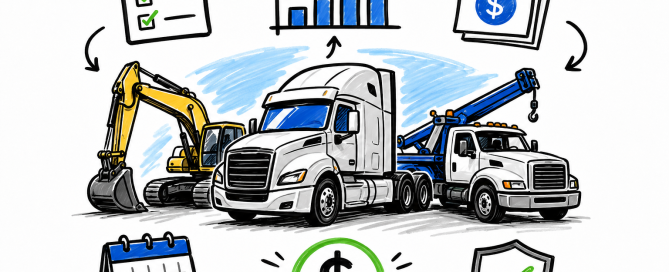
An established business equipment finance guide for evaluating terms, preserving working capital, and putting revenue-producing assets into service now.
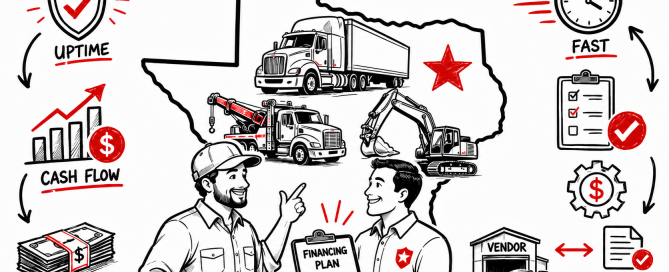
Choosing a commercial financing partner Texas businesses can rely on means weighing equipment knowledge, lender access, structure, and responsive execution.
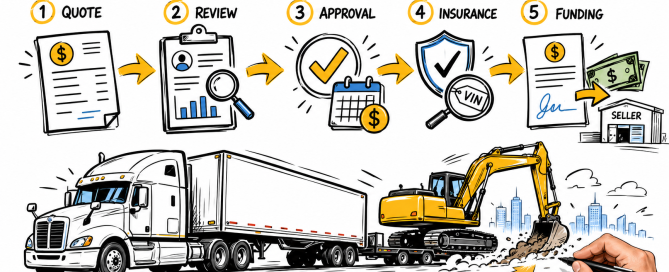
Understand the equipment finance process, from equipment quote and credit review through approval, documentation, vendor payment, and delivery planning.
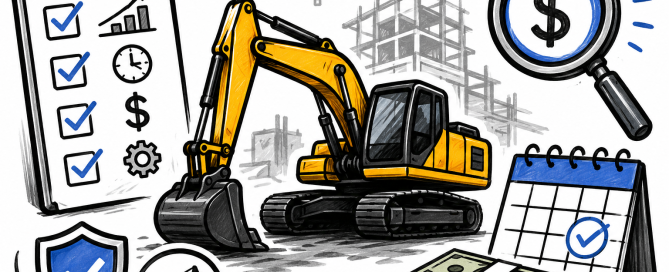
A construction equipment loan review for established businesses: assess terms, collateral, cash flow, asset age, and lender fit before you fully commit.
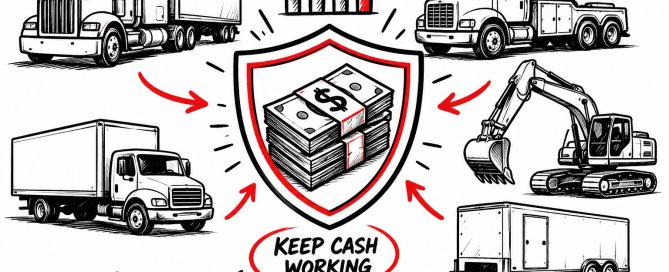
Fleet financing helps businesses replace, expand, or upgrade revenue-producing equipment while managing cash flow, uptime, and lender requirements well.