
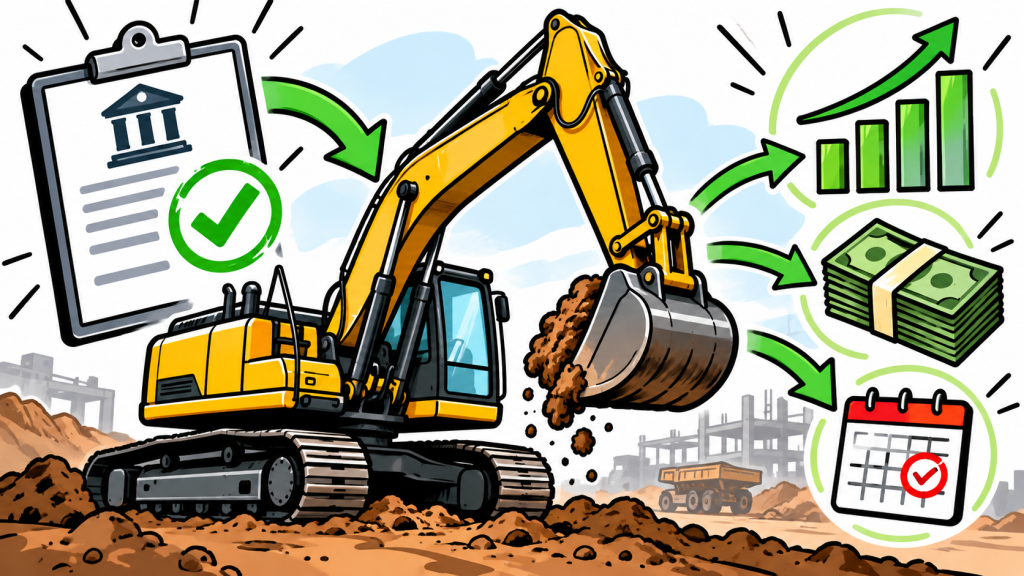
Construction Financing for Equipment That Earns
A contractor can lose more margin waiting on a machine than on the interest cost of financing it. When an excavator is down, a compact track loader is too small for the next phase, or a dump truck is tied up on another job, crews wait, schedules slip, and rental bills grow. Construction financing is primarily a capital-planning decision: how to put the right revenue-producing asset into service without draining the cash needed to operate the business.
For established contractors, demolition companies, sitework firms, paving crews, utility contractors, and material handlers, the best structure depends on more than the purchase price. The equipment, seller, business history, fleet profile, cash flow, and intended use all affect what financing options may be available.
When construction financing makes business sense
Paying cash is not always the lowest-risk choice. A $180,000 used excavator paid for in full may avoid monthly debt service, but it can also reduce the liquidity available for payroll, fuel, insurance, repair reserves, job mobilization, and materials. That tradeoff matters when receivables are paid on 30-, 60-, or 90-day terms.
Financing can spread the equipment cost over the period in which the machine earns revenue. It can also allow a contractor to replace an unreliable asset before repair costs, downtime, and missed production become more expensive than a payment. This is particularly relevant for equipment with meaningful utilization, including excavators, dozers, wheel loaders, skid steers, compact track loaders, cranes, forklifts, trenchers, crushers, and attached equipment.
The right answer still depends on the situation. A company with substantial cash reserves and a predictable replacement cycle may prefer a larger down payment or a shorter term. A contractor taking on several awarded projects may place more value on preserving working capital and aligning payments with expected job revenue. Financing is useful when it supports a sound operating plan, not simply because a machine is available to buy.
Start with the asset and its earning life
Lenders generally look at whether the requested term makes sense for the equipment’s age, condition, and expected useful life. A new excavator from an established dealer is often easier to evaluate than a 12-year-old machine with high hours, incomplete service records, and a private-party seller.
Asset details matter. Be prepared to provide the make, model, year, serial number, purchase price, hours or mileage where applicable, attachments, and seller information. For used yellow iron, maintenance history and operating condition can influence both lender appetite and advance amount. A machine that looks inexpensive upfront may be harder to finance if its age or condition limits the term, requires a higher down payment, or creates concerns about resale value.
The seller also affects the transaction. A dealer invoice typically provides clear equipment identification, pricing, and ownership documentation. Private-party purchases can be financeable, but they may require additional verification of title, lien status, payoff information, photos, or inspection details. Buying from an auction can introduce timing issues because payment rules and release requirements may move faster than a typical equipment transaction.
Include the equipment needed to put the machine to work
The financed amount may sometimes include more than the base machine, depending on the transaction and lender requirements. Buckets, hydraulic breakers, grapples, couplers, trailers, snow attachments, GPS machine-control components, and delivery costs can be commercially necessary parts of the purchase.
That does not mean every accessory should automatically be rolled in. A useful test is whether the item is durable, clearly tied to the financed asset, and necessary for the equipment’s intended revenue-producing use. Separating a major attachment purchase from the main machine can occasionally improve clarity, especially when equipment is sourced from different sellers.
What lenders review beyond personal and business credit
Strong credit helps, but construction financing is not evaluated on a credit score alone. Lenders want to understand the business behind the request and whether the equipment fits its operating history.
An established contractor will usually be in a stronger position when it can document time in business, stable deposits, existing fleet or equipment ownership, commercial insurance, and a history of completing similar work. A request for a second excavator from a company that has operated one for years is generally easier to explain than a request for a large specialized machine outside the company’s usual scope.
Cash flow is central. Lenders may review business bank statements, financial statements, tax returns, debt schedules, and proof of current obligations. The documents requested vary by deal size, credit profile, asset type, and lender. For a straightforward transaction involving a well-qualified, established business and a newer asset, documentation may be relatively limited. Larger purchases, older equipment, concentrated debt, or a material change in fleet size can call for a fuller file.
Contract backlog can help provide context, but it does not replace financial documentation. A signed project or purchase order may demonstrate expected utilization. Lenders will still look at the company’s ability to manage payments if a project is delayed, retainage is held back, or weather affects production.
Choose a payment structure that matches operations
The monthly payment is only one part of the structure. Term length, down payment, seasonal cash flow, end-of-term treatment, and collateral value all affect the total picture.
A longer term can lower the monthly payment and preserve near-term cash flow, but it can increase total financing cost and may leave the business owing more than the asset is worth for a longer period. A shorter term usually builds equity more quickly, though the higher payment must fit the operating budget.
Some construction businesses have seasonal revenue patterns. Where available and appropriate, a structure with seasonal payment considerations may fit an operation that slows during winter months or has predictable periods of reduced utilization. The business still needs to support the full obligation under the agreed terms, so seasonal structures should be based on documented operating patterns rather than optimism about a future job.
Down payments are also deal-specific. Well-qualified businesses purchasing newer equipment may have options that require less money upfront, while older assets, private-party purchases, or more complex credit situations may require a meaningful equity contribution. A down payment can improve lender confidence and reduce the amount financed, but it should not leave the company short on operating capital.
Avoid financing a problem machine
An attractive monthly payment cannot correct a poor equipment decision. Before seeking construction financing, compare the machine’s capacity, attachment compatibility, transport needs, maintenance support, and parts availability with the work it will perform.
For example, a contractor may find a lower-priced excavator several states away. The purchase can look favorable until transport, inspection, deferred maintenance, unavailable attachments, and local dealer support are considered. A newer machine from a local or established dealer may cost more, but its service history, warranty coverage, and ability to stay on the job may justify the difference.
The same logic applies to fleet expansion. Adding three compact track loaders may be practical if crews, trailers, operators, and booked work can support them. If the business only has utilization for one additional unit, financing a larger package can create an avoidable fixed-cost burden. Equipment should solve a production constraint, replace unreliable capacity, or support committed growth.
Build a clean financing file before the purchase becomes urgent
The fastest path through a commercial equipment transaction is usually preparation. Obtain a detailed quote or invoice early, confirm whether the seller has a clear title or payoff process, and gather current business information before a machine is scheduled for pickup.
It also helps to explain the business case in plain terms: what the equipment is, where it will work, whether it replaces or adds capacity, and how it supports revenue. A concise explanation can clarify a transaction that might otherwise look unusual on paper, such as a large replacement purchase after a major repair failure or a new equipment category tied to an expanded service line.
Commercial Fleet Financing, Inc. works as a specialized equipment finance broker and financing partner, helping qualified established businesses present equipment transactions to suitable funding sources. That can include assistance with equipment details, documentation, vendor coordination, and deal structure. Approval, term, down payment, and funding timing remain dependent on the borrower, asset, lender requirements, and a complete transaction file.
A productive next step is to evaluate the machine and the financing request together. Bring the equipment quote, seller information, business financial picture, and expected use into the same conversation before committing to a purchase. That approach gives the business a better chance to protect cash flow while getting equipment into service when the work requires it.
Blog Articles

How to Preserve Working Capital for Fleet Growth
Learn how to preserve working capital when replacing or adding commercial equipment, with practical financing and purchasing guidance for established fleets

How to Finance Fleet Trailers Without Straining Cash
Learn how to finance fleet trailers using structures, documentation, and asset factors that can protect cash flow and keep freight moving in service.

7 Best Ways to Fund Sprinter Vans for Business
Compare the best ways to fund sprinter vans, from loans and leases to vendor programs, while protecting working capital and matching terms to use well.
Commercial Vehicle Lifecycle Guide for Fleet Owners
This commercial vehicle lifecycle guide helps fleet leaders plan purchases, maintenance, replacement, and financing around uptime, cash flow, and asset value.
Commercial Vehicle Title Guide for Fleet Buyers
This commercial vehicle title guide explains liens, title transfers, VIN checks, and finance steps that help fleets put purchased equipment into service.