Equipment Collateral: What Lenders Evaluate
Learn how equipment collateral affects commercial financing, from asset value and condition to advance rates, documentation, and deal structure decisions.

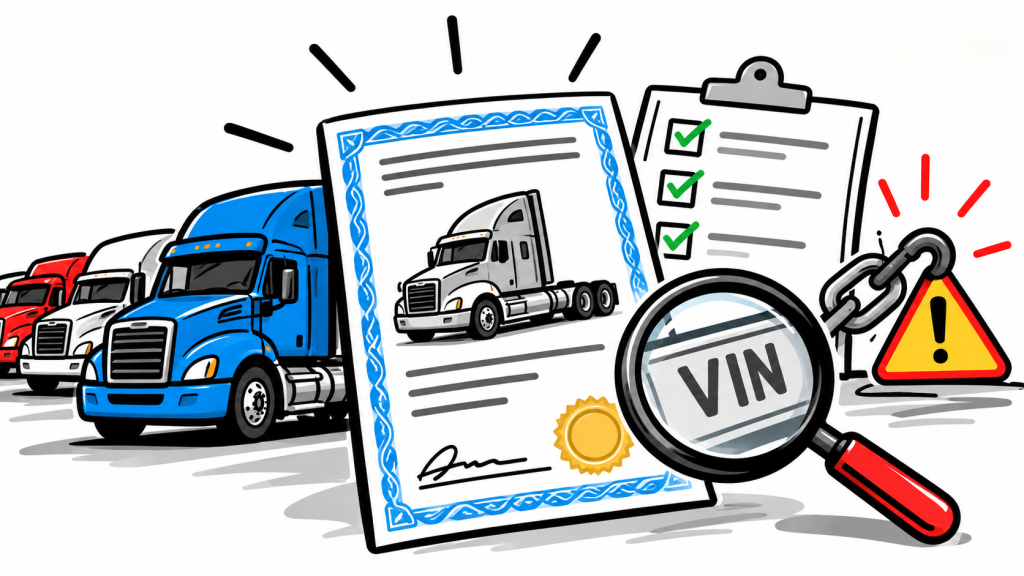
A truck can be mechanically ready to work and still sit in a yard because its ownership paperwork is not. This commercial vehicle title guide covers the title issues that can delay a purchase, interfere with financing, or keep a replacement unit from entering service on schedule.
For an established fleet, a title is more than a state document. It establishes who can sell the vehicle, whether another party has a recorded interest in it, and whether the buyer can register, insure, and finance the asset. That matters whether you are replacing a high-mileage tractor, adding a rollback, buying a used dump truck, or taking delivery of a new box truck from a dealer.
A vehicle title generally identifies the legal owner, the vehicle identification number (VIN), and, when applicable, a lienholder. Registration is separate. A registration allows the vehicle to operate under the applicable state requirements; the title establishes ownership. Do not assume a current registration proves that the seller has clear authority to transfer the unit.
For financed commercial vehicles, the titled owner is often the business purchasing the asset, while the financing source is listed as lienholder. The exact format varies by state. Some states issue an electronic title while a lien is active, and some retain title information electronically rather than providing a paper title to the borrower.
The practical point is simple: the names, VIN, and lien status must line up with the purchase agreement and financing documents. A mismatch can create extra work at the point when the business needs the equipment dispatched.
Title review should begin before funds are committed, particularly on used equipment purchased outside a franchised dealer environment. Ask the seller early how title is held, whether a lien exists, and whether there is a payoff required at closing. A legitimate lien is common and manageable. An undisclosed lien, missing title, or seller whose name does not match the title requires closer attention.
Confirm the VIN in several places: the title record, the purchase order or bill of sale, the physical VIN plate, and any financing application. On commercial equipment, a single transposed character can slow documentation or require corrected paperwork. For tractors and vocational trucks, compare the VIN to the cab plate and other manufacturer identification where available. For trailers, confirm the assigned VIN and title requirements before assuming the unit can be titled the same way as a power unit.
Asset descriptions should also be specific. “2022 Peterbilt” is not enough for a finance file or title correction. Include the year, make, model, VIN, purchase price, and, when relevant, body type or permanently mounted equipment. A tow truck, wrecker, ambulance, or crane-equipped chassis may have a base vehicle and substantial upfit value that need to be reflected consistently in the transaction documents.
A clear title generally means no lienholder is shown, but the transaction can still have issues. The seller must have authority to sell, the title must be properly assigned, and the business buying the vehicle must be named correctly. If the operating company is an LLC but the purchase documents name an owner personally, correcting the ownership path later can be more difficult than getting it right before closing.
Pay attention to title brands. Salvage, rebuilt, flood, or other branded-title designations can affect insurability, resale value, lender appetite, and the ability to place the unit into certain fleet programs. A branded vehicle is not automatically unusable, but it should be priced and financed with its history in mind. The same caution applies to vehicles with unusually low purchase prices, incomplete service records, or a seller who cannot explain how ownership moved from the titled party to the current seller.
Commercial fleets should also distinguish between a title issue and a condition issue. A clean title does not verify engine health, emissions-system condition, accident history, maintenance quality, or remaining useful life. On a used Class 8 truck or vocational unit, an independent inspection and maintenance review may be just as consequential as title verification.
Many used commercial vehicles are sold while an existing loan or lease payoff remains. This is normal, but the closing process must be coordinated. The seller should obtain a current payoff statement that identifies the account, payoff amount, expiration date, and instructions for releasing the lien.
In a properly structured transaction, purchase funds may be directed to the existing lienholder for the payoff and to the seller for any remaining equity. The documents should make clear how the title or lien release will be delivered after payoff. Do not rely on a verbal promise that the title will be sent later without a documented process.
Timing matters because lien releases and title updates can take longer than the equipment handoff. If the buyer needs to register the unit immediately or use it as collateral for financing, the funding source may need evidence that its lien can be recorded in the required position. The appropriate structure depends on the state, seller type, lienholder process, and equipment involved.
A dealer purchase often involves fewer title-handling steps for the buyer because the dealer manages title assignment, registration paperwork, and payoff coordination as part of the sale. That does not remove the need to verify the VIN, buying entity, and final equipment description. It simply gives the transaction a more established documentation path.
Private-party sales can offer access to specific used units, especially specialized wreckers, trailers, older dump trucks, and hard-to-find vocational equipment. They also require more diligence. The buyer should establish who owns the unit, whether the seller is a business or individual, where the title is held, and whether any lien or payoff is outstanding before scheduling pickup.
A purchase from an auction, broker, or consignor needs similar care. The party marketing the vehicle may not be the titled owner. That can be acceptable when the sales documents clearly establish authority and the title transfer process, but it should not be left vague.
Commercial equipment financing adds another documentation layer because the funding source needs a valid security interest in the asset. Lenders and financing sources commonly review the borrower’s legal business name, entity formation details, insurance requirements, asset information, seller documentation, and title or lien status. The depth of review may vary with credit strength, time in business, fleet history, asset age, mileage, purchase price, and transaction structure.
Newer equipment purchased from an established dealer is often more straightforward than an older unit from a private seller, but neither result is automatic. A 10-year-old truck with high mileage may still be financeable for an established business, yet the available term and down payment expectations may differ from those for a late-model replacement tractor. Specialized equipment can also require a clearer description of its revenue-producing use.
For businesses buying multiple units, keep each VIN, price, and seller detail organized by asset. A fleet expansion can lose time when invoices, insurance schedules, and titles refer to equipment inconsistently. Good document control is not administrative busywork – it supports a cleaner closing and faster deployment.
The exact requirements differ by state and transaction, but most commercial buyers should be prepared to provide a signed purchase agreement or invoice, the existing title or dealer title paperwork, payoff information when a lien exists, proof of insurance, and entity information matching the buyer name. A bill of sale may also be needed, especially for private-party purchases.
Review signatures carefully. Title assignments often have limited space for corrections, and some states impose specific notarization or reassignment requirements. A crossed-out VIN, incomplete assignment, or signature in the wrong capacity can turn a routine transfer into a replacement-title process.
Keep copies of every signed document, payoff confirmation, and communication regarding title delivery. This record helps if a registration office, insurer, financing source, or future buyer asks how ownership was transferred.
The best time to solve a title problem is before the truck is scheduled for delivery, insurance binding, decals, body work, or dispatch. Build title verification into the same acquisition checklist used for inspections, maintenance records, specifications, and financing approval.
Commercial Fleet Financing, Inc. can help qualified businesses coordinate the equipment, seller documentation, and financing requirements across multiple funding sources. The structure still depends on the business profile, asset, seller, title status, and lender requirements, but early document review can prevent a paperwork issue from becoming an uptime issue.
A commercial vehicle purchase should end with equipment that can be titled, insured, registered, financed when needed, and put to work. Treat the title as part of the acquisition plan, not as a document to chase after the keys change hands.
Learn how equipment collateral affects commercial financing, from asset value and condition to advance rates, documentation, and deal structure decisions.
Learn how to evaluate commercial truck mileage before buying or financing, using engine hours, service records, asset age, and intended duty cycle needs.
Fleet cash flow affects uptime, buying power, and growth. Learn how established businesses can plan equipment purchases while protecting working capital.
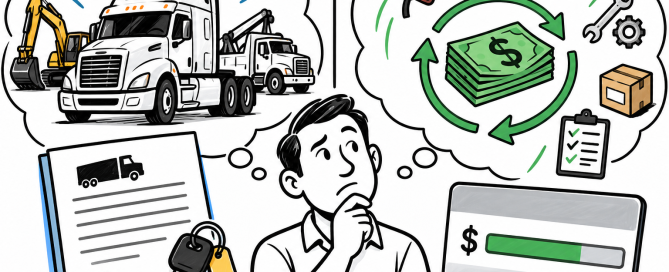
Compare fleet loans versus credit lines for equipment purchases, repairs, and expansion. See how terms, collateral, cash flow, and timing shape the choice.
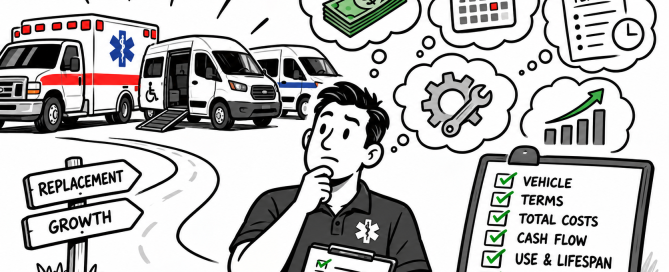
This medical transport financing review explains how established operators can compare terms, protect cash flow, and put the right vehicle in service.