A Multi Unit Fleet Example for Five Trucks
This multi unit fleet example shows how five commercial trucks can be financed while protecting cash flow, managing documents, and timing delivery well.


A truck that is fully depreciated on the books can still be expensive to own. If it misses routes, consumes shop hours, or becomes difficult to source parts for, the apparent savings from delaying replacement can disappear quickly. This commercial vehicle lifecycle guide is designed for fleet owners, CFOs, and operations leaders who need to make equipment decisions based on uptime, cash flow, and revenue capacity – not just purchase price.
The right replacement point is not a universal mileage number or age threshold. A late-model box truck running predictable local routes has a different useful life than a severe-duty dump truck, rollback, or tractor operating long-haul miles. The goal is to manage each asset as a revenue-producing tool from specification through disposition.
Lifecycle planning begins before a vehicle is purchased. A unit that is underspecified for its daily workload may wear prematurely, while an overbuilt unit can tie up capital in capacity the business does not use.
Define the work first: payload, towing requirements, body configuration, route length, idle time, terrain, driver shifts, expected annual mileage, and customer-service expectations. A tow company may need a wrecker with a particular boom capacity and wheel-lift configuration. A medical transport provider may need vehicle layouts and accessibility features that fit its operating model. A construction company may prioritize PTO capability, axle ratings, and body compatibility over highway fuel economy.
This is also where ownership cost becomes more useful than sticker price. A less expensive used vehicle may make sense when the intended work is limited and maintenance resources are strong. It may be a poor choice if a breakdown interrupts a contracted route, a time-sensitive recovery operation, or a jobsite schedule with crews waiting.
New equipment often offers current specifications, warranty coverage, predictable condition, and a longer planned service window. It may also carry a larger monthly payment and longer lead times, depending on the chassis, body builder, or upfitter.
Used equipment can reduce the initial capital requirement and may be available immediately. However, asset age, mileage, maintenance history, engine hours, title status, seller type, and remaining useful life can affect both financing options and operating risk. A clean, well-documented used tractor purchased from an established dealer is a different transaction from an older specialty truck acquired through a private seller.
Reconditioned equipment can work well when the scope of refurbishment is clearly documented and the buyer understands what has, and has not, been rebuilt. Ask for service records, inspection findings, parts invoices, and a clear description of the work completed. A fresh paint job is not the same as a renewed drivetrain, hydraulic system, or body.
Many fleets know their maintenance expense but do not isolate the cost of downtime. That creates a blind spot. A repair invoice may be manageable, yet the real cost can include rental equipment, overtime, missed loads, rescheduled customers, driver idle time, and dispatch disruption.
Track each vehicle by unit number and compare its monthly performance against similar assets. Useful measures include maintenance and repair cost, unscheduled shop days, fuel consumption, tire expense, roadside events, hours or miles out of service, and revenue contribution. The exact metrics depend on the business, but consistency matters more than a complicated dashboard.
A practical replacement trigger is often a trend rather than one major failure. For example, a five-year-old vocational truck may still be mechanically sound, but repeated electrical repairs, hydraulic leaks, and parts delays can signal that its reliability is no longer appropriate for a critical role. Conversely, a well-maintained unit with stable operating costs may remain productive beyond the fleet’s typical trade cycle.
Scheduled maintenance is expected and can be budgeted. Oil changes, preventive inspections, tires, brakes, filters, and planned component replacement keep a vehicle in service. Breakdown risk is harder to budget because it affects operations without warning.
Review whether your maintenance program is catching recurring issues early. Telematics, driver inspection reports, work orders, and fuel data can all help identify patterns. A fleet does not need every available technology platform to make better decisions, but it does need a reliable process for turning operating information into action.
The common question is, “Should we repair this vehicle or replace it?” The better question is whether the next dollar spent will preserve revenue capacity at an acceptable cost and risk level.
A major repair can be justified when the vehicle has a suitable remaining service life, the repair addresses a defined issue, parts availability is reasonable, and the unit still fits the work. Replacing the vehicle may be more sensible when the repair only postpones several other likely problems, capacity has changed, or downtime is affecting customer commitments.
Consider three comparisons: the projected cost to keep the unit for another 12 to 24 months, the cost to acquire a replacement, and the revenue or operating benefit the replacement creates. A newer trailer may reduce maintenance exposure, but a replacement tractor or rollback might also allow the business to accept additional work, improve route reliability, or retire a costly rental arrangement.
Do not overlook resale timing. A unit with reasonable mileage, sound condition, and broad market appeal may retain more value before it becomes heavily worn or requires expensive repairs. Trading or selling earlier is not always the best answer, but waiting until an asset has little marketability can limit the proceeds available for the next acquisition.
Equipment financing is most useful when it supports the operating plan rather than reacting to a breakdown. Waiting until a critical unit is down can narrow equipment choices and compress documentation, inspection, and vendor coordination.
For established businesses, financing can preserve working capital for payroll, fuel, inventory, repairs, and growth costs while spreading the acquisition cost over a term aligned with the asset’s expected productive life. The appropriate structure depends on the vehicle, business profile, intended use, cash flow, and lender requirements.
A newer commercial vehicle may support a longer term than an older, higher-mileage unit with limited remaining useful life. Specialty assets can require added review because resale markets, body configurations, or upfit values vary. Down payment requirements may also vary based on credit strength, time in business, fleet history, asset age, seller, and the overall deal structure.
For example, an established contractor replacing two aging dump trucks may prioritize a structure that keeps monthly obligations manageable while allowing the trucks to enter service before peak season. A logistics company adding late-model tractors may focus on matching payments to contracted revenue and preserving liquidity for driver recruiting and maintenance. Neither approach is automatically better. The equipment and operating plan should drive the structure.
A replacement plan works best when the documentation is organized before a vehicle becomes urgent. Lenders commonly review business financial information, ownership details, credit profile, time in business, existing debt, insurance, equipment details, and the intended commercial use. The documentation needed varies by transaction size, borrower strength, asset type, and funding source.
For the asset itself, keep the quote, buyer’s order, VIN or serial number, specifications, mileage or hours, seller information, and any relevant maintenance or inspection records. Specialty equipment may need more detail on bodies, attachments, hydraulic systems, or installed components.
This preparation helps a financing partner present the transaction accurately and identify likely questions early. Commercial Fleet Financing, Inc. works with qualified businesses on commercial vehicle and equipment transactions by coordinating the borrower, vendor, and available funding sources around the details that matter to the deal.
Dealers, manufacturers, body builders, and private sellers affect timing. A chassis may be available while the required body or upfit is months out. A used unit may need an independent inspection before final commitment. A private-party sale may require additional title and payoff verification.
Tell the seller how you plan to acquire the asset and ask what documentation is ready now. Clear communication reduces the chance that an otherwise suitable vehicle is lost because the paperwork, inspection, or delivery requirements were addressed too late.
Every purchase should include a preliminary exit plan. Will the unit be traded, sold to another commercial operator, reassigned to lighter-duty work, retained as a backup, or operated until it is no longer economical? The answer may change, but considering it early improves purchasing discipline.
A unit moved from front-line service to backup status still has carrying costs: insurance, registration, storage, inspections, and maintenance. Backup equipment can protect uptime in some operations, particularly towing, emergency transport, and construction. In others, it becomes an underused asset that consumes capital without solving a real capacity problem.
The best lifecycle decision is usually made before the crisis. Review your highest-cost and highest-utilization units regularly, compare their expected service needs against replacement options, and start the financing conversation while you still have choices.
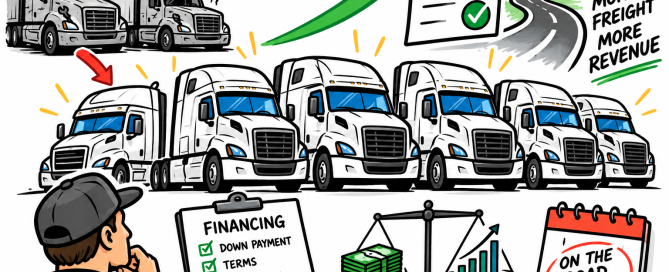
This multi unit fleet example shows how five commercial trucks can be financed while protecting cash flow, managing documents, and timing delivery well.
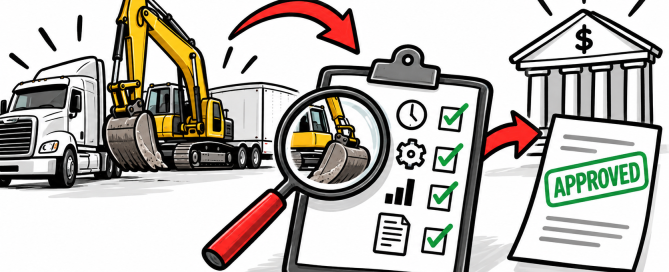
Learn how equipment collateral affects commercial financing, from asset value and condition to advance rates, documentation, and deal structure decisions.
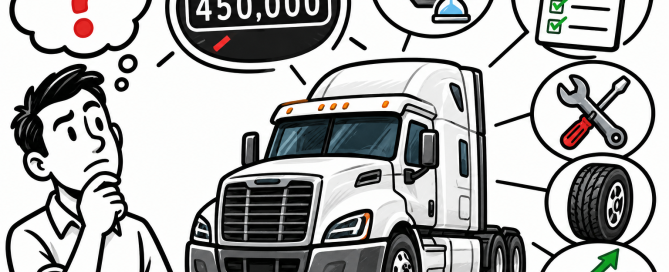
Learn how to evaluate commercial truck mileage before buying or financing, using engine hours, service records, asset age, and intended duty cycle needs.
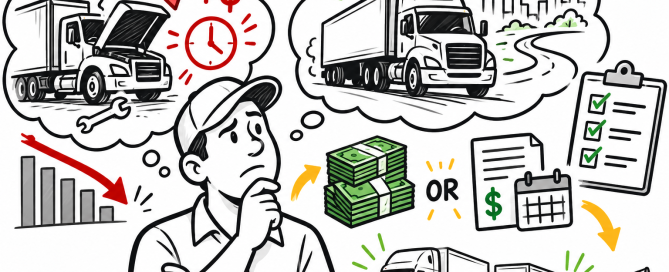
Fleet cash flow affects uptime, buying power, and growth. Learn how established businesses can plan equipment purchases while protecting working capital.
Compare fleet loans versus credit lines for equipment purchases, repairs, and expansion. See how terms, collateral, cash flow, and timing shape the choice.