Equipment Collateral: What Lenders Evaluate
Learn how equipment collateral affects commercial financing, from asset value and condition to advance rates, documentation, and deal structure decisions.

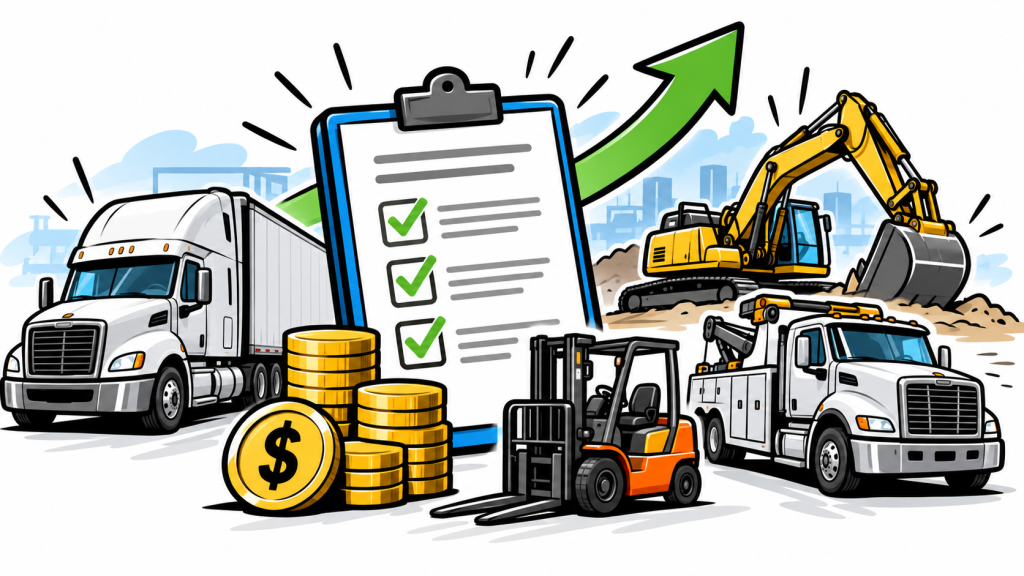
An aging truck that misses routes, a tow unit that cannot stay in service, or an excavator that limits bid capacity can cost more than its repair invoice. The right commercial financing options help an established business replace or add revenue-producing equipment without tying up the cash needed for payroll, fuel, materials, insurance, and day-to-day operations.
The best structure is rarely just the one with the lowest stated payment. It has to fit the asset, its expected useful life, the seller, your business credit profile, and the way the equipment will produce revenue. A late-model sleeper tractor, a specialized wrecker, and a used forklift may each call for a different approach.
Most equipment transactions fall into a few practical structures. The differences affect ownership, payment, term length, documentation, and the amount of cash a business keeps available after closing.
An equipment finance agreement or commercial equipment loan is commonly used when a business intends to own the truck, trailer, or machine for the long term. The equipment serves as collateral, and the borrower makes scheduled payments over an agreed term. At the end, ownership is typically transferred or the borrower owns the asset after the final payment, depending on the structure.
This approach often makes sense for assets with a long operating life and a clear place in the fleet, such as dump trucks, excavators, box trucks, trailers, forklifts, and industrial equipment. It can also be a practical fit for a company replacing a unit it expects to run for years after payoff.
The tradeoff is that lenders will usually look closely at the collateral. Age, mileage, hours, condition, make, model, and resale demand can all influence term length and advance rate. A five-year-old highway tractor with high mileage may still be financeable, but it may not receive the same structure as a newer unit with lower miles and a strong maintenance record.
A finance lease can provide many of the economic features of ownership while using an end-of-term purchase provision. Common versions include a nominal purchase option or a fixed purchase option. The right format depends on how long the business plans to keep the asset and how the lender views its residual value.
For a fleet adding specialized equipment, a finance lease may provide a useful payment structure without requiring the business to pay the full purchase price upfront. It is often considered for vocational trucks, car haulers, construction equipment, ambulances, and other assets that will be used consistently over a defined period.
A lower monthly payment can be attractive, but it should be evaluated alongside the end-of-term obligation. A structure with a larger purchase option may reduce the monthly payment while leaving a meaningful amount due at maturity. That may be appropriate if the business expects the asset to retain value, but it is not automatically the lowest-cost choice.
An operating lease, often called a fair market value lease, is designed around an expected residual value at the end of the term. Rather than committing to a predetermined purchase amount at the outset, the customer may have end-of-term options that can include returning, renewing, or purchasing the equipment at its then-current fair market value, subject to the agreement.
This can be worth considering when replacement cycles matter as much as ownership. A business running late-model tractors on a planned turnover schedule, for example, may prefer to avoid carrying equipment well beyond its most productive years. It can also be relevant where technology, emissions requirements, or customer specifications make regular updates valuable.
The key issue is return flexibility versus return responsibility. Equipment returned at lease end may be subject to condition, usage, mileage, or other contractual requirements. This structure deserves careful review for any fleet that operates in demanding conditions or accumulates high annual miles.
A revolving line of credit can support recurring operating needs, while equipment financing is generally built around a specific asset purchase. They solve different problems. Using a working-capital line to buy a long-lived truck can reduce liquidity available for fuel, payroll, repair parts, or seasonal swings. Using long-term equipment financing for a short-term expense can create the opposite mismatch.
Some established companies use both: equipment financing for the truck or machine and a separate operating line for the cash needs surrounding deployment. Down payments, taxes, delivery costs, upfitting, titling, insurance deposits, and initial maintenance may not all be handled the same way under every approval.
Sale-leaseback structures may also be available in certain situations. In a sale-leaseback, a business uses eligible equipment it already owns as part of a financing transaction to release capital. Eligibility depends on the asset, title status, value, condition, business profile, and lender requirements. It is generally a strategic liquidity decision, not a default replacement for an equipment purchase facility.
Lenders do not evaluate a semi-truck the same way they evaluate a 15-year-old crane or a custom-built rollback. The asset and the borrower are reviewed together.
For the borrower, key factors often include time in business, commercial credit strength, financial statements or bank activity when requested, debt obligations, fleet history, and demonstrated ability to service the payment. An established paving contractor with documented revenue and several paid-for units presents a different profile than a company purchasing its first piece of heavy equipment.
For the equipment, lenders may consider new versus used status, asset age, mileage or engine hours, purchase price, seller type, title history, and expected useful life. Purchases from established dealers can be more straightforward to document than private-party transactions, although private sales can be financeable with the right paperwork and collateral review.
The transaction itself matters too. A replacement unit that eliminates repeat downtime may be easier to explain than a speculative expansion purchase. That does not mean growth transactions are a problem. It means the financing request should show how the additional unit fits available contracts, route density, staffing, backlog, or production capacity.
A common mistake is choosing the longest available term simply to reduce the payment. A lower payment can preserve monthly cash flow, but extending the term too far can leave a business owing more than the equipment is worth if it needs to sell, trade, or replace the asset early.
The opposite mistake is compressing the term so aggressively that the payment strains operations. A towing company may buy a wrecker expected to generate strong revenue for years, but the payment still has to fit insurance, driver costs, maintenance, and seasonal volume. A construction company may have strong annual revenue but uneven monthly cash flow tied to project schedules.
A useful starting point is to compare the proposed term with three timelines: the equipment’s expected productive life, the business’s normal replacement cycle, and the period over which the equipment will generate reliable revenue. They should be reasonably aligned, even if they are not identical.
Payment frequency can matter as well. Monthly payments are common, but some businesses may need a structure that better reflects seasonal operations or contract payment timing. Availability depends on the lender, borrower profile, asset, and transaction details.
A good financing structure can lose momentum when documentation arrives late or the equipment details change after approval. Before signing a purchase agreement, confirm the exact year, make, model, vehicle identification number or serial number, mileage or hours, sale price, seller information, and any additions such as a body, liftgate, winch, hydraulic system, or specialized upfit.
For trucks and trailers, the quote should distinguish the chassis from the body or trailer when applicable. For construction and industrial equipment, include attachments, hours, and whether the unit is dealer-serviced, auction-sourced, or privately sold. These details affect collateral review and can affect what a lender is willing to finance.
Businesses should also be prepared to provide organizational documents, proof of insurance when required, bank information, financial statements, tax returns, debt schedules, or fleet lists depending on the size and complexity of the request. Strong documentation does not guarantee approval, but it can reduce preventable delays.
A specialized equipment finance broker can help compare available commercial financing options and present the transaction to funding sources that fit the asset and borrower profile. That is particularly useful when a purchase involves older equipment, specialized collateral, multiple units, a private seller, or a deadline tied to a vendor delivery slot.
Commercial Fleet Financing works with established U.S. businesses seeking financing for revenue-producing vehicles and equipment. The practical work is not limited to an application. It can include reviewing the equipment quote, identifying documentation needs, coordinating with a dealer or seller, explaining lender conditions, and helping move an approved transaction through funding.
Fast decisions, low-down-payment structures, or funding on a short timeline can be possible for well-qualified transactions, but they depend on credit, time in business, fleet history, asset quality, seller documentation, lender requirements, and the final deal structure. The most reliable way to protect timing is to start the conversation while the equipment is still available, not after delivery has been scheduled.
Before choosing a structure, put the purchase order, current fleet information, intended use, and a realistic replacement plan in the same conversation. That gives the financing request a better chance of matching the equipment’s real job: keeping productive assets in service and putting the next unit to work.
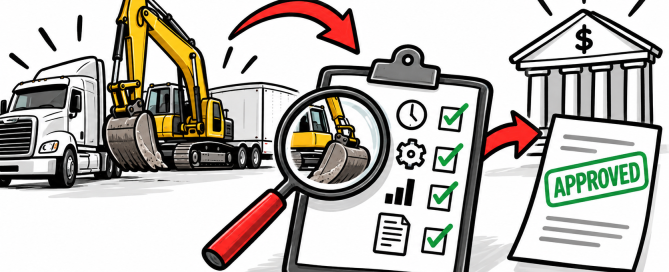
Learn how equipment collateral affects commercial financing, from asset value and condition to advance rates, documentation, and deal structure decisions.
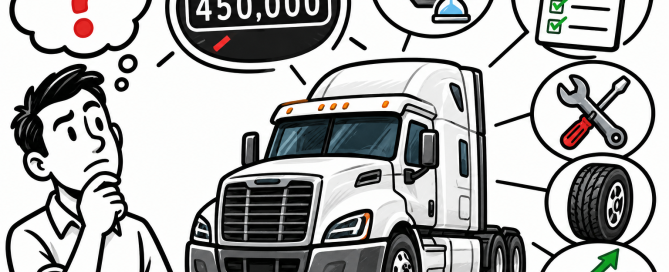
Learn how to evaluate commercial truck mileage before buying or financing, using engine hours, service records, asset age, and intended duty cycle needs.
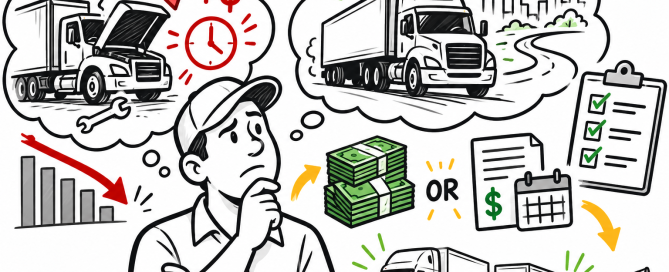
Fleet cash flow affects uptime, buying power, and growth. Learn how established businesses can plan equipment purchases while protecting working capital.
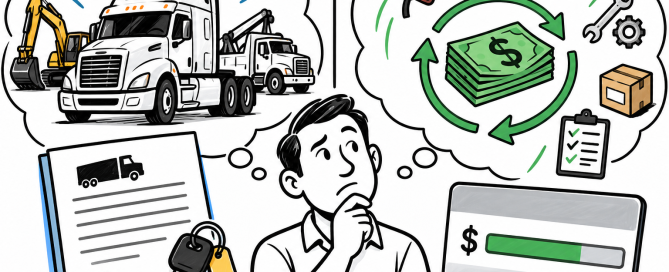
Compare fleet loans versus credit lines for equipment purchases, repairs, and expansion. See how terms, collateral, cash flow, and timing shape the choice.
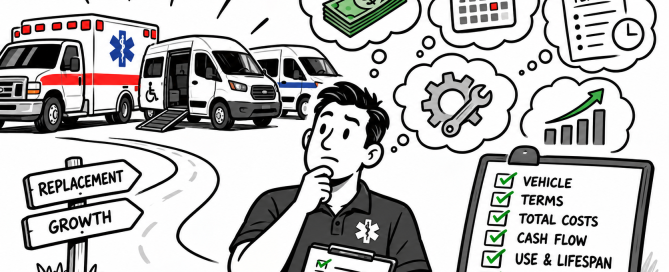
This medical transport financing review explains how established operators can compare terms, protect cash flow, and put the right vehicle in service.