Equipment Collateral: What Lenders Evaluate
Learn how equipment collateral affects commercial financing, from asset value and condition to advance rates, documentation, and deal structure decisions.

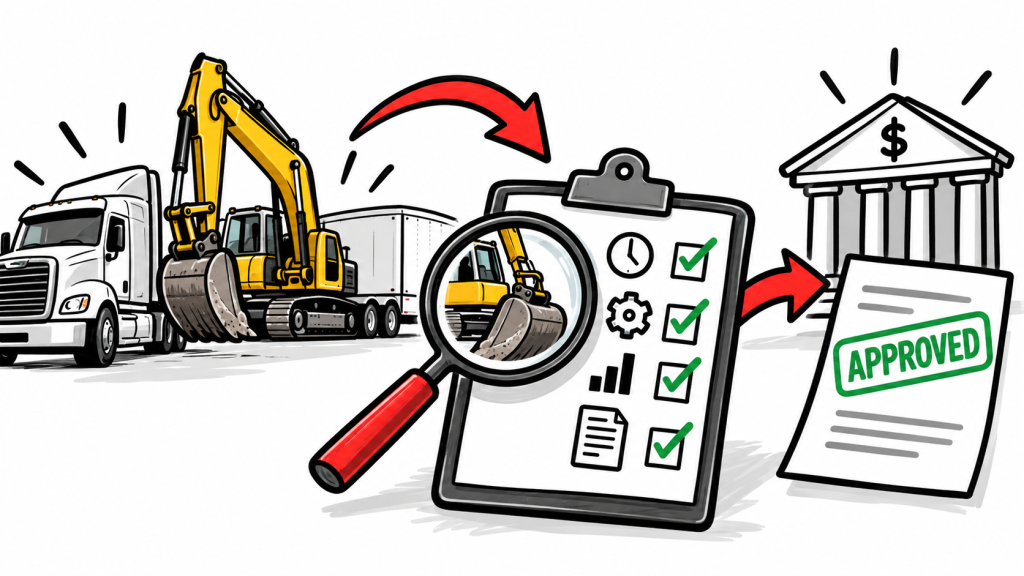
A late-model excavator, a clean fleet of trailers, or a well-maintained rollback can do more than produce revenue. It can serve as equipment collateral: the asset that supports a commercial financing transaction. For an established business replacing aging units or adding capacity, the quality and marketability of that asset can affect the financing structure as much as the company’s credit profile.
Collateral is not a technical detail to address after choosing equipment. It should be part of the purchase decision from the start. A unit with strong resale demand, clear ownership history, and a reasonable useful life is generally easier to finance than an older specialty asset with limited buyers, uncertain condition, or incomplete documentation.
Equipment collateral is business-use equipment pledged to secure an obligation. If a business finances a truck, trailer, forklift, or piece of yellow iron, the financing source typically retains a security interest in that asset until the obligation is satisfied. The security interest gives the financing source defined rights in the equipment if the borrower defaults.
In a typical transaction, the equipment itself is the primary collateral. Depending on the borrower, asset, and financing program, a financing source may also request a personal guaranty, a blanket lien on business assets, additional collateral, or a larger down payment. Those requirements vary. A strong, established fleet with consistent financial performance may be evaluated differently from a business seeking to finance a highly specialized asset with a narrow resale market.
The practical point is straightforward: collateral reduces part of the financing source’s risk, but it does not replace underwriting. Lenders and funding sources still review the company’s repayment capacity, credit strength, time in business, operating history, and the purpose of the acquisition.
Not all equipment holds value the same way. A commonly traded Class 8 truck from a recognized manufacturer may have a broad resale market, while a custom-built unit configured for one specific operation may be harder to remarket. That difference can influence term length, required cash down, advance rate, and documentation requests.
An advance rate is the percentage of an asset’s supported value that a financing source is willing to finance. It is not always based solely on the invoice price. The review may consider the equipment’s age, mileage or hours, condition, configuration, market demand, and expected liquidation value. A $150,000 purchase price does not automatically mean the full amount is financeable, particularly if the unit is priced above comparable market values or includes soft costs that are not easily recoverable.
For example, a contractor buying a late-model excavator from an established dealer may have a cleaner collateral story than a buyer acquiring an older machine at auction with high hours and no service records. The auction machine may still be financeable, but the transaction could require more cash down, a shorter term, an equipment inspection, or a stronger borrower profile.
Financing sources commonly examine the equipment category, manufacturer, model, serial or VIN information, age, usage, condition, and market liquidity. For vehicles, mileage, maintenance history, engine specifications, title status, and prior use matter. For construction and industrial equipment, operating hours, attachments, wear items, emissions configuration, and service records can be relevant.
Seller type also matters. An invoice from an established dealership or manufacturer generally provides a more defined transaction trail than a private-party sale. Private sales are not necessarily a problem, but they often require closer review of ownership, lien status, payoff information, and the condition of the asset.
Specialized equipment presents a trade-off. A purpose-built wrecker, medical transport vehicle, or custom vocational truck may be exactly what an operation needs to generate revenue. At the same time, specialized configurations can shrink the resale market. A sound deal structure accounts for both realities rather than assuming every revenue-producing asset will be financed on the same terms.
Business owners often focus on the quoted price because it drives the capital budget. Underwriting focuses on a different question: what is the equipment likely worth in the market if it must be resold? That number can be lower than the purchase price, especially when the quote includes delivery, warranties, taxes, installation, custom upfits, or accessories.
Some of those costs may be eligible for financing in the right structure. Others may need to be covered with cash. The answer depends on the asset, the borrower’s profile, and the funding source’s guidelines.
This is particularly relevant for truck and trailer transactions. A new dump truck with a body package, a car hauler with specialized loading equipment, or a service truck with tools and upfits may have a total invoice well above the base chassis value. The equipment is still functional as a revenue-producing unit, but the collateral review may distinguish between the chassis, installed equipment, and non-recoverable costs.
Businesses can avoid surprises by asking for itemized quotes early. A complete quote should identify the base unit, add-ons, warranties, freight, installation, taxes, and any payoff or trade-in component. Clean documentation helps a financing partner present the transaction accurately to appropriate funding sources.
A valuable asset can still create friction when its ownership trail is unclear. Before funding, financing sources generally need to confirm that the seller has the right to sell the equipment and that existing liens will be released. For titled vehicles, that may involve title documents, payoff letters, and lien-release procedures. For non-titled equipment, serial-number verification, bills of sale, and Uniform Commercial Code, or UCC, lien searches may be part of the file.
Documentation requirements increase with complexity. A dealer sale of new equipment is often simpler than a private-party purchase, a refinance, or a transaction involving multiple trade-ins. None of those structures is automatically difficult, but each requires accurate details.
Businesses can keep the process moving by providing the equipment quote or purchase agreement, VINs or serial numbers, seller contact information, recent business financial information when requested, and a clear explanation of intended use. If a payoff is involved, obtain the current payoff statement promptly. Payoff amounts can change, and an outdated figure can hold up closing.
The best financing structure is not always the one with the longest term or lowest apparent payment. It should align the payment with the equipment’s useful life, the business’s cash flow, and the asset’s expected value over time.
A long term can preserve monthly cash flow, which may be useful when adding several units or managing seasonal revenue. But extending payments beyond the practical service life of an asset can leave the business owing more than the equipment is worth. A shorter term may build equity faster and reduce total financing cost, but it requires a higher monthly payment.
Down payment is another example of a trade-off. A larger down payment can reduce the amount financed and may strengthen a file where the asset is older, highly used, or priced above supported value. Retaining more cash can be equally important when the business needs working capital for fuel, payroll, insurance, repairs, or mobilization. The appropriate balance depends on the transaction rather than a blanket rule.
For a qualified established business, terms, down payment options, and decision timing may be influenced by credit, time in business, fleet history, asset age, documentation quality, and lender requirements. Strong collateral helps, but it is only one part of the credit decision.
Yes. Used trucks, trailers, construction equipment, forklifts, and other commercial assets are frequently used as collateral. The key questions are whether the asset has sufficient remaining useful life, a supportable value, clear ownership, and a market that supports resale. Older equipment, high-mileage trucks, and high-hour machines may still qualify, but terms and cash requirements can differ from those for new equipment.
Often, yes, provided the transaction can be documented properly. The buyer should expect verification of the seller, ownership, lien status, VIN or serial number, condition, and purchase price. A private-party transaction may need more coordination than a dealer sale, so allowing time for documentation is prudent.
An existing fleet or equipment base can help demonstrate operating experience and asset-management history, especially for businesses expanding within a familiar category. It is not the only qualification factor. Financial performance, credit quality, industry experience, and the revenue purpose of the new asset remain central to the review.
The equipment should fit the job first. Buying a less suitable unit simply because it appears easier to finance can create downtime, operating inefficiency, and unexpected maintenance costs. But once the operational need is clear, buyers should compare options through a collateral lens as well: model year, hours or mileage, market demand, seller reputation, documentation, and resale potential.
That is where a specialized financing partner can add value. Commercial Fleet Financing, Inc. works with established businesses nationwide to organize equipment details, identify likely underwriting considerations, coordinate with vendors, and match qualified transactions with available funding sources. The goal is not to force every transaction into one program. It is to build a structure that recognizes the equipment, the business, and the urgency of putting the asset into service.
Before committing to a purchase, gather the quote, equipment specifications, seller information, and a realistic view of the unit’s expected workload. A well-documented asset and a well-prepared borrower file give the financing review a clearer starting point – and give the business a better basis for making a sound capital decision.
Learn how equipment collateral affects commercial financing, from asset value and condition to advance rates, documentation, and deal structure decisions.
Learn how to evaluate commercial truck mileage before buying or financing, using engine hours, service records, asset age, and intended duty cycle needs.
Fleet cash flow affects uptime, buying power, and growth. Learn how established businesses can plan equipment purchases while protecting working capital.
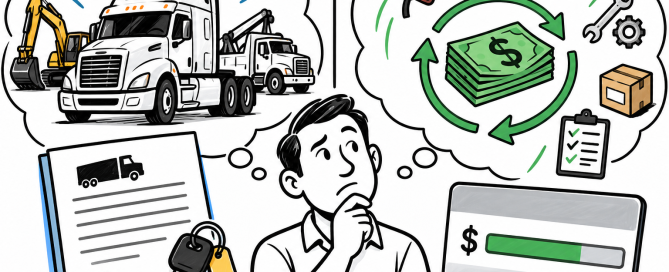
Compare fleet loans versus credit lines for equipment purchases, repairs, and expansion. See how terms, collateral, cash flow, and timing shape the choice.
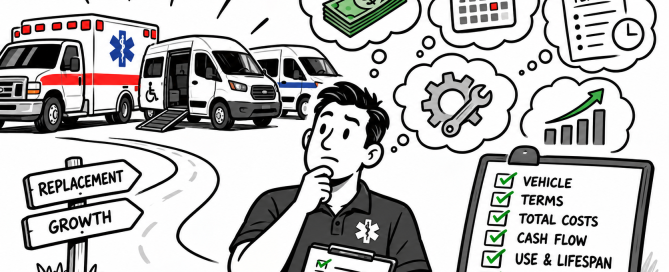
This medical transport financing review explains how established operators can compare terms, protect cash flow, and put the right vehicle in service.