Why Equipment Age Matters in Equipment Financing
Why equipment age matters in financing: learn how model year, hours, mileage, condition, and seller type can shape terms and approval options on deals.

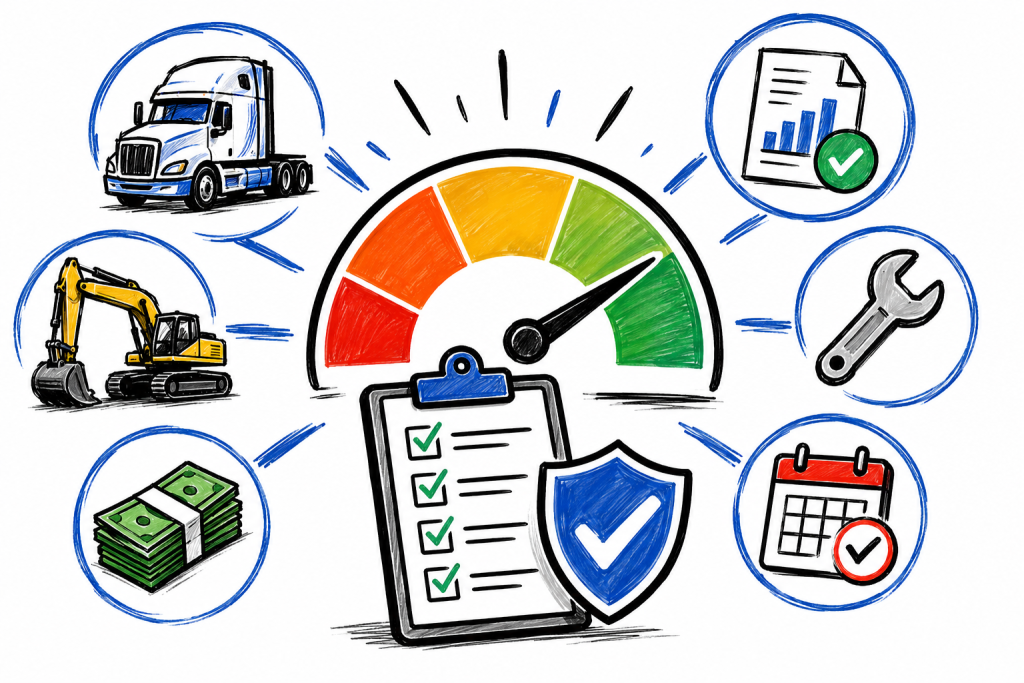
A late-model sleeper tractor is available, a replacement wrecker is needed before the current unit becomes a downtime problem, or a contractor has a signed job that requires another excavator. The question is rarely whether the equipment can produce revenue. It is whether the credit profile supports a financing structure that preserves working capital. That is why business owners ask what credit score matters when financing commercial equipment.
The practical answer is that there is no single universal score. Commercial equipment financing decisions are based on the entire transaction: the business, the guarantor when one is required, the asset, the seller, available cash, and the documentation supporting the request. A strong score helps, but it does not replace a sound operating history or make an overvalued, high-mileage asset easier to finance.
For established businesses, personal credit is often still part of the review, particularly when an owner provides a personal guaranty. Many financing sources also evaluate business credit, but business credit data can vary widely depending on how long the company has been reporting trade lines and borrowing activity.
As a general rule, a personal FICO score in the mid-600s or higher may open more possibilities than a weaker profile. Scores in the 700s and above generally present more favorably, assuming the rest of the file is consistent. But those ranges are not approval cutoffs. Each funding source sets its own credit standards, and its view can change based on the equipment type, term requested, time in business, and overall leverage.
A fleet with several years of documented revenue, stable bank activity, and a good payment record may remain financeable even if an owner has an isolated credit issue to explain. Conversely, an excellent personal score does not automatically solve concerns about declining revenue, insufficient cash flow, unresolved tax liens, or a business that is heavily leveraged.
Personal credit generally shows how an individual has managed obligations such as mortgages, credit cards, auto loans, and other consumer accounts. Reviewers may focus not just on the score, but also on recent late payments, collections, utilization, inquiries, bankruptcies, and the age of accounts.
Business credit is tied to the company. It can reflect commercial trade relationships, payment patterns, existing equipment debt, and public filings. A business may have strong operations but a thin business credit file if it has not established reporting accounts. That does not necessarily end the conversation. It does mean the financing request will likely rely more heavily on financial statements, bank statements, tax returns, and the owner or owners behind the company.
For larger or more established borrowers, the business itself may carry more weight than the individual guarantor. The level of documentation and the lender requirements often increase with deal size, complexity, and exposure.
Credit is one part of risk evaluation, not the whole file. In commercial equipment finance, a lender also needs confidence that the asset will hold reasonable value and that the business can make payments from normal operations.
Cash flow is central. A transportation company adding a tractor should be able to show how the unit will be dispatched, what freight or contract demand supports it, and how the payment fits into operating cash flow. A towing company replacing a rollback may point to maintenance costs, unavailable service time, and current call volume. The equipment must make commercial sense beyond the purchase price.
The asset itself matters. New equipment from an established manufacturer and dealer is often easier to evaluate than older specialty equipment from a private seller. A 2021 excavator with verifiable hours, service records, and a recognized resale market may be viewed differently from a much older unit with uncertain condition. For trucks, mileage, engine specifications, maintenance history, title status, and intended application can affect the available structure.
The down payment can also change the discussion. More money down reduces the amount financed and can improve the lender’s collateral position. That may help offset a thinner credit file, an older asset, or a longer requested term. It is a tradeoff: putting more cash down can improve financing flexibility, but it also reduces short-term liquidity for payroll, fuel, repairs, insurance, or project mobilization.
Other common review points include:
Consider two businesses with the same owner FICO score of 720. One is a five-year trucking company buying a new tractor from an authorized dealer. It has consistent revenue, several paid or well-performing equipment accounts, and a reasonable cash down payment. The transaction is straightforward, and the equipment has a clear market value.
The second business is purchasing a 12-year-old specialized truck from a private seller. It has uneven deposits, significant existing debt, and limited proof of the unit’s maintenance history. The owner’s score is still useful, but the asset age, seller type, and documentation create more questions.
The difference is not a contradiction. It is how commercial underwriting works. Credit quality matters, but the financeability of the specific equipment and the business case behind it matter too.
Trying to raise a credit score by a few points may not be the fastest way to improve a near-term equipment transaction. A better immediate step is to build a clean, complete file.
Start with an accurate equipment quote or purchase order. It should identify the year, make, model, serial number or VIN when available, purchase price, and seller. For used equipment, provide condition reports, service records, current photos, and hour or mileage information when they are available. Incomplete asset details can slow down review even when credit is strong.
Next, organize the business documentation likely to be requested. Depending on the deal, that may include recent business bank statements, financial statements, tax returns, debt schedules, proof of insurance, and organizational documents. Keep explanations concise but direct if there is an unusual credit event, a revenue decline, or a recent change in ownership.
It also helps to match the request to the equipment’s expected working life. Requesting a long term on an older high-mileage truck can be difficult because the collateral may age out before the obligation does. A shorter term or additional down payment may be more realistic, although it will raise the monthly payment. The right structure balances monthly cash flow against the business’s need to avoid carrying debt longer than the asset remains productive.
A business with strong credit and a straightforward new-equipment purchase may have several paths to consider. Complexity increases when the transaction involves used vocational equipment, multiple units, a private-party sale, seasonal revenue, a specialized body, or a need to coordinate a vendor, inspection, title requirements, and insurance.
That is where a specialized equipment finance broker can add practical value. Commercial Fleet Financing works with established businesses nationwide and can help present the equipment, operating profile, and documentation in a way that fits the requirements of potential funding sources. The goal is not to force every deal into one program. It is to identify a structure that makes sense for the asset and the business.
A complete application does not guarantee an approval, rate, term, or funding timeline. Still, well-documented businesses with suitable equipment and a clear use case often move more efficiently than those trying to solve basic questions after a purchase is already urgent.
Before committing to equipment, look beyond the score shown in a credit-monitoring app. Bring the purchase details, business financial picture, fleet history, and expected revenue impact into the same conversation. That gives you a more useful answer than any single credit-score threshold can provide.
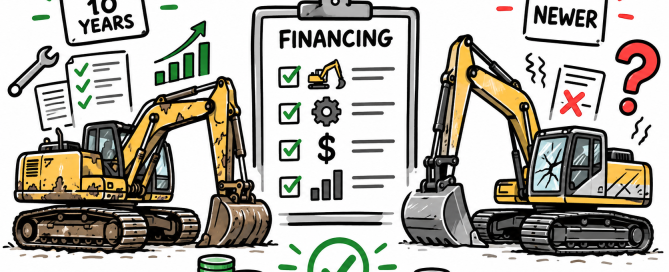
Why equipment age matters in financing: learn how model year, hours, mileage, condition, and seller type can shape terms and approval options on deals.

Learn how to fund equipment upgrades while protecting cash flow, comparing structures, preparing documentation, and putting productive assets to work now.

US fleet financing helps established businesses replace, add, or upgrade revenue-producing equipment while protecting cash flow and planning fleet uptime.

Get clear answers to equipment financing questions about terms, down payments, collateral, documentation, and funding timelines for commercial assets.
Compare top fleet acquisition strategies for replacing, expanding, and financing commercial vehicles while protecting cash flow and uptime with confidence.