How to Coordinate Dealer Equipment Funding Deals
Learn how to coordinate dealer equipment funding, align documents and delivery, and keep qualified commercial equipment purchases moving forward on time.

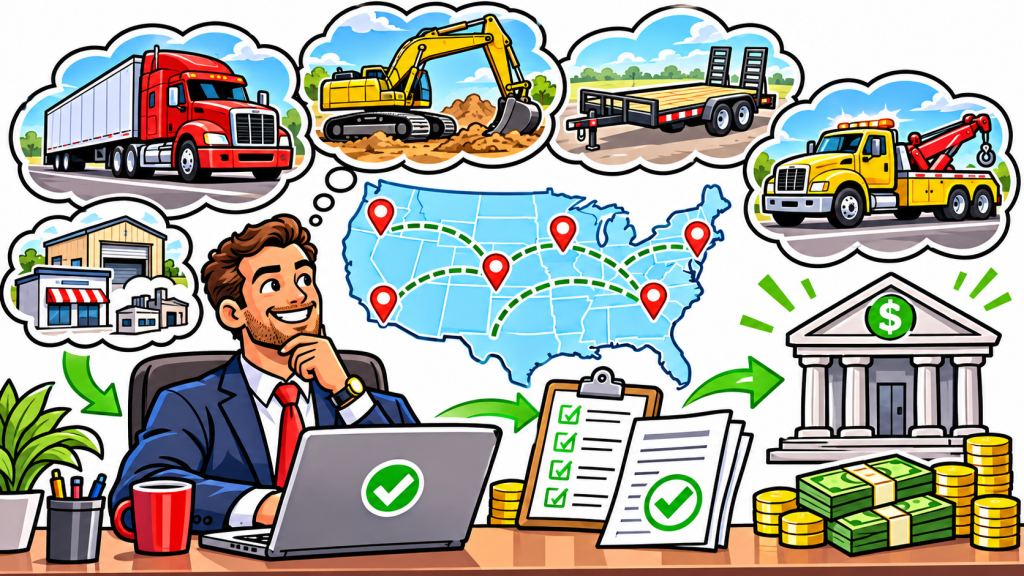
A truck sitting in a dealer’s yard, an excavator waiting on a jobsite, or a replacement wrecker needed after a costly breakdown can all create the same business problem: revenue is delayed while capital is tied up. This nationwide equipment financing broker guide explains what an established business should expect when using a broker to finance commercial vehicles and equipment across the United States.
The broker’s value is not simply submitting an application. A capable commercial equipment finance broker evaluates the borrower, the asset, the seller, and the intended use, then works to match the transaction with funding sources whose requirements fit the deal. That can matter when a business is replacing three high-mileage tractors, adding rollback units to a towing fleet, or purchasing used yellow iron with a limited useful life remaining.
A nationwide broker serves as the financing partner between a qualified business and potential funding sources. Unlike a bank that offers only its own credit products, a broker may have access to multiple lenders and financing programs. The objective is to identify workable options based on the business profile and transaction details.
For a fleet operator, that process usually begins with practical questions. Is the equipment new or used? What is the year, mileage, condition, and expected service life? Is the seller a franchised dealer, an established independent dealer, an auction, or a private party? Will the asset generate revenue directly, replace an aging unit, or support a new contract?
Those details affect lender appetite. A late-model sleeper tractor purchased from a recognized dealer is generally evaluated differently from a 15-year-old vocational truck bought in a private-party transaction. Neither is automatically unfinanceable, but the available term, advance amount, documentation, and lender choices may be different.
A broker also helps keep the transaction moving by coordinating with the customer, seller, and funding source. That may include clarifying the equipment quote, confirming payoff information on a trade, obtaining invoices, verifying insurance requirements, reviewing entity documents, and helping address conditions before funding.
Commercial equipment does not always sit near the buyer. A Texas contractor may locate a specialized excavator in Ohio. A medical transportation company may source compliant vehicles from a manufacturer in another state. A carrier replacing tractors may buy from several dealers in different regions.
Nationwide financing experience matters because the transaction still needs to be structured correctly when the buyer, seller, equipment location, and funding source are in different states. Titling, registration, delivery timing, insurance certificates, lien filing, and vendor payment procedures can all affect when equipment is released.
The same applies to multi-unit purchases. A business adding six trailers from one vendor and two tractors from another may need a coordinated approach rather than eight disconnected applications. Depending on the borrower profile, asset mix, and lender requirements, a broker may be able to help organize the purchase into a more practical structure.
Strong credit helps, but commercial equipment financing decisions are not based on credit alone. Lenders commonly evaluate the overall strength and consistency of the operating business.
Time in business is a major factor. An established company with several years of documented operations, recurring customers, and existing equipment typically presents differently than a newer company. Revenue, profitability, bank activity, debt obligations, and fleet history can all help show whether the business can support the proposed payment.
The asset matters just as much. Revenue-producing equipment with a recognized resale market often has more financing options than specialized or highly aged assets. For vehicles, lenders may review year, mileage, make, model, engine, condition, and commercial use. For construction and industrial equipment, they may focus on age, hours, condition, serial number, attachments, and whether the equipment is mobile or permanently installed.
The transaction structure also matters. A business with strong financials may qualify for a lower down payment or a longer term on eligible equipment, while another business may need more money down, a shorter amortization period, or additional support. These are not universal outcomes. Terms depend on credit profile, time in business, asset type and age, existing debt, documentation, lender requirements, and the total deal structure.
New equipment often offers clearer documentation, warranties, and longer expected useful life. That can make it easier to align financing with the business’s planned ownership period. The tradeoff is a higher purchase price and, in some cases, longer delivery timelines.
Used equipment can preserve capital and may allow a business to acquire an asset faster. For example, a towing company may find a late-model wrecker that can enter service sooner than a new build. However, used equipment requires closer review. Mileage, hours, maintenance history, title status, modifications, and seller credibility all deserve attention before the financing process is too far along.
Specialized assets require another level of analysis. Ambulances, non-emergency medical transport vehicles, car haulers, buses, cranes, demolition equipment, and certain industrial machines may have narrower resale markets or specific compliance considerations. A broker familiar with commercial equipment can identify questions early, rather than discovering late in the process that a lender needs more detail about the configuration or intended use.
The fastest way to create avoidable delays is to request financing before the basic transaction details are settled. You do not need every document at the first conversation, but a clear equipment package gives the broker and potential funding sources a better starting point.
For most established businesses, that package should include the seller’s quote or invoice, year/make/model and VIN or serial number, purchase price, seller contact information, and expected delivery date. Be ready to explain how the asset will be used and whether it replaces an existing unit or adds capacity.
Business documentation may include recent bank statements, business tax returns or financial statements, an equipment schedule, debt schedule, formation documents, and ownership information. The exact request varies by lender and transaction size. A well-prepared borrower does not necessarily receive automatic approval, but complete and consistent documentation helps reduce back-and-forth.
If there is a trade-in, payoff, or existing lien, disclose it early. If the purchase includes add-ons such as a body, liftgate, trailer, specialized recovery equipment, or attachments, make sure the quote separates those costs clearly. Incomplete invoices are a common reason commercial deals slow down.
A productive broker conversation should go beyond the monthly payment. Ask how the asset’s age, mileage, hours, or configuration may affect available terms. Ask whether the seller type creates added documentation needs. If timing is critical, ask what conditions typically control funding, including insurance, signed documents, delivery confirmation, and lender approval requirements.
It is also reasonable to ask whether a proposed term matches the equipment’s expected service life and your replacement cycle. A lower payment can improve monthly cash flow, but extending the term too far may leave the business owing more than the asset is worth later. Conversely, a shorter term may build equity faster but place greater pressure on operating cash.
For fleet expansion, discuss the broader picture. Adding equipment only makes sense if utilization, drivers or operators, maintenance capacity, insurance, and available work can support it. Financing can preserve working capital for payroll, fuel, repairs, and mobilization, but it does not solve an operating plan that lacks capacity or demand.
Some well-documented transactions can move quickly, and funding in as little as 24 hours may be possible in limited cases. It depends on the borrower’s credit profile, time in business, fleet history, asset, seller, documentation, lender requirements, and how quickly all parties complete their steps.
Delays are more likely when equipment descriptions are incomplete, a private seller has title issues, an invoice changes after approval, insurance evidence is missing, or the buyer has undisclosed liens or obligations. Complex multi-unit purchases, older equipment, and specialized builds can also require more review.
Commercial Fleet Financing, Inc. works as a specialized nationwide equipment finance broker and financing partner, helping established businesses evaluate options, assemble documentation, coordinate with vendors, and move qualified transactions toward funding.
The right financing conversation starts with the equipment you need to put to work, the cash flow you need to protect, and the operational plan behind the purchase. Bring those details forward early, and the financing process has a stronger chance of supporting the schedule that matters most: getting the asset into service.

Learn how to coordinate dealer equipment funding, align documents and delivery, and keep qualified commercial equipment purchases moving forward on time.
See how lender underwriting evaluates your business, equipment, cash flow, and documents so you can structure a commercial equipment deal with less delay.
A truck lease comparison for established fleets: evaluate payments, mileage, residual risk, tax treatment, uptime, and end-of-term obligations before sign.
Electric truck financing can preserve working capital while you evaluate range, charging, payload, incentives, and lender requirements for fleet use today.
Learn what affects commercial equipment terms, from credit and cash flow to asset age, mileage, down payment, documentation, and lender fit for your deal.