Equipment Collateral: What Lenders Evaluate
Learn how equipment collateral affects commercial financing, from asset value and condition to advance rates, documentation, and deal structure decisions.

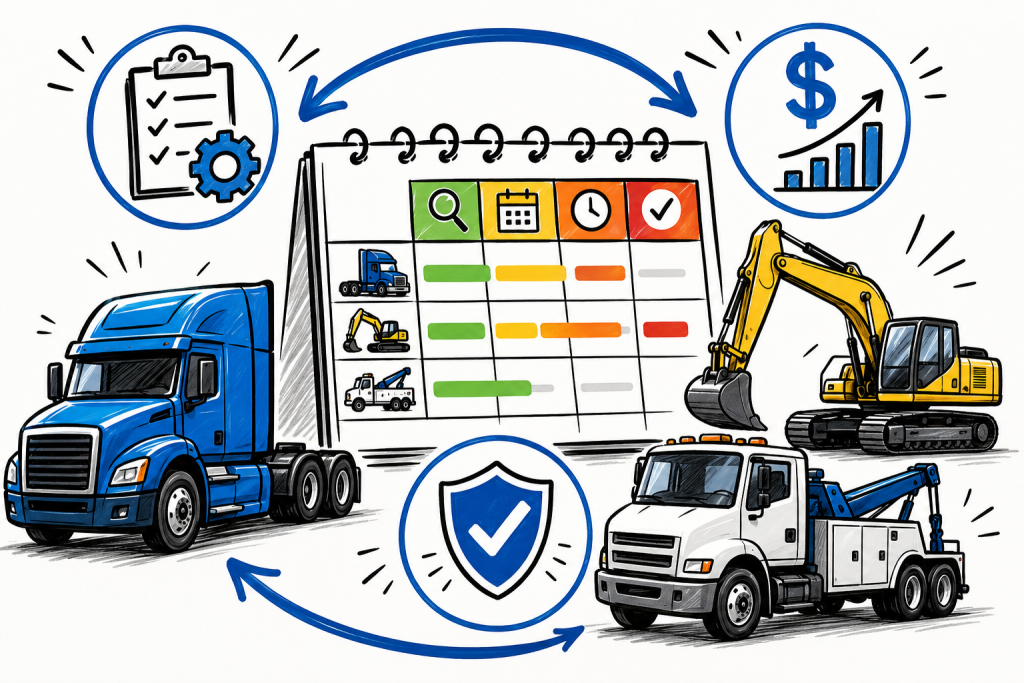
A truck that is down twice in a month, an excavator approaching a major undercarriage repair, or a tow unit that can no longer meet customer response expectations can force a replacement decision at the worst possible time. Knowing how to plan equipment replacements before that point gives your business more control over uptime, trade value, cash flow, and financing structure.
For established fleets and equipment-dependent businesses, replacement planning is not simply a matter of buying newer assets every few years. The right timing depends on the asset’s condition, maintenance pattern, utilization, remaining value, revenue role, and the availability of a suitable replacement. A high-mileage over-the-road tractor may need a different plan than a low-hour excavator, a specialized wrecker, or a wheelchair-accessible medical transport vehicle.
Age and mileage matter, but they are incomplete replacement triggers. A 7-year-old box truck with a dependable service record may continue producing revenue with manageable maintenance. A newer dump truck with recurring emissions-system issues, poor availability, or excessive downtime may be a more urgent candidate for replacement.
Track each asset’s direct and indirect operating costs. Direct costs include scheduled maintenance, unscheduled repairs, tires, parts, rental equipment, and fuel efficiency changes. Indirect costs can be more expensive: missed loads, delayed job schedules, driver frustration, overtime, customer service failures, and dispatch disruption.
A useful question is not, “What did this unit cost to repair last month?” Ask, “What is the likely cost of operating this asset for the next 12 to 24 months compared with replacing it?” One major repair does not always justify a replacement. But a repeated pattern of repairs, declining reliability, and increasing lost production often does.
For fleet assets, calculate cost per mile, cost per operating hour, or cost per completed job. For construction and industrial equipment, maintenance cost per hour and downtime per project can provide a clearer picture than calendar age. The objective is to identify the point where holding the asset becomes less economical than moving it while it still has usable resale or trade value.
A replacement plan should be a rolling schedule, not a once-a-year exercise. Separate equipment into logical groups based on use, condition, and replacement complexity. For example, a transportation company might group Class 8 tractors, dry vans, refrigerated trailers, straight trucks, and service vehicles separately. A contractor may separate excavators, skid steers, compact equipment, forklifts, and support trucks.
For each group, set practical planning ranges rather than rigid deadlines. A tractor may be reviewed at a certain mileage or age range, while a trailer may remain productive much longer if its frame, floor, brakes, and compliance requirements remain sound. Specialized assets such as wreckers, ambulances, buses, or car haulers require additional review because body configuration, chassis availability, compliance specifications, and lead times can affect replacement timing.
Your schedule should show four statuses: assets to monitor, assets likely to be replaced within 12 months, assets that need a replacement order now, and assets that should be sold, traded, or redeployed. This gives operations, finance, and purchasing the same view of upcoming needs.
Do not assume every older unit should be replaced with an identical model. Changes in route density, payload, driver availability, fuel strategy, job mix, or customer contracts may support a different specification. Replacing a light-duty unit with a medium-duty unit, adding liftgate capacity, selecting a different trailer configuration, or moving to a more productive machine can improve the economics even when the monthly payment is higher.
The replacement window should account for the time it takes to source, approve, prepare, and place equipment into service. Ordering only after a unit fails can leave a business exposed to vendor inventory constraints, body-builder lead times, title issues, inspections, or financing documentation requirements.
Start with the in-service date, then work backward. Consider the vendor’s expected delivery date, any upfitting or customization, insurance requirements, registration, decals, GPS installation, permits, and driver or operator training. A standard late-model tractor from dealer inventory may be ready sooner than a custom rollback, a vocational truck with a specialized body, or a new machine with attachments.
Used equipment requires a different review. Condition, maintenance records, hour or mileage accuracy, prior use, seller type, and asset age can all influence both suitability and financing options. A lower purchase price can be attractive, but it may not offset an uncertain repair history or shorter remaining useful life. For a revenue-producing asset, the lowest acquisition cost is not always the lowest operating cost.
Maintaining limited backup capacity can also change the plan. A fleet with spare tractors or a contractor with access to rental equipment can tolerate a longer transition. A business operating near full utilization may need replacements in service before retiring the old units. That approach can create a short period of overlapping payments, but it may protect revenue and customer commitments.
A replacement plan should include more than the equipment purchase price. Build an all-in estimate that accounts for taxes and fees where applicable, delivery, installation, attachments, body work, telematics, insurance changes, initial maintenance, and any required deposits. For used assets, allow room for inspections, immediate repairs, or reconditioning.
Then decide how much capital should be committed at one time. Paying cash may reduce financing expense, but it can also tie up liquidity needed for payroll, materials, fuel, seasonal swings, or a new contract. Financing may preserve working capital and align equipment cost with the revenue the asset produces over time. The tradeoff is that the structure, term, down payment, and total financing cost must fit the asset and the company’s broader financial position.
Avoid treating the monthly payment as the only decision point. A longer term can lower the monthly obligation, which may help cash flow, but it can also leave a balance outstanding longer as the asset depreciates. A shorter term can build equity faster but requires more monthly cash. The appropriate structure depends on the asset’s useful life, expected utilization, replacement cycle, and your business’s financial priorities.
Well-prepared replacement planning gives a financing partner and potential funding sources a clearer transaction to evaluate. Established businesses should keep current financial information available, including recent business bank statements, financial statements when requested, tax returns if required, debt schedules, and details on existing equipment obligations.
The equipment file matters too. Have a vendor quote, year, make, model, vehicle identification number or serial number when available, mileage or hours, purchase price, seller information, and a clear explanation of intended business use. If equipment will replace an existing unit, explain what happens to the old asset: trade-in, sale, retention as a spare, or payoff from proceeds.
Qualification and structure can vary based on time in business, credit strength, fleet history, cash flow, existing debt, asset type, asset age, seller type, and down payment. Newer equipment from a recognized dealer may be evaluated differently than an older specialized unit sold privately. Strong documentation and a clear replacement rationale can reduce avoidable back-and-forth.
A specialized equipment finance broker such as Commercial Fleet Financing can help qualified businesses match a replacement transaction to appropriate funding sources, coordinate with vendors, and work through documentation requirements. Timing, available terms, down payment, and funding speed remain conditional on the borrower profile, asset, lender requirements, and complete transaction details.
Replacement plans lose value when they sit unchanged in a spreadsheet. Review them quarterly and after meaningful changes such as a major repair, a new customer contract, a utilization increase, a driver shortage, or a shift in vendor availability.
Compare actual maintenance and downtime against your assumptions. If a unit is outperforming its plan, you may defer replacement and preserve capital. If repair frequency rises or resale value declines faster than expected, move the unit forward in the schedule. The goal is not to replace equipment on a fixed date. It is to make a deliberate decision while your business still has choices.
A well-timed replacement puts productive equipment into service before aging assets begin dictating your operating schedule. That creates a stronger position with vendors, funding sources, drivers, customers, and your own cash flow.
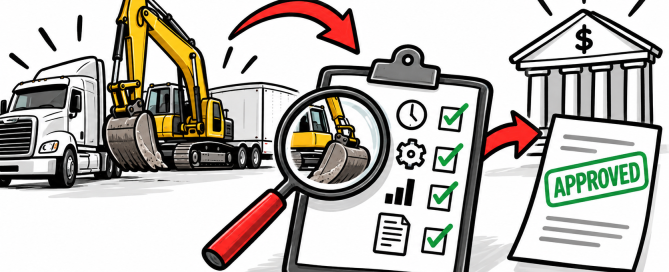
Learn how equipment collateral affects commercial financing, from asset value and condition to advance rates, documentation, and deal structure decisions.
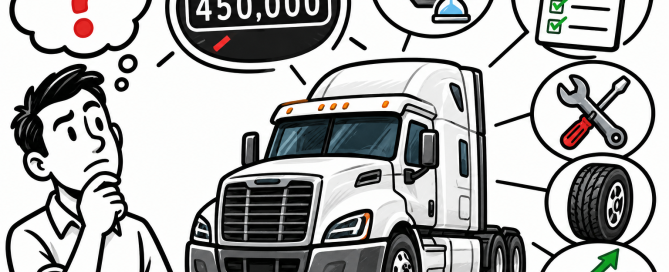
Learn how to evaluate commercial truck mileage before buying or financing, using engine hours, service records, asset age, and intended duty cycle needs.

Fleet cash flow affects uptime, buying power, and growth. Learn how established businesses can plan equipment purchases while protecting working capital.
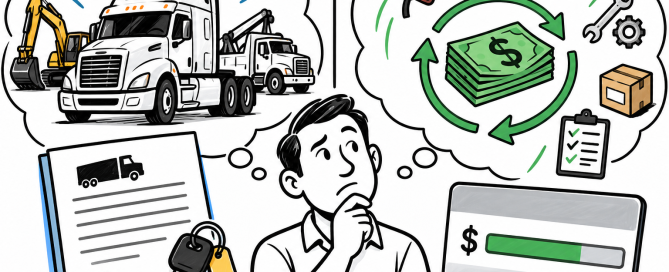
Compare fleet loans versus credit lines for equipment purchases, repairs, and expansion. See how terms, collateral, cash flow, and timing shape the choice.
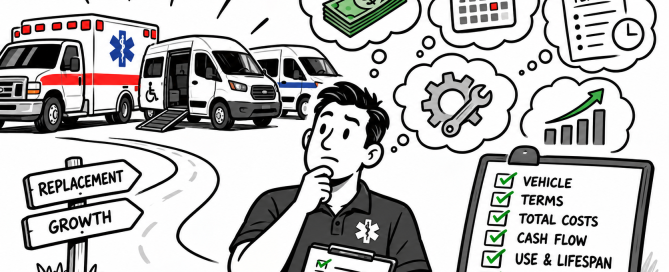
This medical transport financing review explains how established operators can compare terms, protect cash flow, and put the right vehicle in service.