Used Box Truck Financing Requirements Explained
Used box truck financing requirements vary by truck age, mileage, seller, credit, and operating history. See what lenders review before you buy for work.

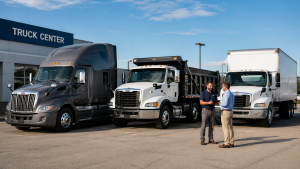
A quarter-point change in pricing can look small on paper and still reshape the monthly payment on a semi-truck, dump truck, or box truck that needs to earn revenue right away. That is why commercial truck financing rates matter so much to fleet operators, owner-operators, contractors, and business buyers. The rate is not just a number. It affects cash flow, working capital, replacement timing, and how quickly a new asset starts paying for itself.
Many borrowers start by asking for the lowest rate, which makes sense. But in commercial equipment finance, the lowest quoted number is only part of the story. Commercial truck financing rates usually reflect the overall risk and structure of the deal, not just a broad market average.
Lenders and finance sources are looking at the borrower, the truck, and the intended use. A newer sleeper tractor with strong resale value, bought by an established carrier with clean time in business and solid cash flow, is a very different credit profile from an older vocational truck being purchased by a newer company with limited operating history. Both may be financeable, but they are unlikely to price the same way.
That is why experienced financing support matters. The structure of the file, the documentation presented, and the lender fit can influence the outcome as much as the headline rate itself.
Credit quality still matters, but commercial underwriting goes further than a personal score. Time in business, annual revenue, debt load, industry experience, and cash reserves all play a role. A borrower with stable contracts, organized financials, and a clear operating plan often presents as lower risk than a newer business with inconsistent deposits or thin documentation.
For owner-operators and smaller fleets, lenders may also look closely at prior equipment ownership, CDL background, and whether the borrower is replacing an existing unit or expanding capacity. Replacement purchases can sometimes be viewed more favorably because the business already has a proven use case.
Not every truck is priced the same. Over-the-road semis, dump trucks, tow trucks, rollbacks, refrigerated trucks, and box trucks each carry different resale profiles and operational risks. Newer equipment often qualifies for more favorable terms because it is easier to value, easier to insure, and typically less expensive to maintain in the near term.
Used trucks can still be a smart buy, especially when the asset is well-spec’d and priced correctly, but older units sometimes bring tighter advance limits, shorter terms, or higher rates. The issue is not just age. It is the combination of age, mileage, condition, and how liquid that asset would be if the lender had to remarket it.
More money down can improve the financing profile, though it is not always required in the same way for every deal. A meaningful down payment lowers the lender’s exposure and can help with approval strength, monthly payment, and sometimes pricing. On the other hand, preserving cash may be more important for a business that needs funds for fuel, payroll, repairs, permits, or startup operating costs.
This is where structure matters. A slightly higher rate with better cash preservation may be the better business decision if it keeps the truck on the road and generating revenue. The cheapest rate is not always the strongest operational choice.
Longer terms usually reduce monthly payments, which can help cash flow. They can also increase total finance cost over time. Shorter terms may lower overall cost but create a heavier monthly burden. That trade-off matters if the truck will be used hard, if margins are tight, or if the business expects to rotate equipment on a shorter replacement cycle.
For example, a contractor financing a dump truck may prioritize manageable monthly payments during seasonal swings, while a larger fleet with stronger liquidity may prefer a shorter term to reduce total cost and cycle into newer equipment faster.
Commercial truck financing rates are not fixed the way many borrowers expect. Two businesses buying similar trucks can receive very different offers because lenders are pricing the full deal, not just the asset class.
A borrower with strong tax returns, good liquidity, and a clean payment history may qualify for more competitive terms than a startup with limited documentation. A truck purchased from a reputable dealer with complete invoices and specs may also move more smoothly than a private-party transaction with documentation gaps. Even the intended use matters. Long-haul freight, towing, oilfield support, municipal work, and construction hauling each carry different underwriting considerations.
That is one reason rate shopping without context can waste time. A quote that sounds attractive may be based on ideal credit, a specific asset age, or a structure that does not match the actual transaction.
Borrowers usually have more influence over pricing than they think. The strongest files are clean, complete, and easy to underwrite. That starts with accurate business information, recent bank statements, clear equipment details, and realistic expectations around term and down payment.
If you are planning a purchase, it helps to have the truck identified, the seller documentation ready, and a clear explanation of how the unit fits your operation. Lenders respond better when they can see the business purpose immediately. Replacing an aging truck that is causing downtime, adding units to support contracted demand, or purchasing a specialized vocational truck for a defined revenue stream all help frame the request.
It also helps to avoid unnecessary credit activity before applying. Major new obligations, inconsistent deposits, or missing paperwork can create friction and delay approval decisions. In commercial finance, speed often comes from preparation.
The best financing outcome is not always the one with the lowest rate. It is the one that fits how your business actually runs. A truck that earns revenue every day needs a payment structure that works with your receivables, operating costs, and maintenance cycle.
A lower monthly payment may give you room to hire a driver, absorb insurance costs, or handle startup fuel expenses. A larger down payment may improve terms but leave less cash available for tags, repairs, or payroll. A shorter term may save money overall but pressure monthly cash flow during slower periods. All of those factors should be weighed together.
For many equipment buyers, timing matters almost as much as pricing. A delayed funding process can mean losing the truck, missing a contract start date, or keeping an unreliable unit in service longer than planned. That is why experienced financing coordination can be valuable. Matching the file to the right lending program, preparing the package correctly, and staying ahead of documentation issues can matter just as much as rate negotiation.
In some cases, fast approvals and funding in as little as 24 hours may be possible, but that depends on the borrower profile, asset, lender requirements, and how complete the file is when submitted.
Before moving forward, ask how the rate aligns with the term, down payment, and total payment structure. Ask whether the truck’s age affected pricing, whether additional documentation could improve the offer, and whether there are alternative structures worth reviewing. A practical financing partner should be able to explain not just what the offer is, but why it looks the way it does.
That conversation is especially important for businesses buying multiple units, replacing core fleet assets, or financing specialized trucks like wreckers, rollbacks, dump bodies, or refrigerated equipment. Those deals often benefit from a financing source that understands the equipment category and the business use behind it.
Commercial Fleet Financing works with businesses across the U.S. that need financing for revenue-producing trucks and equipment, and that specialization matters when the goal is not just getting a quote but getting a deal structured correctly.
A good rate is useful. A workable structure is what keeps the truck productive, the payment manageable, and the business positioned for the next purchase.
Used box truck financing requirements vary by truck age, mileage, seller, credit, and operating history. See what lenders review before you buy for work.
Equipment finance industry trends are reshaping fleet planning, lender review, and capital decisions for established U.S. operators across markets today.
This commercial fleet financing guide explains how established businesses structure vehicle and equipment purchases around cash flow, uptime, and growth.
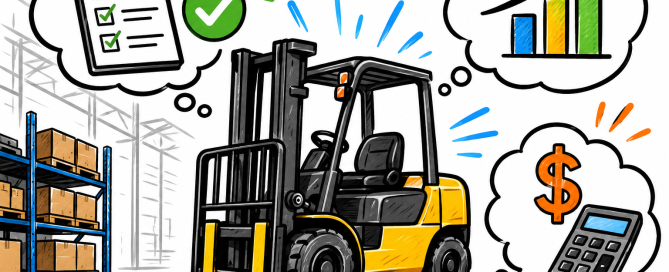
Learn how to finance forklifts with financing structures, credit factors, and buying steps that protect cash flow, support uptime, and growth plans.
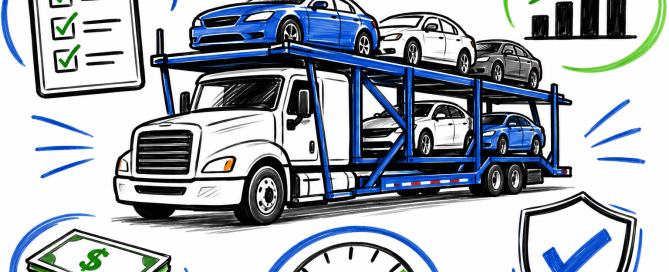
Learn how to finance a car hauler with terms, down payment, asset age, credit, and documentation factors that shape a commercial equipment transaction.