How to Plan Equipment Replacements Without Gaps
Learn how to plan equipment replacements around uptime, cash flow, resale value, and financing so your fleet stays productive as assets age and costs rise.


A first truck deal can look good on paper and still put a new business in a tight spot by month three. The best semi truck financing for new owner operators is not just the lowest payment or the fastest approval. It is the financing structure that matches your revenue plan, equipment choice, operating history, and cash position well enough to keep the truck moving and the business stable.
That distinction matters because new owner-operators usually enter the market with two competing pressures. You need to preserve cash for fuel, insurance, permits, repairs, and the first few weeks of operating expenses. At the same time, lenders and finance sources want to see a deal that makes sense, both from an asset standpoint and a business standpoint. If either side gets ignored, the truck can become a strain instead of a revenue-producing asset.
For a new owner-operator, a strong financing offer usually balances five things: manageable down payment, payment structure, truck age and mileage, documentation strength, and realistic terms based on the intended use of the truck. That is why there is no single program that fits every borrower.
A buyer with strong personal credit, industry experience, and a clean deal package may qualify for more flexible structures than a first-time buyer with limited liquidity or a truck that falls outside typical lender preferences. Likewise, a newer sleeper tractor with solid specs from a reputable dealer will often finance differently than an older day cab bought through a private seller.
The practical takeaway is simple. The best financing is the one that supports the truck’s ability to generate income without overextending the business in the first 90 to 180 days.
New owner-operators often focus on monthly payment first. That is understandable, but lenders usually start with the collateral. They want to know what unit is being financed, how it will be used, and whether the transaction fits their credit box.
Truck age, mileage, condition, engine type, emissions profile, and seller type can all influence structure. A late-model tractor with reasonable mileage may open more options than a high-mileage unit with an uncertain maintenance record. Sometimes the cheaper truck is actually the harder one to finance, or it requires more cash down. In those cases, trying to save on purchase price can create more pressure on working capital.
This is one reason experienced financing support matters. A specialized commercial financing partner can help identify whether the equipment itself is helping or hurting the deal before time gets lost chasing the wrong structure.
New trucks can offer better reliability and stronger lender comfort, but they come with a higher equipment cost. Used trucks are often more accessible for first-time buyers, yet they can trigger tighter advance limits, shorter terms, or larger down payment expectations depending on age, mileage, and overall profile.
For many new owner-operators, the better answer is not automatically new or used. It depends on route type, contract stability, maintenance reserves, and how much downtime the business can absorb.
A new business does not always mean an impossible financing request. Plenty of first-time buyers are financeable. The key is understanding what helps offset limited time in business.
Credit quality is still important, but it is not the only factor. Lenders may also look at CDL experience, prior employment in trucking, business setup, cash available for down payment and startup costs, and the quality of the truck being purchased. If you already have a dispatch plan, a letter of intent, or a clear operating strategy, that can also help present a more complete borrower profile.
Documentation matters more than many buyers expect. A clean application, matching business information, bank statements when requested, proof of identity, insurance details, and seller documentation can all affect how quickly a transaction moves. Many delays happen not because the deal is weak, but because the file is incomplete or inconsistent.
The structure of the deal affects cash flow as much as the approval itself. A lower payment can be helpful, but only if it does not create other problems, such as too much total cost, a large end-of-term obligation, or a mismatch between payment timing and business revenue.
Some borrowers benefit from traditional equipment finance structures with fixed terms and predictable payments. Others may need a different approach based on credit profile, truck type, or startup status. The right structure often depends on how much the borrower can put down, how the truck is sourced, and how strong the overall file looks to the lender.
This is where newer owner-operators can make expensive mistakes by shopping only on headline terms. A quote that looks attractive at first glance may come with requirements or limitations that create friction later. It is better to review the whole deal than to focus on one number.
A lower down payment can preserve cash, which is valuable when starting out. But low-down or zero-down possibilities, when available, usually depend on the full borrower profile, equipment quality, and lender requirements. They are not universal.
In many cases, putting some money down is not just about approval. It can improve structure, strengthen the application, and reduce pressure on the business after funding. The goal is not to minimize cash at all costs. The goal is to keep enough capital available for real operating needs without weakening the file.
The first mistake is buying based on urgency alone. If a unit is available and the seller is pushing for speed, buyers sometimes move forward before confirming whether the truck fits normal lending parameters.
The second is underestimating total startup expense. Insurance down payments, authority-related costs, maintenance, fuel advances, registration, and early operating gaps can hit at once. If every available dollar goes into the truck, the business may start undercapitalized.
The third is assuming every finance source views the deal the same way. They do not. Different lenders have different appetites for startups, truck age, mileage, seller type, and credit profile. A well-structured submission can make a meaningful difference.
The fourth is weak documentation. Missing information slows decisions and can create concerns that were not there at the start.
A first-time buyer can take practical steps to improve financing outcomes. Start by forming the business correctly and making sure names, addresses, and documents match across the application. Have your CDL information ready, along with business formation documents and proof of insurance when required.
Choose the truck carefully. Dealer-sourced equipment with complete unit details is often easier to underwrite than a loosely documented private-party transaction. If you are comparing units, ask for year, make, model, VIN, mileage, and seller information upfront so the deal can be evaluated correctly.
Be realistic about your budget. The right truck is one your business can support, not just one you can technically qualify to finance. A payment that works only if every week is perfect is usually too aggressive for a startup.
It also helps to work with a financing partner that understands revenue-producing commercial vehicles and can align the deal with lenders that handle startup and first-time owner-operator scenarios. That kind of guidance can save time and help avoid preventable declines tied to structure rather than borrower potential.
In trucking, equipment timing is business timing. If you have a driver opportunity, freight relationship, or replacement need, delays can cost revenue. That is why speed matters, but speed without preparation does not help much.
A specialized commercial financing partner can often move more efficiently when the application is complete, the truck information is clear, and the borrower understands what may be requested. Depending on the deal, approvals and funding coordination can move quickly, but timing always depends on documentation, lender requirements, and the specifics of the transaction.
For new owner-operators, the best approach is to prepare before the perfect truck appears. Know your budget, have your documents ready, and understand what kind of deal makes sense for your first year of operation.
The right financing should help you put a truck into service with enough room left to run the business well. That is usually the difference between buying a truck and building a trucking operation.
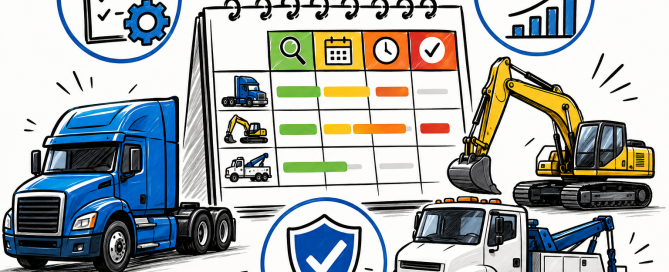
Learn how to plan equipment replacements around uptime, cash flow, resale value, and financing so your fleet stays productive as assets age and costs rise.
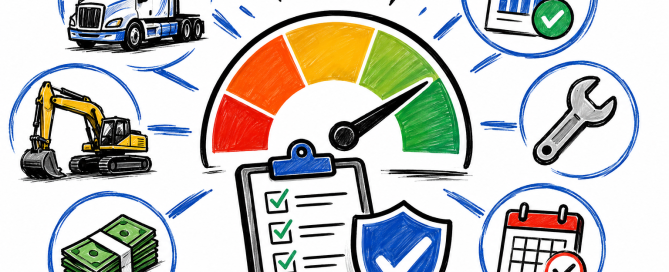
What credit score matters in commercial equipment financing? Learn how business and personal credit, asset quality, and deal structure affect options.
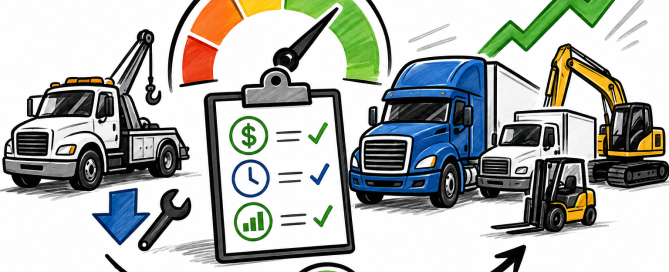
Learn when fleet financing makes sense for replacing aging equipment, preserving working capital, and adding capacity without disrupting daily operations.
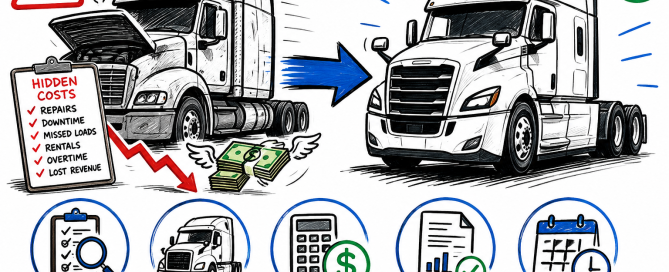
A truck replacement financing guide for established fleets: compare structures, protect working capital, and put dependable equipment into service faster.
Can businesses finance older equipment? See how asset age, mileage, condition, seller type, and borrower strength affect commercial financing options.