Top Fleet Acquisition Strategies for Growing Businesses
Compare top fleet acquisition strategies for replacing, expanding, and financing commercial vehicles while protecting cash flow and uptime with confidence.

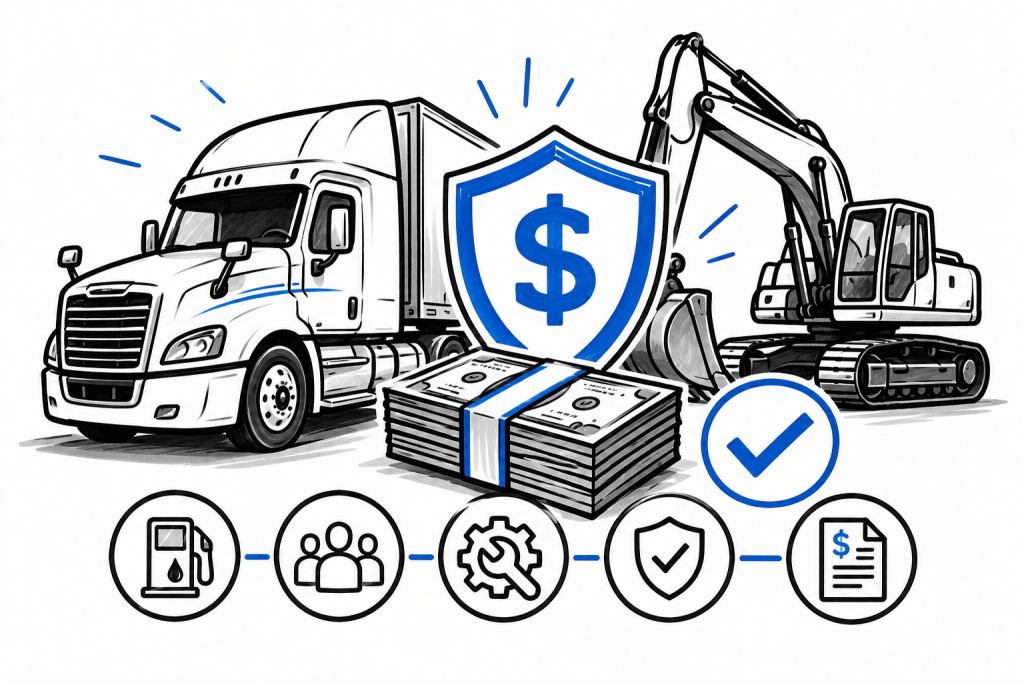
A $250,000 truck, trailer package, excavator, or rollback can be the right operational purchase and still create a cash-flow problem if it drains the account that covers payroll, fuel, insurance, repairs, and receivables. Established businesses preserve working capital for equipment purchases by matching the asset’s cost and useful life to a financing structure that leaves enough liquidity to operate through normal swings in revenue and expense.
The question is not simply whether your business can pay cash. It is whether paying cash produces the best operating position after the equipment is delivered, insured, titled, upfitted, and put to work. For fleet and equipment-dependent companies, available cash is often more valuable as operating capacity than as a one-time equipment payment.
Working capital is the funds available for day-to-day business needs after current obligations are considered. In practical terms, it is what helps a carrier cover fuel and driver payroll while invoices are outstanding, what lets a towing company handle an unexpected transmission repair, and what allows a contractor to mobilize crews before a project draw arrives.
Equipment purchases can consume cash well beyond the invoice price. A newly acquired tractor may need plates, insurance changes, telematics, decals, an ELD setup, a wet kit, or other specifications before it can generate revenue. A construction machine may require transport, attachments, site preparation, and operator allocation. When cash is tied up in the purchase itself, these follow-on costs can force a business to delay deployment or rely on a short-term operating line.
That is why a lower total cost from paying cash is not automatically the better decision. The relevant comparison is the cost of financing against the value of retaining liquidity, avoiding disruption, and putting a productive asset into service at the right time.
Commercial equipment financing spreads the cost of a revenue-producing asset over a defined term. Rather than use the full purchase price at closing, the business typically contributes a down payment, if required, and makes scheduled payments from operating cash flow while the equipment is in service.
For an established business replacing three aging day cabs, this may mean retaining cash for tires, maintenance reserves, driver recruiting, and fuel. For a demolition contractor buying a late-model excavator, it may mean keeping enough liquidity to take on the next project without waiting for the equipment purchase to be recovered through billings.
The structure needs to reflect the asset and the business. A newer, titled truck with a predictable resale market may support different financing considerations than a specialized wrecker, high-hour dozer, or older machine with limited secondary-market demand. Asset age, mileage or hours, seller type, purchase price, and intended commercial use all affect the available options.
Monthly payments are common, but monthly is not always the only useful way to view affordability. A business should compare the payment with the revenue the equipment is expected to produce, the utilization required to support it, and the timing of customer payments.
A box truck on a contracted route may have predictable weekly revenue. A dump truck supporting seasonal work may have a more uneven earning pattern. A medical transport operator may need to account for reimbursement cycles. The right term and payment structure depend on those realities, not just on the lowest possible monthly payment.
Longer terms can reduce the monthly payment and preserve more near-term cash. The tradeoff is that the business may pay more over the life of the financing and could carry a balance longer than it prefers. Shorter terms generally build equity faster but place greater pressure on monthly cash flow. Neither approach is universally better.
Before requesting financing, build a complete equipment budget. This is especially important with vocational trucks and custom builds, where the chassis, body, attachments, installation, and delivery may be quoted separately.
Include the purchase price, sales tax where applicable, freight, installation, upfits, attachments, warranties, documentation fees, and expected costs to place the asset in service. Also identify any trade-in value, deposits already paid, and manufacturer or dealer incentives that may affect the transaction.
A clear budget helps prevent a common mistake: financing only the base equipment price and then using working capital to cover every required add-on. It also gives financing sources a cleaner picture of what is being acquired and why each component is necessary for business use.
For example, a towing company purchasing a $180,000 rollback may also need wheel-lift equipment, lighting, communications equipment, decals, and transport from the body builder. If those costs are part of making the truck revenue-producing, they should be discussed early rather than treated as afterthoughts.
A larger down payment can lower the amount financed and may improve the overall structure. It can be particularly relevant for older equipment, higher-mileage trucks, specialized assets, or transactions where the borrower wants to reduce the lender’s exposure.
But using every available dollar for down payment can undermine the goal of preserving working capital. The better question is: how much cash can the business put into the transaction while still maintaining a sensible operating reserve?
For well-qualified businesses, low-down-payment or, in some cases, zero-down structures may be available. Those outcomes depend on factors including business and personal credit strength, time in business, fleet or equipment history, financial documentation, asset type, seller, and lender requirements. A low down payment is not automatically the right choice if the resulting payment is too aggressive for the equipment’s expected utilization.
Financing should support the replacement cycle rather than work against it. A company that historically trades tractors before mileage and maintenance costs accelerate may not want a structure that leaves it significantly upside down at its normal replacement point. Conversely, a business that keeps well-maintained equipment for many years may prioritize a payment schedule that supports longer-term ownership.
Used equipment requires additional discipline. A lower purchase price can make a used truck, trailer, forklift, or yellow iron asset attractive, but age, mileage, hours, condition, and remaining useful life matter. Financing a ten-year-old machine over an extended term may create a low payment while exposing the business to greater repair risk as the asset ages.
Review maintenance records, inspection results, title status where relevant, serial numbers, and any rebuild or refurbishment details. For trucks, confirm mileage, engine and emissions-system condition, and whether the specification fits the intended lanes and loads. For construction equipment, consider undercarriage condition, hydraulic performance, attachments, and local service support. The asset must be financeable, but it also has to be operationally sound.
The fastest path from quote to funding is usually a well-prepared file, not a rushed application. Financing sources commonly evaluate the business profile, credit history, time in business, equipment details, vendor information, and the economics of the transaction. Larger or more complex requests may require additional financial information.
Useful documents often include the equipment quote or purchase order, business formation information, recent bank statements, financial statements when requested, tax returns when requested, and identification for guarantors or owners. The exact package varies by deal.
Vendor coordination matters too. A dealer invoice, private-party bill of sale, build sheet, serial number, payoff information, or delivery confirmation can affect timing. Private-party equipment purchases may require more verification than acquisitions from established dealers. Custom equipment may need progress-payment planning if the asset is being built over time.
CFF works as a specialized commercial equipment finance broker and financing partner, helping qualified businesses organize the transaction, present the equipment and operating story clearly, and evaluate available structures from multiple funding sources. That support can be particularly useful when a deal involves used equipment, a specialized body, multiple assets, or a time-sensitive replacement.
Preserving cash is not a reason to delay a necessary replacement indefinitely. An aging truck that regularly misses dispatch, a loader with repeated hydraulic failures, or a tow unit that cannot meet customer demand has a cost beyond repair invoices. Lost billable hours, missed contracts, rental expense, overtime, and customer frustration can outweigh the savings from waiting.
A practical review compares three scenarios: continue repairing the current asset, pay cash for a replacement, or finance the replacement while retaining operating reserves. Include projected downtime, maintenance exposure, resale or trade value, and the equipment’s expected revenue contribution. The result will not be exact, but it is more useful than comparing only the purchase price and monthly payment.
The right equipment purchase should leave the business with two things: an asset that can reliably produce revenue and enough liquidity to support the operation around it. Before signing a quote, review the equipment specification, delivery path, total in-service cost, down payment, payment schedule, and remaining cash reserve together. That is how a replacement or expansion becomes a planned operating decision instead of a strain on the business.
Compare top fleet acquisition strategies for replacing, expanding, and financing commercial vehicles while protecting cash flow and uptime with confidence.
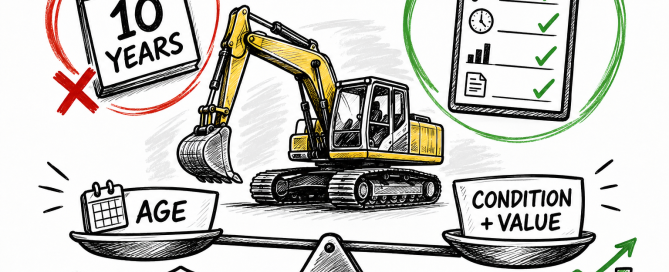
Does equipment age matter? Learn how age, mileage, condition, seller type, and useful life can affect commercial equipment financing options and timing.
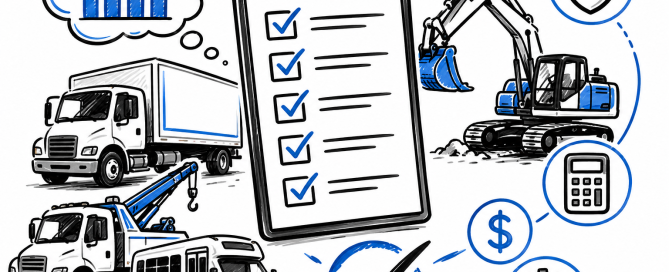
Use this fleet acquisition checklist to assess equipment fit, costs, financing readiness, vendors, and uptime before committing capital to a purchase.
A fleet financing partner review helps established businesses compare lender access, equipment knowledge, terms, timing, and support before they commit.

Learn how to finance ambulances with terms that protect cash flow, fit vehicle specifications, and help qualified medical fleets stay ready for service.