The Construction Equipment Industry — Poised for Steep Growth
Heavy Equipment Financing: How to Grow with the Industry [...]

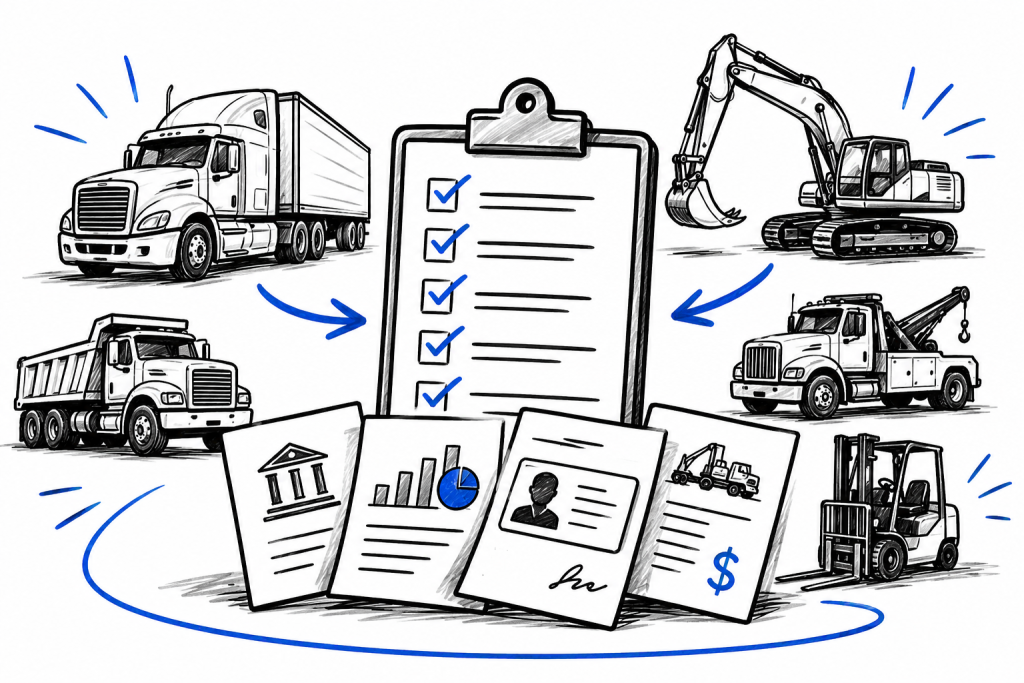
If you are trying to put a truck, trailer, excavator, rollback, forklift, or other revenue-producing asset into service quickly, paperwork can either move the deal forward or stall it. A common question is what documents are needed for equipment financing, and the honest answer is that it depends on the borrower, the equipment, the lender program, and how the deal is structured.
That said, most commercial equipment finance requests follow a predictable pattern. Lenders want to verify who the borrower is, what equipment is being purchased, how the business performs, and whether the transaction makes sense for the asset and the use case. When those pieces are organized upfront, approvals tend to move faster and with fewer conditions.
For many transactions, the starting file is fairly simple. A lender may ask for a completed application, basic business information, an equipment quote or invoice, and identification for the principal owner or guarantor. From there, the document list can expand based on credit profile, time in business, equipment type, requested amount, and whether the asset is new or used.
A strong file often includes business formation documents, recent bank statements, tax returns, and sometimes financial statements. For owner-operators, small fleets, contractors, and closely held businesses, lenders may also ask for proof of commercial use, insurance details, or a breakdown of existing equipment and debt. The cleaner the file, the easier it is to match the transaction to the right lending program.
The first item is usually the finance application. This gives the lender the legal business name, entity type, address, tax ID, ownership structure, requested amount, and information on the equipment being acquired. Accuracy matters here. Small mismatches between the application, invoice, and business records can create unnecessary back-and-forth.
The second document is the equipment invoice, quote, or purchase order. This tells the lender exactly what is being financed. It should include the seller or vendor name, equipment description, year, make, model, serial number or VIN when available, and the total purchase price. If there is a down payment, trade-in, soft costs, delivery charge, or installation component, those details should be shown clearly.
The third is identification for the business owner or guarantor. In most cases, that means a valid government-issued photo ID. If the borrower is a corporation, LLC, or partnership, lenders may also request business formation documents such as articles of organization, incorporation paperwork, or a certificate showing the entity is active.
Not every borrower has to provide a full financial package, but many do. When requested, recent business bank statements are among the most common items. Lenders use them to confirm cash flow, average balances, NSF activity, and how the business manages its operating account.
Tax returns are also common, especially for larger requests, startups, challenged credit files, or transactions involving specialized or older equipment. A lender may ask for one to three years of business tax returns and, in some cases, personal tax returns for the principal owner. This is less about curiosity and more about validating revenue trends, profitability, and repayment capacity.
Some files also require interim financials. That may include a profit and loss statement, balance sheet, or accounts receivable aging. Construction companies, trucking businesses, medical transport operators, and seasonal businesses often benefit from adding context here, especially if the latest tax return does not reflect current contract volume or fleet growth.
Lenders need to know they are financing a real operating business. Depending on the borrower profile, they may request an EIN confirmation letter, business license, secretary of state registration, or a voided business check. If the business recently changed names, ownership, or structure, those records should be ready as well.
For corporations, LLCs, and partnerships, ownership verification can become important. An operating agreement, corporate resolution, or partnership agreement may be needed to confirm who has authority to sign. This comes up often when there are multiple owners, holding companies, or affiliated entities involved in the transaction.
If the business operates under a DBA, make sure the invoice and application align with that setup. One of the most common delays in commercial equipment finance is not credit. It is inconsistent paperwork.
The type of asset being financed matters. A new box truck from a dealer may require a cleaner and shorter file than a used excavator from a private seller. If the equipment is used, lenders may ask for additional detail about condition, hours, mileage, photos, maintenance records, or serial-number verification.
For titled vehicles such as semi-trucks, dump trucks, tow trucks, buses, and ambulances, title-related documentation can be part of the funding package. If there is a trade-in or payoff involved, payoff letters and current lender information may also be required. For yellow iron, forklifts, and industrial equipment, serial numbers and equipment specs are usually critical.
If the asset is being purchased through a dealer, manufacturer, or established vendor, documentation is often more standardized. Private-party transactions can still be financeable, but they usually require more diligence because the lender needs to verify ownership, condition, and the legitimacy of the sale.
Newer businesses can still qualify for equipment financing, but documentation typically carries more weight. A lender may want to see stronger personal credit support, additional bank statements, proof of industry experience, or evidence of signed contracts that show how the equipment will generate revenue.
For example, an owner-operator buying a first semi-truck may need to provide a CDL, proof of trucking experience, and possibly a contract or dispatch history. A new construction company financing a skid steer or mini excavator may be asked for current jobs, customer agreements, or proof of business deposits. The less operating history there is, the more the lender tends to focus on the borrower’s background and the equipment’s income potential.
Business owners sometimes assume more paperwork means something is wrong. Not necessarily. It often means the lender is trying to place the deal in the right credit box.
A straightforward request for a newer trailer or forklift with solid business credit may move on a streamlined document set. A larger transaction, an older asset, a startup file, a thin-credit borrower, or a more specialized piece of equipment may call for more support. The goal is not paperwork for its own sake. The goal is to give the lender enough confidence to approve terms that fit the transaction.
This is also where working with a specialized commercial financing partner can help. When the financing team understands fleet assets, vocational trucks, construction equipment, and commercial-use underwriting, they can often identify the likely document needs early and help the borrower avoid preventable delays.
The best approach is to think like an underwriter before documents are requested. Make sure your business name is consistent across the application, invoice, bank account, and formation records. Use complete equipment descriptions. If the asset is used, gather photos, specs, and maintenance details early.
It also helps to review your bank statements before sending them. Frequent overdrafts, large unexplained transfers, or heavy personal and business commingling can raise questions. If there is a reasonable explanation, provide it upfront rather than waiting for an underwriter to ask.
If your business had a one-time disruption, changed ownership, expanded rapidly, or recently won major contracts, say so. Context matters in commercial finance. Numbers tell part of the story, but operating reality matters too.
A surprising number of delays come from avoidable issues. An invoice without a serial number, an application signed by the wrong party, expired identification, or tax returns missing all schedules can push funding back. So can mismatched addresses, missing entity documents, or equipment descriptions that are too vague.
Another common problem is waiting to gather documentation until after conditional approval. That can work on very small or highly streamlined transactions, but larger or more complex deals usually move better when the file is assembled early. If uptime matters and the equipment is needed for a job, route, contract, or fleet replacement, preparation is part of the financing strategy.
Instead of asking only what documents are needed for equipment financing, ask what the lender needs to prove. They need to prove the borrower exists, the signer has authority, the business can support the payment, the equipment has identifiable value, and the transaction fits commercial use.
Once you understand that logic, the document list stops feeling random. It becomes a checklist tied directly to approval and funding.
If you are planning to finance a commercial truck, trailer, bus, ambulance, forklift, or heavy equipment, getting your paperwork lined up early can save real time. A clean file does not guarantee approval or the exact terms you want, but it gives the transaction a much better chance to move without unnecessary friction. And when equipment is supposed to generate revenue, every day saved matters.
Heavy Equipment Financing: How to Grow with the Industry [...]
Empower Your Business By Financing Construction Equipment When your [...]
5 Tips for Growing Your Dump Truck Business Now's The [...]
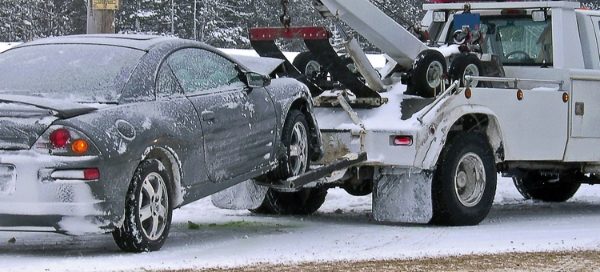
Making Big Money: Growing Your Tow Truck Business The [...]

The Hidden Costs of Dump Truck Ownership and How [...]