A Multi Unit Fleet Example for Five Trucks
This multi unit fleet example shows how five commercial trucks can be financed while protecting cash flow, managing documents, and timing delivery well.

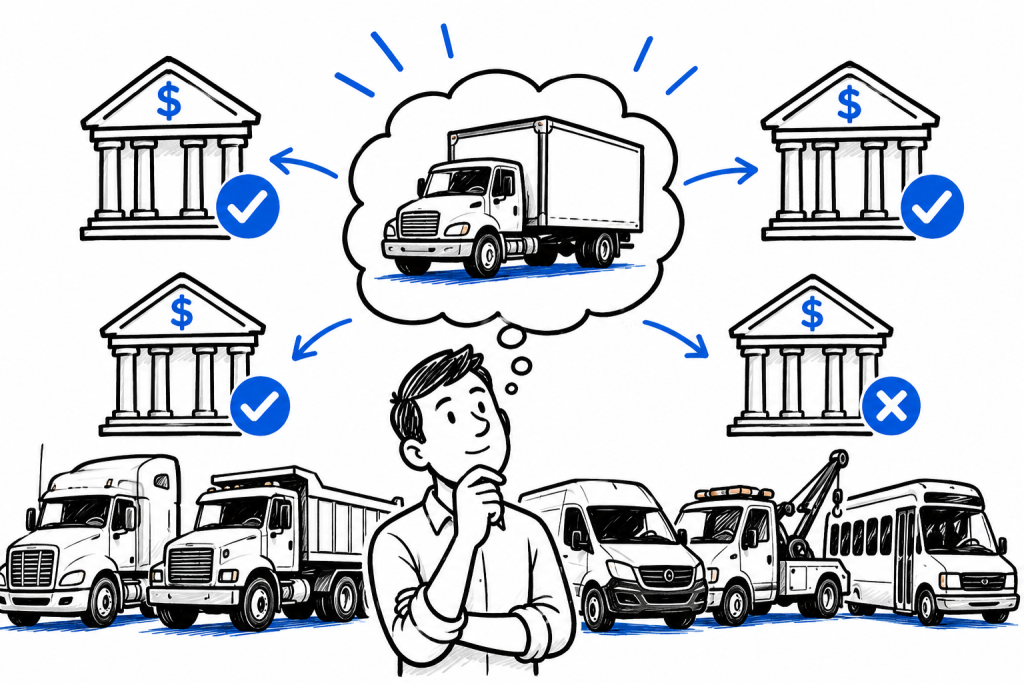
If you’re asking what banks finance commercial vehicles, you’re usually already past the shopping stage. You have a box truck, dump truck, semi, tow truck, van, or other business-use vehicle picked out, and now the real question is who will actually approve the deal on terms that make operational sense.
The short answer is that some banks do finance commercial vehicles, but not every bank is built for this type of transaction. Commercial vehicle financing is not the same as financing a passenger car. The lender has to understand the asset, the business use, the borrower profile, the age and type of equipment, and whether the unit supports revenue generation. That is where the process often separates generalist banks from commercial equipment-focused financing sources.
Large national banks, regional banks, community banks, and certain bank-owned equipment finance divisions may all finance commercial vehicles. The catch is that their appetite can vary a lot.
Some banks are comfortable with newer Class 8 trucks purchased by established carriers with strong financials. Others may finance cargo vans for service businesses, buses for transportation operators, or dump trucks for contractors. But many banks get more selective when the deal involves older equipment, a startup business, limited time in business, specialized vocational units, or a borrower who needs a faster turnaround than a traditional credit process can offer.
That matters because commercial vehicles are not one-size-fits-all assets. A lender may like a late-model tractor but hesitate on a rollback, a wrecker, a used box truck with higher mileage, or a specialized medical transport vehicle. The bank’s comfort level is shaped by resale value, industry risk, borrower experience, and how easy the unit is to underwrite.
A bank does not just look at the vehicle. It looks at the whole deal structure.
For commercial vehicle financing, lenders typically evaluate time in business, business revenue, cash flow, credit history, down payment if required, equipment age, equipment condition, and how the vehicle will be used in the business. If the borrower is expanding a fleet, replacing aging units, or buying equipment tied directly to contracted work, that can strengthen the file. If the transaction is urgent, unusual, or documentation is incomplete, approval can get harder.
Banks also tend to have policy boundaries. One bank may cap equipment age. Another may avoid first-year startups. Another may prefer owner-operators over larger fleets, or the reverse. A bank can be a good lender and still be the wrong fit for a specific commercial vehicle transaction.
That is why borrowers often get confused. They hear that banks finance commercial vehicles, but what they really need to know is which lenders are active in their exact asset class and borrower profile.
Banks and commercial financing sources commonly consider a wide range of business-use vehicles, but approval depends on the equipment and the borrower. The most commonly financed categories include semi-trucks, trailers, box trucks, cargo vans, sprinter vans, dump trucks, tow trucks, wreckers, rollbacks, buses, limousines, ambulances, and non-emergency medical transport vehicles.
Some lenders are also comfortable with vocational and municipal-type units, while others stay focused on more standardized over-the-road equipment. A contractor buying a dump truck and a medical transport operator buying a wheelchair-accessible van may both be looking for financing, but those are very different credit files from a lender’s perspective.
Used equipment adds another variable. Many banks prefer cleaner, newer units with a stronger collateral profile. Older commercial vehicles can still be financeable, but the lender pool may narrow and the structure may change.
If you go directly to a bank, expect the process to be more document-driven than consumer auto financing. Commercial vehicle lenders often ask for business bank statements, tax returns, financials, ownership information, invoices or purchase orders, equipment details, and sometimes explanations around use, experience, or recent business performance.
That is not necessarily a bad thing. A strong file can help a bank get comfortable quickly. But speed and flexibility can vary. Some institutions move efficiently on straightforward deals. Others take longer because commercial equipment is not their primary lane, or because the credit request has to work its way through internal review.
For business owners trying to put equipment into service fast, timing matters just as much as rate and term. Waiting too long for a lender that is unsure about the asset can cost more than a slightly different financing structure with a lender that understands the deal.
There are plenty of situations where a traditional bank is not the cleanest path.
Startups often run into resistance because banks usually want operating history. Borrowers with recent credit issues may find that policy-driven institutions are less flexible. Specialized equipment can be harder to place if the lender does not know the market. And if the seller is a dealer or vendor trying to move a transaction quickly, a long bank process can stall the sale.
This is where a specialized commercial financing partner can make a difference. Instead of relying on one credit box, the deal can be matched to lenders that understand business-use vehicles, fleet assets, and equipment categories with different underwriting preferences. That helps when the transaction involves a unique unit, a used asset, a growing fleet, or a borrower with a more nuanced profile.
Borrowers often start with the wrong question. Instead of only asking what banks finance commercial vehicles, it is smarter to ask what type of lender is likely to finance this specific vehicle for this specific business.
A strong financing outcome usually depends on six practical factors: the borrower, the business, the equipment, the seller, the documentation, and the timeline. If those pieces line up, there may be multiple workable options. If one or two are weak, lender selection becomes much more strategic.
For example, an established trucking company buying a newer used semi from a reputable dealer is a different situation than a new towing company buying an older wrecker from a private seller. Both may be financeable, but they will not fit the same lender profile or structure.
That is why experience in deal structure matters. Matching the file to the wrong lender wastes time. Matching it correctly can improve approval odds, reduce back-and-forth, and keep the purchase moving.
Before applying, get clear on the equipment and your operating story. Lenders want to understand what you are buying, how it will be used, and why it makes sense for the business.
It helps to have the seller information, equipment specs, purchase price, and basic business documents ready. If the unit is replacing an aging vehicle, expanding capacity, or tied to contract demand, say that clearly. If you have industry experience, include it. If cash flow supports the payment, make that easy to see.
Borrowers sometimes think the lowest advertised rate should drive the whole decision. In commercial vehicle finance, the better question is whether the structure supports the business. Term length, payment size, down payment, speed to close, and lender comfort with the asset can all matter as much as pricing.
A specialized partner brings two advantages that matter in this market: lender access and equipment understanding.
Not every lender wants every type of commercial vehicle. Some like clean transportation deals. Some are better with vocational trucks. Some are more open to startups, while others focus on stronger established businesses. Some can move quickly when documentation is organized and the asset fits program guidelines.
A company like Commercial Fleet Financing, Inc. works in that middle ground where equipment knowledge, lender fit, and transaction speed all matter. For borrowers and sellers, that can mean more practical guidance on structure, documentation, and lender expectations rather than a generic application path.
That is especially useful when the asset is revenue-producing and the business needs it in service quickly. Whether the unit is a semi, trailer, tow truck, sprinter van, box truck, dump truck, bus, or another commercial vehicle, the financing process works better when the people handling it understand both the equipment and the credit side.
Yes, banks do finance commercial vehicles. But the better answer is that the right financing source depends on the vehicle, the business, and the deal structure.
If you are buying equipment to generate revenue, protect working capital, replace older units, or grow a fleet, focus less on finding any bank and more on finding the right financing path for the transaction in front of you. That is usually what gets deals approved, documented, and funded without wasting weeks on the wrong lender.
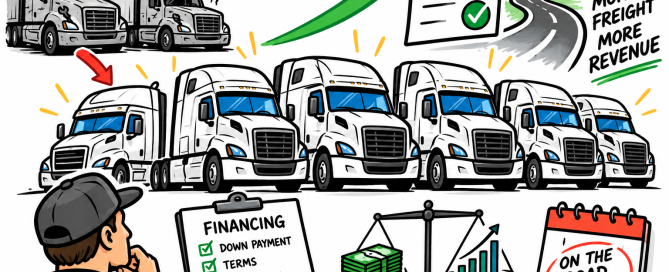
This multi unit fleet example shows how five commercial trucks can be financed while protecting cash flow, managing documents, and timing delivery well.
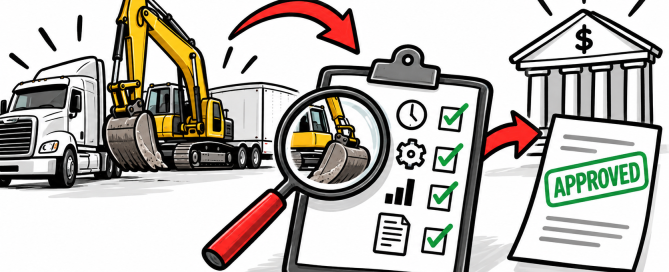
Learn how equipment collateral affects commercial financing, from asset value and condition to advance rates, documentation, and deal structure decisions.
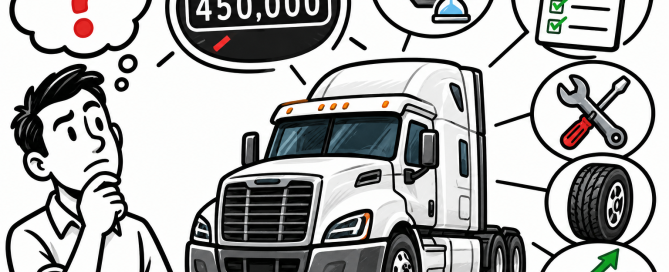
Learn how to evaluate commercial truck mileage before buying or financing, using engine hours, service records, asset age, and intended duty cycle needs.
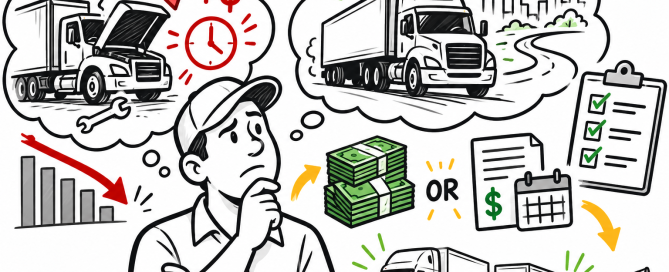
Fleet cash flow affects uptime, buying power, and growth. Learn how established businesses can plan equipment purchases while protecting working capital.
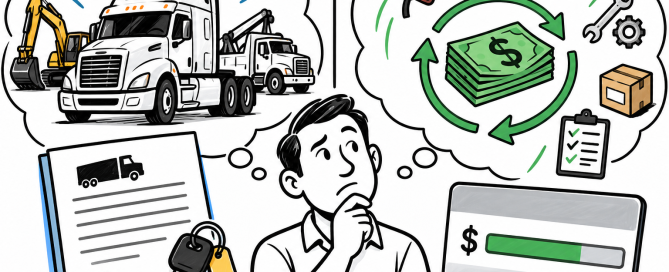
Compare fleet loans versus credit lines for equipment purchases, repairs, and expansion. See how terms, collateral, cash flow, and timing shape the choice.