Fleet Replacement Trends Shaping 2026 Decisions
Fleet replacement trends are shifting toward uptime, lifecycle cost, and flexible financing. Learn how established businesses can plan asset upgrades.

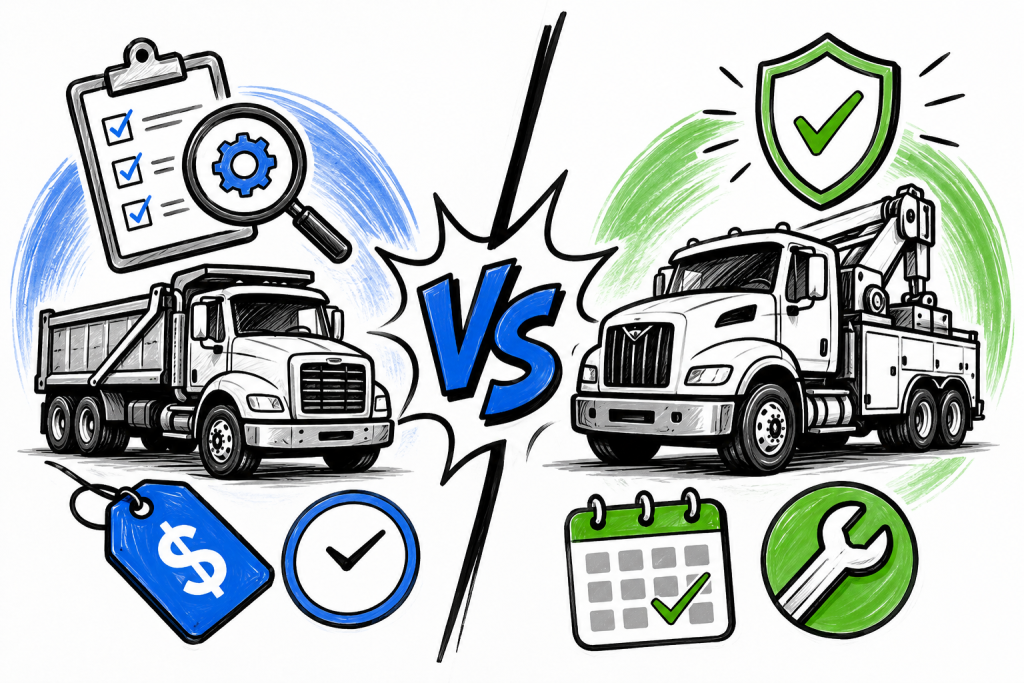
A truck that is available this week can be more valuable than a new unit that will not arrive for several months. But a lower purchase price can disappear quickly if an older machine spends too much time in the shop. That is the real question behind used versus new equipment financing: which asset gives the business the best path to productive service without putting unnecessary pressure on cash flow?
For established businesses, the answer is rarely just “buy new if you can afford it” or “buy used to save money.” The asset, seller, maintenance history, useful life, operating environment, and financing structure all matter. A late-model used excavator with documented service records may be a stronger business decision than a new unit with a long delivery lead time. Conversely, a new vocational truck with a full warranty may justify its higher cost when uptime is central to the operation.
Equipment financing should support the work the asset will perform. Before comparing monthly payments, consider what the truck, trailer, wrecker, forklift, or yellow iron will produce once it is in service – and what it costs when it is not.
A towing company replacing a high-mileage rollback may prioritize a newer chassis, warranty coverage, and dependable availability for after-hours calls. A construction contractor adding a second excavator for a defined project may place more weight on immediate availability and purchase price, especially if a well-maintained used unit can perform the required work. A logistics company expanding its box-truck fleet may need consistency across vehicle specifications to simplify driver training, maintenance, and parts stocking.
New equipment generally offers a known starting point: current specifications, no prior operating history, and often manufacturer warranty coverage. Used equipment may offer faster delivery, less initial depreciation, and a lower overall acquisition cost. Neither advantage is automatic. The right choice depends on whether the asset will remain productive for the intended financing term.
The equipment itself is collateral, so its age, condition, value, and expected useful life influence how funding sources evaluate a transaction. Financing a new dump truck or trailer is often more straightforward because the invoice price and specifications are clear. Financing used equipment can require additional diligence, particularly when the asset is older, has high mileage or hours, or is being sold by a private party.
With new equipment, lenders may be more comfortable offering longer terms when the borrower profile and asset support that structure. A longer term can reduce the monthly payment, although it may increase total financing cost over time. Some new-equipment programs may also allow lower down payments for well-qualified, established businesses. Those outcomes depend on credit strength, time in business, financial documentation, fleet history, the asset category, and lender requirements.
Used equipment financing is not necessarily difficult, but it is more asset-specific. Funding sources commonly look at the year, make, model, mileage or engine hours, condition, marketability, and seller type. A five-year-old commercial truck with service documentation and reasonable mileage is different from a 15-year-old specialty vehicle with limited resale demand. The first may fit a conventional commercial equipment structure; the second may require a larger down payment, shorter term, or a different financing approach.
The seller also matters. A purchase from an established dealer usually comes with an invoice and identifiable equipment details. A private-party sale can still be financeable, but the buyer should expect closer review of title status, payoff information, serial numbers, ownership, and purchase documentation. Clean paperwork keeps a workable transaction from slowing down at the finish line.
New equipment is often the better fit when reliability, specifications, and operating life outweigh the higher purchase price. That can be especially true for equipment that runs hard, serves regulated applications, or must meet a customer or contract requirement.
For example, a medical transport operator may need a vehicle built to current specifications with a predictable in-service life. A fleet adding new tractors may value fuel efficiency, warranty protection, and a standardized maintenance platform. A roofing contractor buying a new crane truck may need a precise body configuration and capacity that is difficult to find in the used market.
New purchases can also make sense when the business expects to keep the asset for many years. The company gets the full early-life operating period, can establish its own maintenance history, and may be able to align the finance term with a longer replacement cycle. Still, new does not eliminate risk. Delivery delays, upfitting timelines, and higher insurance or acquisition costs can affect the economics. Confirm what is included in the quoted price, such as body work, accessories, installation, taxes, freight, and any required deposits.
Used equipment can be a disciplined capital decision, not a compromise. A late-model used semi-truck, trailer, loader, or forklift may be available immediately at a price that preserves more working capital for payroll, fuel, materials, and growth.
The key is to distinguish a lower price from real value. Review service records, maintenance intervals, engine hours, odometer readings, tire condition, hydraulic performance, inspection results, and any known repairs. For commercial trucks, assess the chassis, engine, transmission, emissions system, and body or specialty upfit separately. A tow truck may have acceptable chassis mileage but meaningful wear on its boom, wheel-lift, winch, or hydraulic system.
Used assets are often particularly attractive when the business knows the equipment category well and has the shop capacity or vendor relationships to maintain it. They can also help fill a short-term capacity need while a new unit is on order. However, an older asset with uncertain condition may create higher repair exposure at the same time the business is making a monthly payment. That is not always a reason to avoid the purchase, but it should be reflected in the cash-flow plan and financing term.
A common mistake is choosing the longest available term solely to minimize the payment. Lower monthly payments can help preserve cash, but the business should avoid extending the obligation beyond the period when the asset is likely to be dependable and commercially useful.
If a company buys a newer truck it expects to run for seven years, a longer term may align with its replacement plan. If it buys an older unit to cover seasonal demand or a two-year contract, a shorter structure may better match the equipment’s purpose. The same principle applies to construction equipment: a well-maintained late-model machine may support a longer term than an older asset with high hours and a narrow resale market.
Also consider residual value. This is the expected value of the equipment at the end of the financing period. Some structures may use residual value to reduce periodic payments, but that creates an end-of-term obligation or decision. It can be useful for businesses with predictable replacement cycles, yet it should be understood before signing rather than treated as a payment-only decision.
The borrower profile remains central whether the equipment is new or used. Established businesses with documented revenue, good to strong credit, operating history, and relevant fleet or equipment experience generally present a clearer financing case. A lender will also want to understand the intended use: replacement, expansion, contract fulfillment, or a new service line connected to the company’s proven operations.
Expect requests for some combination of the equipment quote or purchase agreement, business information, financial statements or bank information, tax returns when needed, ownership details, and insurance requirements. Larger transactions, specialized assets, or more complex business structures can require additional documentation.
A specialized equipment finance broker such as Commercial Fleet Financing can help evaluate the asset and transaction before submission, coordinate with vendors, and match qualified businesses with appropriate funding sources. That can be particularly useful when the purchase includes an older asset, a private seller, a specialty upfit, multiple units, or a time-sensitive delivery schedule. Approval timing and terms remain dependent on the full credit, asset, documentation, and lender review.
Ask which option puts the most reliable revenue-producing asset into service at a cost the business can support. Compare the total purchase price, expected maintenance, insurance, downtime exposure, delivery timing, resale outlook, and financing term. A new asset may protect uptime and support a long replacement cycle. A carefully selected used asset may deliver capacity sooner while preserving capital for other operating needs.
The strongest transaction is usually the one where the equipment, business plan, and financing structure all point in the same direction. Bring the quote, equipment details, seller information, and intended use into the financing discussion early. That gives the business a better chance to address asset-age, documentation, and structure questions before the equipment it needs is no longer available.
Fleet replacement trends are shifting toward uptime, lifecycle cost, and flexible financing. Learn how established businesses can plan asset upgrades.
This fleet expansion case study shows how established businesses can structure truck financing, protect working capital, and put assets to work faster.
Compare commercial financing options for trucks and equipment, protect working capital, and put revenue-producing assets into service with confidence.
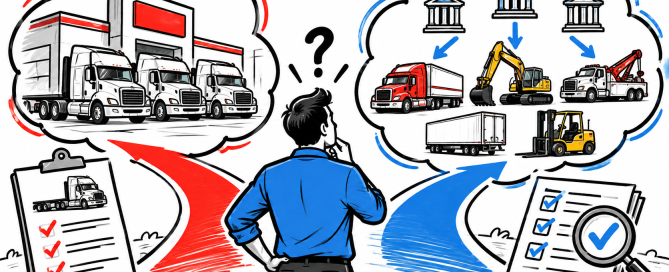
Finance broker versus captive financing: compare lender choice, equipment fit, approval variables, and cash flow before buying commercial assets today.
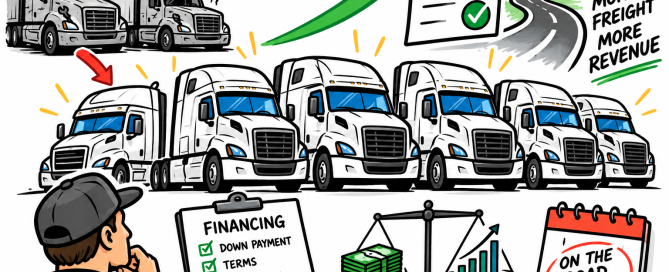
This multi unit fleet example shows how five commercial trucks can be financed while protecting cash flow, managing documents, and timing delivery well.