Commercial Bus Financing for Operators Explained
Commercial bus financing for operators helps established fleets assess terms, vehicle fit, cash flow, and documentation before buses enter revenue service.

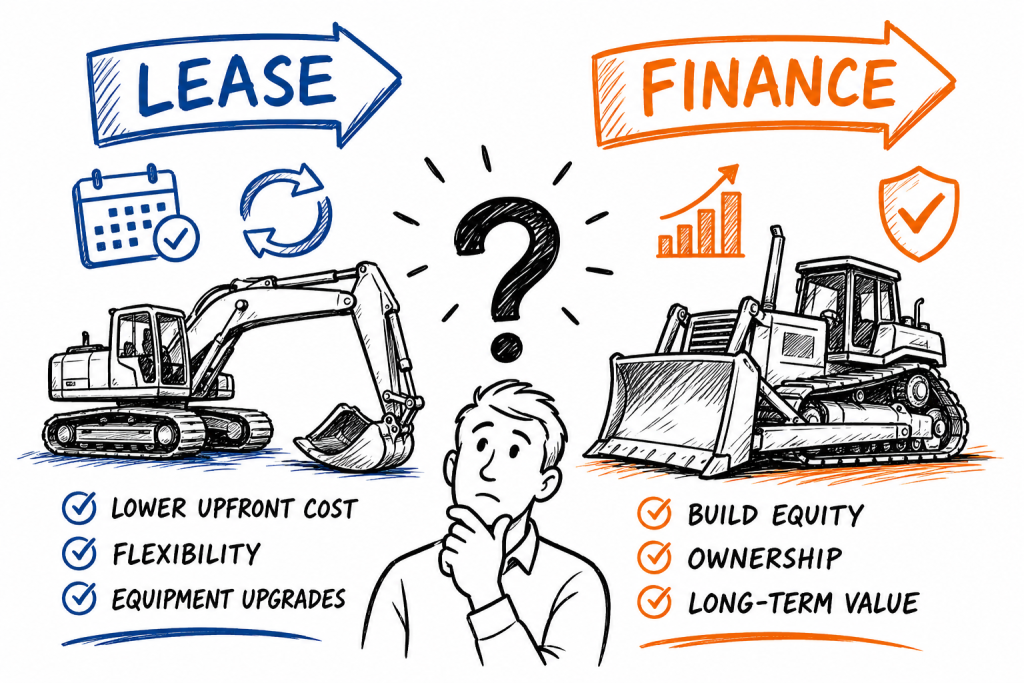
A contractor replacing two aging excavators usually is not asking a theoretical question. The real issue behind leasing vs financing heavy equipment is whether the new units can get on a job quickly, fit the company’s cash flow, and still make sense 24 or 36 months from now.
That decision affects more than the monthly payment. It shapes working capital, upgrade timing, maintenance exposure, tax strategy, balance sheet treatment, and how much flexibility you have when the equipment mix needs to change. For businesses buying revenue-producing assets, the right structure depends on how long the equipment will stay in service, how hard it will be used, and what the business needs most right now – ownership, lower upfront cost, or room to keep expanding.
With equipment financing, the business is typically buying the asset over time. You make scheduled payments, and once the obligation is satisfied, you own the machine, truck, or unit outright, subject to the terms of the agreement. This is often a strong fit when the equipment is expected to stay in the fleet for years and continue producing revenue long after the financing term ends.
With a lease, the structure is usually more focused on use than long-term ownership. Depending on the lease type, the business may return the equipment at the end of the term, renew the lease, or have an option to purchase it. Leasing can be attractive when preserving cash matters, when equipment replacement cycles are shorter, or when the business wants flexibility as needs change.
That sounds simple, but the better question is not which option is cheaper in the abstract. It is which structure matches the equipment’s earning life and your operating plan.
Financing often works best when the equipment has a long useful life and a clear place in the business beyond the next few years. Think dozers, excavators, dump trucks, trailers, forklifts, cranes, or other core assets that will continue earning after the note is paid off.
If your company expects to run the equipment hard, keep it well past the financing term, and control maintenance and usage without lease restrictions, financing can be the more practical path. You are building equity in an asset you plan to keep. Over time, that can improve the total value you get from the machine, especially if it remains productive long after the financing period ends.
Financing can also fit businesses that want fewer end-of-term decisions. Once the term is complete, there is no return condition to satisfy and no need to negotiate the next step just to keep using equipment that is already integrated into operations.
This approach is common for contractors, trucking businesses, recovery operators, and industrial companies that view equipment as a long-term production asset rather than a short-cycle tool. If the machine is central to revenue and likely to remain useful for many years, ownership usually carries real operational value.
Leasing can make sense when flexibility matters more than ownership. A business that rotates equipment more frequently, wants to manage cash carefully, or needs to avoid tying up too much capital in one acquisition may prefer a lease structure.
That is often the case when the equipment category changes quickly, when the business is testing a new service line, or when growth is happening fast and preserving liquidity is more important than building equity in every asset. A site development company adding specialized machines for a large contract, for example, may not want to commit to long-term ownership if demand could shift after that project pipeline changes.
Leasing may also help when monthly budget management is the main priority. Depending on structure, lease payments can be lower than financing payments on the same equipment because you are paying for the use of the asset over the term rather than paying toward full ownership. That can free up capital for payroll, mobilization costs, repairs on other units, fuel, insurance, or additional equipment acquisitions.
The trade-off is that lower short-term cost does not always mean lower total cost over time. If you repeatedly lease equipment you could have owned and kept productively in service for years, financing may prove more economical in the long run.
Many businesses start by comparing rates or monthly payments. That is understandable, but cash flow pressure usually tells the more useful story.
If a down payment, tax burden, transportation cost, installation expense, or initial repair reserve would put stress on working capital, leasing may deserve a closer look. Some lease structures can reduce upfront cash needs and help a business put equipment into service without overextending itself.
On the other hand, if the company has stable revenue, strong utilization, and confidence that the equipment will stay busy, financing may better align with long-term return. A machine that is heavily used and fully integrated into operations often justifies ownership.
This is where deal structure matters. Payment timing, term length, seasonal business cycles, equipment age, collateral profile, and borrower strength all influence what makes sense. A practical financing partner should look beyond a simple lease-versus-loan label and help shape terms around the way the equipment will actually be used.
Not all heavy equipment behaves the same way financially. A late-model excavator with a long useful life, predictable resale value, and constant utilization is a different case than a specialized unit used for a narrow contract niche.
Equipment financing tends to make more sense when the asset has durable value and the business expects to keep it for a long time. Leasing becomes more attractive when equipment may be replaced on a shorter cycle, when usage needs are uncertain, or when technology and compliance factors could push earlier turnover.
For example, a company expanding a mixed fleet may finance core yellow iron and vocational trucks it knows it will keep, while leasing certain support units where long-term ownership is less important. That kind of blended strategy is common in growing operations.
The right structure is not only about accounting preference or fleet philosophy. It also depends on what the approval path looks like.
Different lenders and funding programs can view leases and finance transactions differently based on time in business, credit profile, equipment type, asset age, and how the equipment supports revenue. In some cases, one structure may offer a more workable path than the other because of documentation requirements, term flexibility, or how the asset fits lender guidelines.
That is where specialization matters. A commercial financing partner that understands construction equipment, fleet assets, and vocational units can often identify a more workable structure early in the process, which helps avoid wasted time. For businesses trying to secure equipment quickly, speed is not just about submitting an application fast. It is about putting the deal into the right lane from the start.
Growth-stage businesses often face the hardest version of this decision. They may need multiple units, want to preserve capital, and still need equipment ownership in key areas of the fleet.
In that situation, the answer may not be all leasing or all financing. A company might finance the core assets it plans to keep for the long haul and lease certain units where flexibility matters more. That can help balance monthly obligations, preserve liquidity, and support expansion without forcing one structure onto every purchase.
Commercial Fleet Financing works with businesses across the U.S. that need practical financing solutions for revenue-producing equipment, and this is exactly where structure matters. The best result is usually not the product with the most attractive label. It is the one that supports uptime, protects cash flow, and fits the business plan behind the acquisition.
Before choosing a structure, get clear on four things: how long you expect to keep the equipment, how intensively it will be used, how much cash you want to preserve, and whether flexibility or ownership matters more. If those answers are fuzzy, the wrong structure can look fine on paper and still become a problem later.
A buyer focused only on the lowest payment may end up with end-of-term limits that do not fit actual operations. A buyer focused only on ownership may tie up capital that should have gone toward labor, inventory, or another unit that could also produce revenue.
The strongest equipment acquisitions usually start with the operating plan, not the financing form. Once you know how the asset will earn, how long it will stay productive, and what your business needs from the transaction, the lease-versus-finance decision gets much clearer.
If you are weighing both options, the goal is not to force a one-size-fits-all answer. It is to structure the equipment around the way your business actually makes money.
Commercial bus financing for operators helps established fleets assess terms, vehicle fit, cash flow, and documentation before buses enter revenue service.
Do lenders offer zero down for equipment? Learn when $0 down may be possible, what lenders review, and how commercial deals are structured.
Compare new versus used excavator financing, including approval factors, down payment, terms, uptime risk, and total cost for buyers.
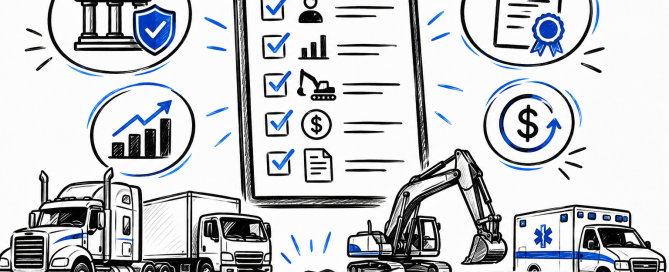
Commercial equipment financing requirements guide for U.S. businesses. Learn credit, cash flow, documents, down payment, and equipment factors.
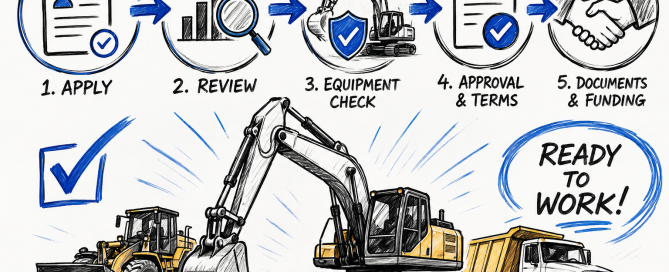
Heavy equipment approval process explained for contractors and fleets. Learn what lenders review, what slows approvals, and how to prepare.