Commercial Truck Financing for Bad Credit
Commercial truck financing for bad credit can still be possible with the right structure, equipment, and documents. Learn what lenders look for.

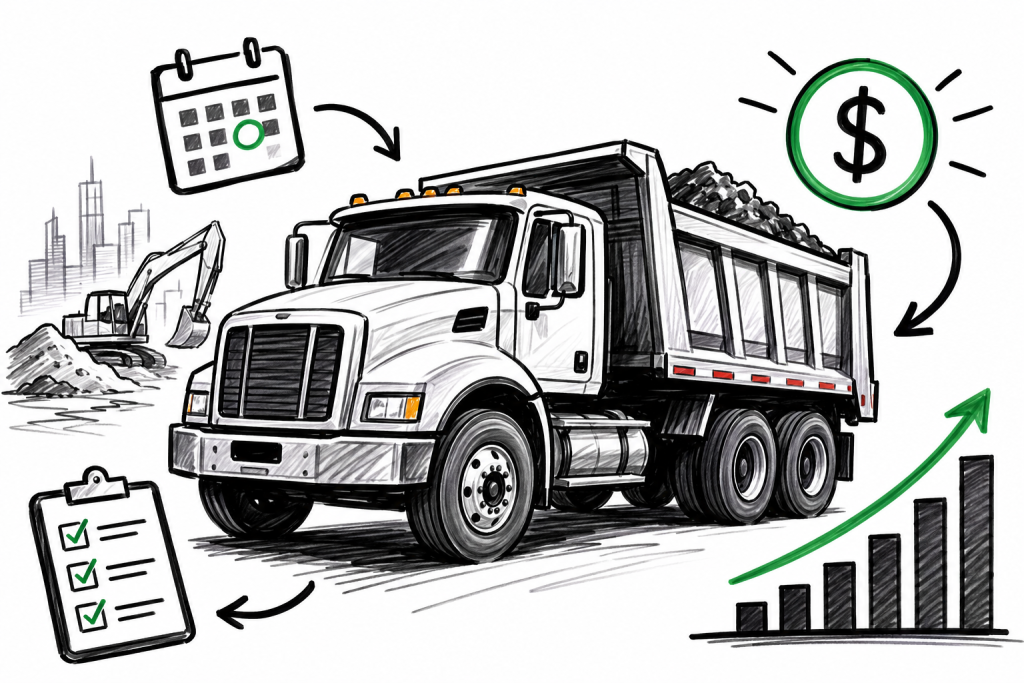
A dump truck that sits on a wish list does not move dirt, haul aggregate, or generate revenue. In most operations, timing matters as much as price. When a job is starting, a unit is aging out, or a fleet needs added capacity before peak season, dump truck financing becomes a practical business tool rather than a side issue.
For contractors, material haulers, excavation companies, paving crews, site development firms, and municipalities, the right structure can preserve working capital while putting a revenue-producing truck into service. The wrong structure can create unnecessary pressure on cash flow, delay delivery, or limit your options when repairs, payroll, and fuel costs hit at the same time. That is why financing should be evaluated with the truck, the job cycle, and the business plan in mind.
Dump trucks are not one-size-fits-all assets. A single-axle unit for lighter local work is a different financing scenario than a tandem-axle truck for heavy hauling, and both differ from a tri-axle or quad-axle setup used in demanding applications. Body type, GVWR, make, model year, mileage, engine hours on related equipment packages, and overall condition all affect how a transaction may be structured.
The use case matters too. A company hauling gravel daily under recurring contracts may present a different risk profile than a newer business buying its first truck for project-based work. Neither deal is automatically simple or difficult. It depends on time in business, revenue, credit profile, cash reserves, equipment quality, and documentation.
That is where a specialized commercial financing partner adds value. The work is not just quoting a payment. It is aligning the truck, the borrower, and the funding structure so the asset supports growth instead of straining operations.
In commercial equipment finance, approvals are usually based on a combination of borrower strength and asset quality. Lenders may look at time in business, annual revenue, industry experience, business credit, personal credit for guarantors, existing debt obligations, and liquidity. They also review the truck itself, including age, mileage, condition, and whether the price makes sense for the market.
Newer dump trucks often open up more options, but used equipment can also be financeable if it fits lender guidelines. In this category, used units are common because many buyers are balancing job demand with capital constraints. A well-maintained used truck with strong service records may be more attractive than a cheaper unit with questionable history.
Down payment expectations can vary. Some borrowers may qualify for low-down structures, while others may need to bring more cash in based on credit, time in business, or the equipment profile. The same goes for term length. A longer term may reduce the monthly payment, but it can also change the total financing cost and the amount of equity built over time. Lower payments are not always the best answer if the truck will age out of your fleet sooner than expected.
A clean file tends to move faster. That usually means a completed application, business formation documents when needed, invoice or purchase order, equipment details, and supporting financials if the deal calls for them. For some transactions, bank statements may help. For others, tax returns or interim financials may be requested.
If you are buying from a dealer, documentation is often more straightforward. Private-party transactions can still be financeable, but they may require additional steps around title, bill of sale, inspection, and asset verification. Those details matter because funding does not happen on intent alone. It happens when the transaction package is complete and acceptable to the funding source.
The best dump truck financing structure is usually the one that fits how your business earns. A contractor with steady municipal work may value predictability above all else. A seasonal operator may care more about preserving liquidity during slower months. A growing fleet may focus on acquiring multiple units without tying up too much capital in one purchase.
This is why deal structure deserves attention. Monthly payment, term, down payment, and asset age all interact. If you push too hard for the lowest possible payment, you may end up with a longer obligation on a truck that sees hard use and heavy depreciation. If you put too much cash down, you may weaken your position when insurance renewals, repairs, or labor costs rise.
There is also a strategic question: buy one better truck or two lower-cost units? Financing can support either path, but the right answer depends on utilization, maintenance planning, and customer demand. More trucks can mean more revenue capacity. They can also mean more downtime exposure if older units need frequent work.
New trucks typically offer stronger reliability, warranty coverage, and easier maintenance planning. They also come with a higher purchase price, which can increase the monthly obligation. For businesses with strong demand and long-term growth plans, that premium may make sense.
Used trucks are often attractive because they reduce the upfront equipment cost and can get a company into service faster. But used equipment is where due diligence matters most. Service history, emissions system condition, frame integrity, body wear, tire condition, and prior usage all matter. A truck that looks affordable on paper can become expensive if it spends too much time in the shop.
From a financing standpoint, newer used units may attract better terms than older ones. Again, it depends. Some older trucks still make sense if the price is right, the condition is sound, and the intended use is limited or local. The key is matching the truck’s remaining useful life with the financing structure.
Many buyers can write a check for a truck and still choose financing. That is not always about lacking capital. Often, it is about controlling cash. Working capital supports payroll, mobilization, fuel, repairs, permits, and the everyday friction of running equipment-heavy operations.
Dump truck financing often makes the most sense when a business wants to replace an aging truck before downtime becomes disruptive, add capacity for signed or recurring work, preserve cash for operating needs, or avoid tying up too much capital in a depreciating asset. It can also be useful when a dealer opportunity appears and the buyer needs to move quickly, assuming the documentation and credit profile support that timeline.
For newer businesses, financing can help shorten the gap between opportunity and ownership. That said, startups usually face more scrutiny than established firms. Industry experience, available cash, and the quality of the truck can carry more weight in those deals.
Many delays are avoidable. Inconsistent application details, missing financial documents, unrealistic seller pricing, title problems, and weak equipment information can all slow a transaction. Private-party deals tend to require extra care because ownership documentation and asset verification need to be clear.
Another common issue is shopping too late. If the truck is needed for a job starting next week, there is less room to solve documentation problems, negotiate structure, or pivot if the first asset choice does not fit lender guidelines. Starting earlier gives you more control over both the truck and the terms.
Working with a financing partner that understands commercial vehicles can help here. The process is not only about submitting paperwork. It is about identifying likely lender concerns early, organizing the deal correctly, and coordinating with the seller so the transaction keeps moving.
Before pursuing dump truck financing, it helps to know your budget range, how the truck will be used, whether you want new or used equipment, and how much cash you want to preserve. Be ready to provide business information, ownership details, and supporting documents that match the size and complexity of the request.
It also helps to think beyond approval. Ask whether the monthly payment fits your actual receivables cycle, whether the truck matches your work mix, and whether the unit can stay productive long enough to justify the structure. Financing should support operations, not force the business to chase revenue just to cover equipment decisions that were rushed.
Commercial Fleet Financing works with business buyers across the U.S. on revenue-producing equipment transactions, including dump trucks, with a focus on deal structure, approval support, and funding coordination. That matters when timing is tight and the asset is central to getting work done.
A well-structured dump truck deal should leave you with more than a truck. It should leave you with room to operate, take on work, and keep the business moving when the next opportunity shows up.

Commercial truck financing for bad credit can still be possible with the right structure, equipment, and documents. Learn what lenders look for.

Learn how to get semi truck financing with better odds by improving your file, choosing the right truck, and structuring the deal well.

Non-EMS Wheelchair Vans in 2025: Business Outlook, Market Growth, and [...]
Heavy Equipment Financing: A Complete Guide for Business Owners [...]
Heavy Equipment Financing and Section 179: How to Cut [...]