Used Versus New Equipment Financing Choices
Used versus new equipment financing affects cash flow, uptime, collateral value, and approval structure. Compare the right purchase for your commercial fleet.

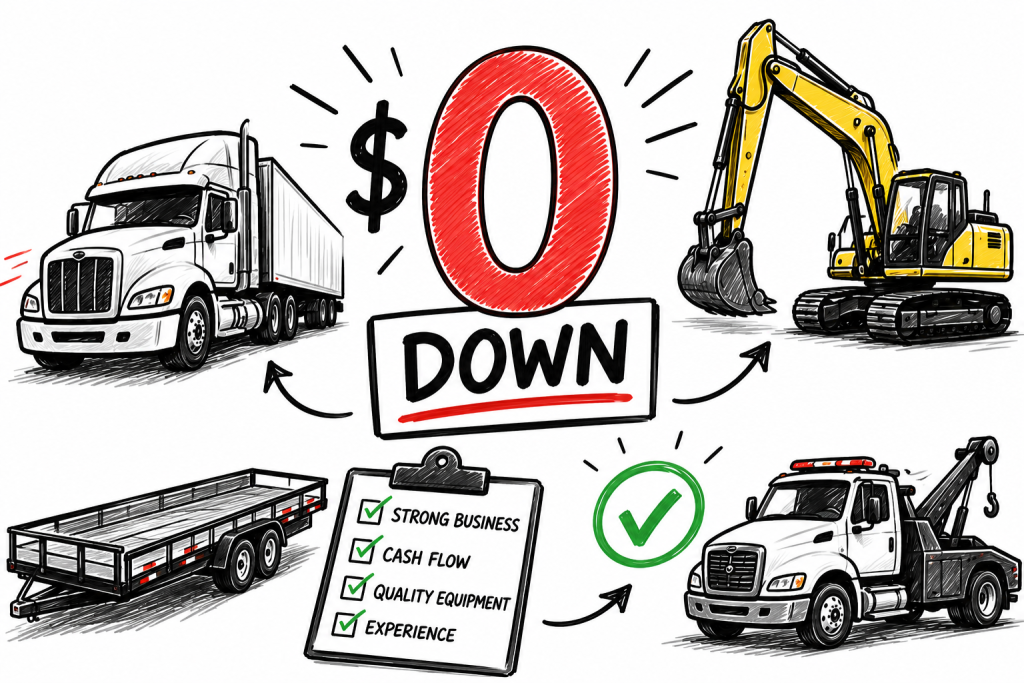
If you are pricing a semi-truck, excavator, tow truck, or trailer and trying to preserve cash for fuel, payroll, insurance, and startup costs, the question gets very practical very fast: do lenders offer zero down? In commercial equipment finance, the answer is sometimes – but not on every deal, not for every borrower, and not for every asset.
Zero-down financing can be available for revenue-producing equipment, especially when the borrower profile, time in business, equipment type, and overall deal structure line up with lender requirements. That matters to business owners because keeping cash in the business can be more valuable than putting a large amount down upfront. But a true $0 down structure is usually earned by the strength of the file, not advertised as a default.
Yes, some lenders do offer zero-down structures on commercial vehicles and equipment. That can apply to assets such as semi-trucks, dump trucks, box trucks, trailers, construction equipment, forklifts, and other business-use equipment that generates revenue.
The key point is that zero down is not a single product sitting on a shelf. It is a financing outcome that depends on risk. Lenders look at whether the equipment has strong resale value, whether the borrower has stable business performance, and whether the transaction makes sense from a cash flow standpoint. A newer sleeper truck for an established carrier with solid financials is a different credit picture than an older specialty unit for a startup with limited history.
In other words, zero down exists, but it is conditional. Some deals qualify. Some are better structured with low down. Others need a meaningful injection from the buyer to get approved or to improve terms.
The down payment question is tied directly to how a lender views the overall file. Credit matters, but it is only one part of the decision.
Time in business is often a major factor. An established company with operating history, bank activity, and a track record of using equipment profitably will usually have more options than a brand-new entity. Startups can still secure financing, but they are more likely to see requests for money down, added support, or narrower equipment eligibility.
The equipment itself also matters. Lenders generally prefer assets with strong collateral value and clear commercial use. A late-model semi-truck, standard trailer, or popular piece of yellow iron may fit more comfortably into a zero-down discussion than highly specialized equipment with a thin resale market. Age, condition, mileage, hours, and manufacturer reputation all play a role.
Cash flow is another major piece. Lenders want to see that the business can support the payment while continuing to operate. For trucking and transportation companies, that may include reviewing revenue trends, contracts, dispatch history, or bank statements. For contractors and construction companies, it may involve seasonal trends, backlog, business financials, and current equipment needs.
They may also evaluate industry experience. A borrower with ten years in towing, excavation, or fleet operations is often viewed differently than someone entering a new business segment for the first time. Experience does not replace financial strength, but it can help support the story behind the request.
A zero-down request tends to gain traction when the transaction looks clean and the risk profile is strong. Established borrowers usually have the best shot, especially if they are buying equipment that will go straight into service and has broad market appeal.
For example, a transportation company replacing an aging truck with a newer used unit may have a stronger case than a first-time owner-operator buying a very old truck with high mileage. A contractor adding a second excavator to support existing jobs may look stronger than a startup trying to finance multiple units without much operating history.
Vendors and dealers can also influence how a deal is structured. If the invoice is well supported, the equipment is accurately valued, and the transaction documentation is clean, approvals can move more efficiently. Good documentation does not create zero down by itself, but it removes friction.
Sometimes what appears to be zero down is really a structured deal. A trade-in, deferred payment, equipment equity, or strong invoice support may reduce the upfront cash requirement to little or nothing from the buyer at closing. That is why it helps to look beyond the headline and review how the transaction is actually built.
Zero down is not always the smartest choice, even when it is available. For some businesses, putting money down can improve monthly cash flow, reduce total financing cost, or help the deal fit lender guidelines more comfortably.
That can be especially relevant with older equipment, higher-mileage trucks, startups, challenged credit profiles, or specialized assets. A down payment may offset collateral risk, strengthen the approval, or open access to more favorable structures. From a business standpoint, the right question is not only whether zero down is possible. It is whether zero down supports the company’s broader cash flow and growth plan.
There is also a practical side to this. If preserving cash is the priority because the business needs working capital for drivers, maintenance, licensing, or mobilization, low down or zero down may make sense. If the business has excess liquidity and wants to lower the monthly obligation, putting cash into the deal may be more efficient.
They can, but startup zero-down approvals are generally harder to secure. Newer businesses often face more scrutiny because there is less operating history to support repayment. That does not mean the deal is dead. It means the lender may lean more heavily on factors like personal credit profile, industry experience, bank strength, equipment type, and the reason for the purchase.
A startup owner-operator with years of CDL experience buying a clean, commercially viable truck is different from a first-time buyer with limited experience acquiring a high-risk unit. The same applies in construction, towing, medical transport, and other equipment-heavy industries. The asset must make sense, and the borrower must make sense with it.
In startup situations, even a modest down payment can change the file materially. It may improve approval odds, expand lender options, or reduce concerns tied to collateral value and operating history.
The strongest zero-down files are usually organized before they are submitted. That means matching the equipment to the business need, documenting cash flow clearly, and presenting a realistic purchase structure.
It helps to choose equipment with commercial value and broad lender acceptance. A clean invoice, complete seller information, and accurate details on year, make, model, VIN, mileage, or hours can prevent delays. If the business is established, recent bank statements and basic financials should tell a clear story. If the company is newer, experience in the industry becomes even more important.
The way the request is positioned also matters. Lenders are not just reviewing a piece of equipment. They are reviewing how that asset fits the business. A truck replacing a failing unit to preserve routes, a trailer added to support contract growth, or a forklift acquired to improve warehouse throughput all make commercial sense. Clear use case supports credit logic.
This is where a specialized commercial financing partner can add value. Instead of forcing every transaction into the same box, the right partner looks at the equipment category, borrower profile, documentation, and available lender programs to determine whether zero down, low down, or a more customized structure gives the deal the best chance to close cleanly.
Business owners often start with one question – do lenders offer zero down – because they are trying to protect working capital. That is a valid concern. But the smarter conversation usually goes one level deeper: what structure gets the equipment into service without creating unnecessary strain on the business?
Sometimes that is zero down. Sometimes it is 10 percent down on a stronger approval. Sometimes it is using equity, a trade, or a different term to improve the overall payment picture. The goal is not to chase a headline. The goal is to put revenue-producing equipment to work on terms the business can actually carry.
If you are evaluating a purchase, the most useful next step is to look at the full file the way a lender will. When the asset, borrower, and deal structure line up, low-down and zero-down options may be on the table – and when they are not, a well-structured alternative can still keep the deal moving.

Used versus new equipment financing affects cash flow, uptime, collateral value, and approval structure. Compare the right purchase for your commercial fleet.
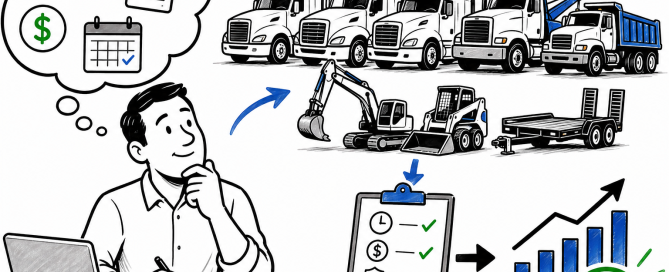
A multi-unit acquisition financing guide for established businesses buying trucks or equipment while protecting cash flow, uptime, and expansion plans.
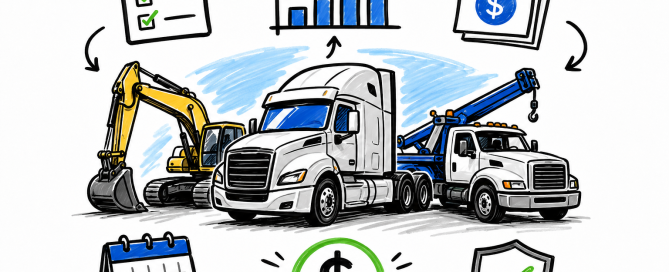
An established business equipment finance guide for evaluating terms, preserving working capital, and putting revenue-producing assets into service now.
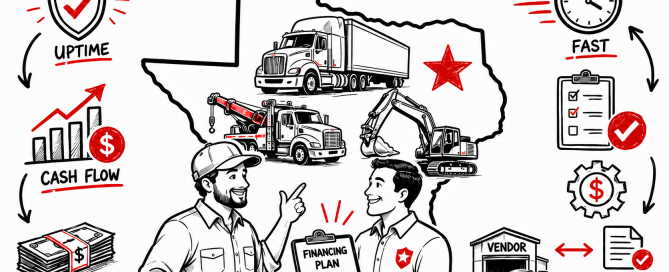
Choosing a commercial financing partner Texas businesses can rely on means weighing equipment knowledge, lender access, structure, and responsive execution.
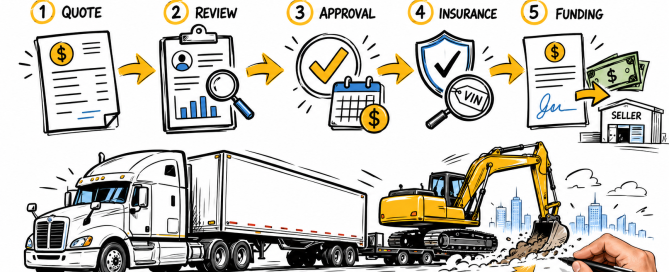
Understand the equipment finance process, from equipment quote and credit review through approval, documentation, vendor payment, and delivery planning.