How Fleet Cash Flow Shapes Equipment Decisions
Fleet cash flow affects uptime, buying power, and growth. Learn how established businesses can plan equipment purchases while protecting working capital.

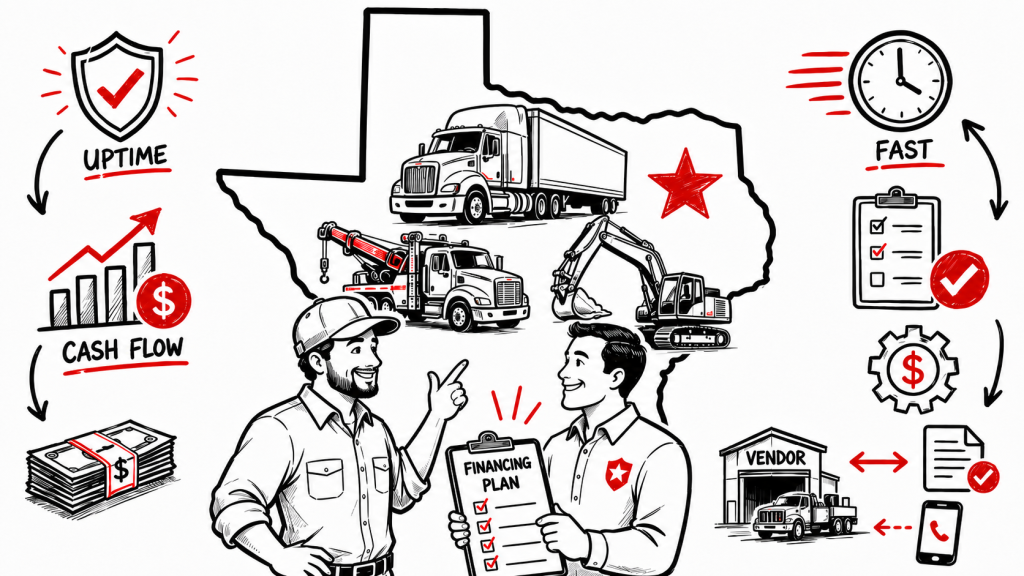
A stalled truck replacement can cost more than the monthly payment ever will. When a tractor is down, a wrecker cannot be dispatched, or an excavator misses a job start, the issue is not simply acquiring equipment. It is protecting capacity, revenue, customer commitments, and working capital. That is why selecting a commercial financing partner Texas businesses can rely on should involve more than comparing a quoted payment.
For established companies, the right financing relationship helps turn a signed equipment quote into an asset that can go to work. The partner should understand both the transaction and the operating reality behind it: asset age, mileage, seller type, fleet history, intended use, cash flow, documentation, and timing.
A commercial equipment finance broker or specialized financing partner is not the same as a bank or a direct lender. Its role is to evaluate the equipment purchase and business profile, identify funding sources that may fit the transaction, help structure the request, coordinate documentation, and keep communication moving between the borrower, vendor, and funding source.
That distinction matters when a deal has variables. A late-model day cab purchased from a franchised dealer may be straightforward for a well-established carrier. A used rollback with higher mileage, a specialized ambulance conversion, or a construction package that includes attachments can require more lender-specific knowledge. The best available approach may depend on how the asset is valued, where it is being purchased, how it will produce revenue, and how the business presents its operating history.
For Texas-based operators, this can be particularly relevant across trucking, towing and recovery, construction, logistics, roofing, landscaping, municipal contracting, and medical transportation. These businesses often need equipment on a schedule set by jobs, replacement cycles, fleet maintenance needs, or vendor availability, not by a generic loan process.
Before requesting terms, define what the equipment must accomplish. Is the purchase replacing an aging unit with rising maintenance costs? Adding capacity for a contract or route growth? Moving work in-house that is currently subcontracted? Each answer changes the appropriate financing conversation.
A replacement transaction may prioritize uptime and a manageable payment that preserves repair reserves. An expansion purchase may place more weight on the projected revenue from the new truck, trailer, forklift, or yellow iron. A seasonal business may need a payment structure that better matches its operating cycle, although available structures always depend on the borrower, asset, and funding source.
The purchase itself should also be commercially sound. A lower-priced unit with high miles, deferred maintenance, or limited remaining useful life can create a difficult tradeoff. It may reduce the initial amount financed but increase downtime risk and limit financing options. Conversely, a newer asset may command a higher price while offering a longer expected service window and potentially broader lender interest.
A useful partner asks practical questions early: What is the equipment replacing? How will it be used? Who is selling it? What is the current fleet composition? Is the purchase price consistent with the asset and market? Those questions are not unnecessary friction. They help prevent a deal from reaching underwriting with gaps that delay a decision.
One funding source does not fit every established business or every asset. A financing partner with access to multiple potential sources can evaluate where a transaction may fit based on credit strength, time in business, revenue, existing equipment, asset type, and requested structure.
This is especially useful when the transaction falls outside a simple new-equipment purchase. Common examples include used commercial trucks, vocational units, trailers, mixed equipment packages, high-value construction equipment, and assets purchased from private sellers. Some lenders may be more comfortable with a particular asset category, age range, mileage level, vendor type, or transaction size than others.
Structure is more than the number of months in the term. It may involve the down payment, payment frequency, advance rate, residual assumptions where applicable, and whether equipment is purchased individually or as part of a package. A lower down payment may preserve cash but could affect payment size, lender fit, or required supporting documentation. A longer term may reduce the monthly payment but should still make sense against the expected useful life of the equipment.
The objective is not to force every deal toward the lowest advertised payment. It is to create a workable arrangement that supports the business without placing unnecessary strain on operations.
Used assets deserve direct discussion. A 2021 semi-truck with documented maintenance and reasonable mileage may be evaluated differently than an older unit with an incomplete service record. The same applies to wreckers, dump trucks, forklifts, excavators, and medical transport vehicles.
Ask whether the proposed financing path accounts for asset age, mileage, condition, utilization, and seller type. A dealer invoice, serial number verification, clear equipment description, and maintenance records can all help support a cleaner review. When buying from a private seller, additional verification and documentation may be necessary.
Established businesses with good to strong credit and documented operations are generally better positioned for commercial equipment financing than companies with limited operating history or unclear financial records. Still, strong credit alone does not settle the transaction.
A financing review commonly considers the business’s time in operation, ownership and credit profile, annual revenue, banking activity, existing debt, fleet or equipment history, and the revenue-producing purpose of the asset. Underwriters also look at the equipment itself and the seller. A commercial vehicle acquired for verified business use is a different transaction from a personal-use vehicle purchase.
Prepare accurate information before submitting a request. Depending on the transaction, this may include an equipment quote or purchase order, business details, recent financial information, bank statements, proof of insurance requirements, and identification of the purchaser and seller. More complex or larger transactions can require additional materials.
The value of a capable partner is not merely collecting documents. It is explaining why a specific item is needed, spotting issues before submission, and helping present the request consistently. A mismatch between the application, invoice, business name, and equipment description can slow an otherwise financeable deal.
Dealers, manufacturers, and equipment sellers have a stake in financing execution. A buyer may be qualified and motivated, but the sale can still stall if the invoice changes, serial numbers are missing, title or ownership information is unclear, insurance requirements are not addressed, or delivery timing is not communicated.
A commercial financing partner should coordinate with the vendor without taking control away from the sale. That means confirming the exact equipment, purchase price, deposits, trade-ins if applicable, and any delivery conditions early. It also means communicating promptly when the funding source requests a corrected document or clarification.
For vendors serving commercial buyers, this support can reduce avoidable back-and-forth and help qualified customers move from quote to delivery. It does not mean every buyer or every unit will qualify. It means the transaction is being handled with an understanding of how equipment sales and finance approvals intersect.
When comparing financing partners, ask how they handle your specific equipment category and whether they regularly work with assets similar to yours. Ask what information they need upfront, how they assess used equipment, and who will coordinate with the seller once the request is submitted.
Also ask how they approach timing. Fast decisions or funding can be possible for well-documented transactions involving qualified borrowers and acceptable equipment, but timing depends on credit profile, time in business, fleet history, lender requirements, seller cooperation, complete documentation, and deal structure. A responsible partner will explain those dependencies instead of making a blanket promise.
Finally, ask whether the proposed structure reflects your actual operating needs. A payment that looks attractive on paper may not be the right fit if it leaves too little cash for payroll, fuel, insurance, maintenance, or the next required replacement.
Commercial Fleet Financing, Inc. works as a specialized equipment finance broker and financing partner for established businesses acquiring revenue-producing vehicles and equipment. The practical advantage of a specialized approach is the ability to discuss the transaction in operational terms, from a high-mileage truck replacement to a vocational fleet expansion or construction-equipment purchase.
The right conversation starts with the asset, vendor, business profile, and reason for the purchase. Bring those details forward early, and financing can become a controlled part of getting productive equipment into service rather than a last-minute obstacle at delivery.
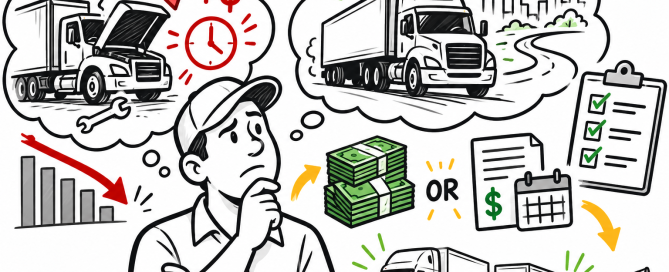
Fleet cash flow affects uptime, buying power, and growth. Learn how established businesses can plan equipment purchases while protecting working capital.
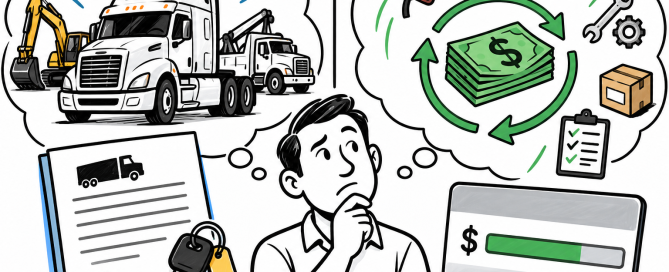
Compare fleet loans versus credit lines for equipment purchases, repairs, and expansion. See how terms, collateral, cash flow, and timing shape the choice.
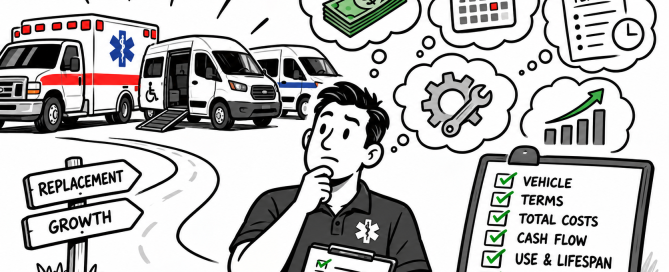
This medical transport financing review explains how established operators can compare terms, protect cash flow, and put the right vehicle in service.
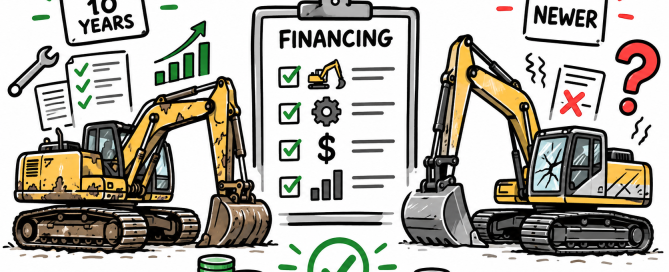
Why equipment age matters in financing: learn how model year, hours, mileage, condition, and seller type can shape terms and approval options on deals.

Learn how to fund equipment upgrades while protecting cash flow, comparing structures, preparing documentation, and putting productive assets to work now.