Commercial Truck Financing for Bad Credit
Commercial truck financing for bad credit can still be possible with the right structure, equipment, and documents. Learn what lenders look for.

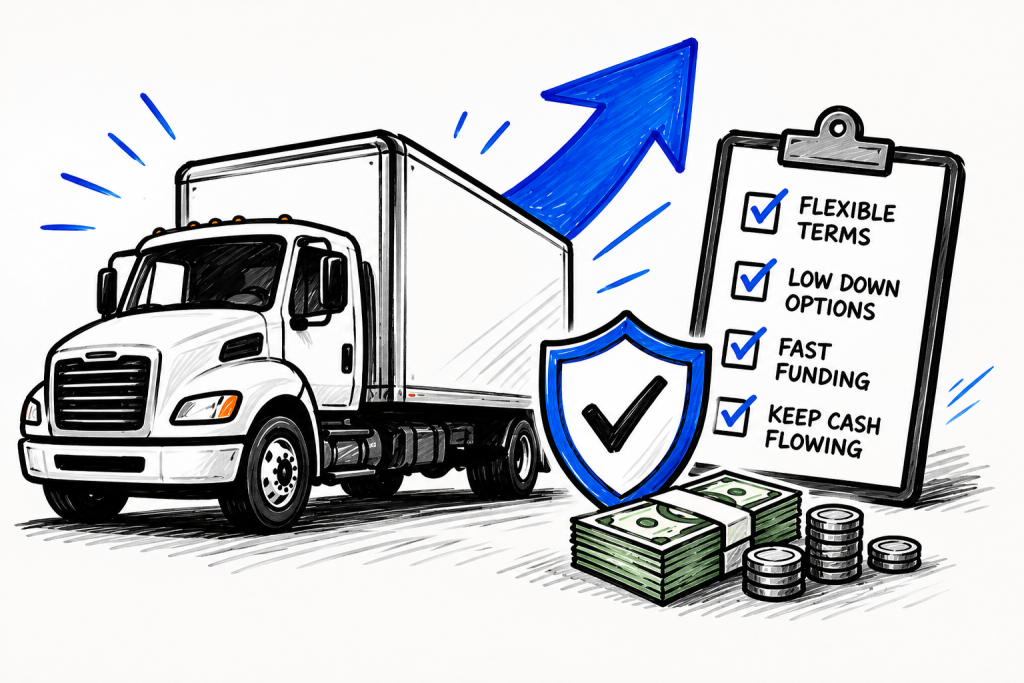
A truck that sits on a lot does not make money. A truck in service does. That is why the best commercial vehicle financing is rarely just the lowest rate on paper. For most business buyers, the right financing is the structure that fits cash flow, gets the equipment into service quickly, and supports revenue without creating avoidable strain on working capital.
That matters whether you are buying one box truck, replacing aging dump trucks, adding tow units, or growing a multi-vehicle fleet. The financing decision affects monthly overhead, maintenance planning, insurance requirements, tax strategy, and how fast the asset starts producing income. A cheap-looking offer can become an expensive one if the term is too short, the down payment is too heavy, or the lender does not understand the vehicle class.
The phrase means different things depending on the borrower and the unit being financed. An owner-operator buying a used semi-truck has a different profile than a medical transport company adding newer vans or a contractor financing vocational trucks with specialized upfits. The best structure is the one that matches the business use, the age and type of equipment, and the company’s operating goals.
In practice, good financing usually balances four things: approval strength, monthly payment, upfront cash required, and speed to funding. If one of those is out of line, the deal can stop making sense. A lower payment may require a longer term. A fast approval may depend on cleaner financials and better documentation. Low-down options may be possible in some transactions, but they depend on borrower strength, collateral profile, lender requirements, and overall deal structure.
That is why specialized commercial financing tends to outperform generic lending channels for revenue-producing vehicles. Commercial trucks, trailers, tow equipment, buses, and vocational units are not standard passenger vehicles. They have different resale values, operating risks, use cases, title issues, mileage considerations, and lender appetites.
If your priority is preserving cash, the best commercial vehicle financing may be a structure with a longer term or a lower upfront requirement, even if the total finance cost is higher over time. That can make sense for businesses that need to keep liquidity available for payroll, fuel, hiring, repairs, or expansion.
If your priority is total cost, a shorter term and stronger down payment may be the better fit. The monthly payment will be higher, but the business may save over the life of the financing. This is often attractive for established operators with strong cash reserves and predictable revenue.
If speed matters most, the ideal option is usually a transaction built around clean documentation, a financeable vehicle profile, and a lender program that already fits the asset type. Buyers often lose time when they shop financing in places that do not understand commercial use vehicles, specialty trucks, or fleet transactions.
If the goal is growth, then scalability matters. A financing partner that understands repeat purchases, replacement cycles, and fleet expansion can help structure today’s acquisition in a way that does not create problems on the next one.
Commercial vehicle financing is not only about credit score. Credit matters, but it is one part of a larger picture. Lenders typically look at time in business, business revenue, equipment type, vehicle age, mileage or usage, industry, liquidity, and whether the asset is being purchased from a dealer or private seller.
The vehicle itself matters more than many buyers expect. A new sprinter van used for medical transport is evaluated differently than a high-mileage used semi-truck. A standard box truck may be easier to place than a highly specialized wrecker or truck with a complex upfit. Some lenders are comfortable with older equipment, while others stay inside tighter year and mileage guidelines.
Documentation quality also affects outcomes. When financials are organized, equipment details are complete, and the invoice or purchase order is clear, approvals tend to move faster. When information comes in pieces, or when the unit description is vague, delays are common.
New equipment usually gives buyers more financing flexibility. It often qualifies for longer terms, stronger advance rates, and a wider group of lender programs. That does not always mean it is the better business decision. New vehicles cost more, depreciate early, and may come with lead times that do not fit urgent operational needs.
Used commercial vehicles can be the smarter move when the business needs faster deployment or a lower acquisition cost. The trade-off is that used units can bring tighter lender guidelines, shorter terms, and more scrutiny around condition, mileage, and remaining useful life. For older or specialized trucks, experience in structuring equipment deals becomes especially important.
There is no universal winner here. A contractor replacing a critical dump truck may be better served by a clean used unit available now. A fleet operator standardizing equipment across locations may gain more from buying new with warranty coverage and predictable maintenance.
A commercial vehicle is not one category. Semi-trucks, trailers, rollbacks, tow trucks, car haulers, limousines, buses, ambulances, non-emergency medical transport vans, and construction-related trucks each bring different underwriting considerations.
That is one reason the best commercial vehicle financing often comes from a financing partner that understands the collateral, the industry using it, and the resale market behind it. A lender comfortable with over-the-road tractors may not have the same appetite for a repo unit, a recovery truck, or a specialized municipal vehicle. A deal that stalls in a generic process may still be financeable when presented correctly with the right asset details and business context.
Upfits matter too. Body type, liftgates, towing gear, sleepers, wrecker assemblies, dump bodies, refrigeration, and accessibility modifications can all influence valuation and funding structure. These are not minor details. They can change how the asset is viewed and what programs are available.
The easiest way to strengthen a commercial vehicle financing request is to present a complete deal. That starts with accurate business information, a clear equipment invoice, and realistic expectations on structure. If the buyer knows what monthly payment range works, whether cash preservation matters more than term length, and how quickly the unit needs to be funded, the financing can be matched more efficiently.
A stronger file often includes recent business bank statements, basic financials when available, information on current equipment owned, and a short explanation of the business use. For newer businesses, showing industry experience can help. For established companies, showing stable contracts, customer demand, or a clear replacement need can support the request.
It also helps to choose the right unit from the start. If the business is stretching for an older truck with unusually high mileage or limited resale support, the financing may be tighter than expected. Sometimes the better decision is a different vehicle that produces a stronger approval and a more workable payment.
This is where experience can save time. A specialized commercial financing partner does more than pass along an application. The value is in understanding which lenders are active in certain asset classes, how to present the deal, what documentation will matter, and where flexibility may exist based on the borrower and equipment.
For a business buyer, that can mean less back-and-forth and a more realistic path from quote to funding. For dealers and vendors, it can mean better support during the sales process and fewer transactions lost to avoidable financing friction. Commercial Fleet Financing works in that lane – focused on business-use vehicles and equipment, deal structure, approval support, and funding coordination for revenue-producing assets across the U.S.
The practical benefit is not just speed. It is fit. A well-structured transaction should support operations, not just close a sale.
Instead of asking only, “What is the lowest rate?” ask, “What financing structure helps this vehicle pay for itself without creating pressure elsewhere in the business?” That is usually the better test.
A truck, van, or vocational unit should help generate revenue, improve capacity, replace unreliable equipment, or position the company for the next stage of growth. The best commercial vehicle financing is the option that aligns with that outcome, fits the realities of the business, and gets the asset working as soon as the deal is ready.
When the structure is right, financing becomes a tool for momentum rather than a drag on the operation. That is the standard worth aiming for.

Commercial truck financing for bad credit can still be possible with the right structure, equipment, and documents. Learn what lenders look for.

Learn how to get semi truck financing with better odds by improving your file, choosing the right truck, and structuring the deal well.

Non-EMS Wheelchair Vans in 2025: Business Outlook, Market Growth, and [...]

Heavy Equipment Financing: A Complete Guide for Business Owners [...]
Heavy Equipment Financing and Section 179: How to Cut [...]