Top Fleet Acquisition Strategies for Growing Businesses
Compare top fleet acquisition strategies for replacing, expanding, and financing commercial vehicles while protecting cash flow and uptime with confidence.

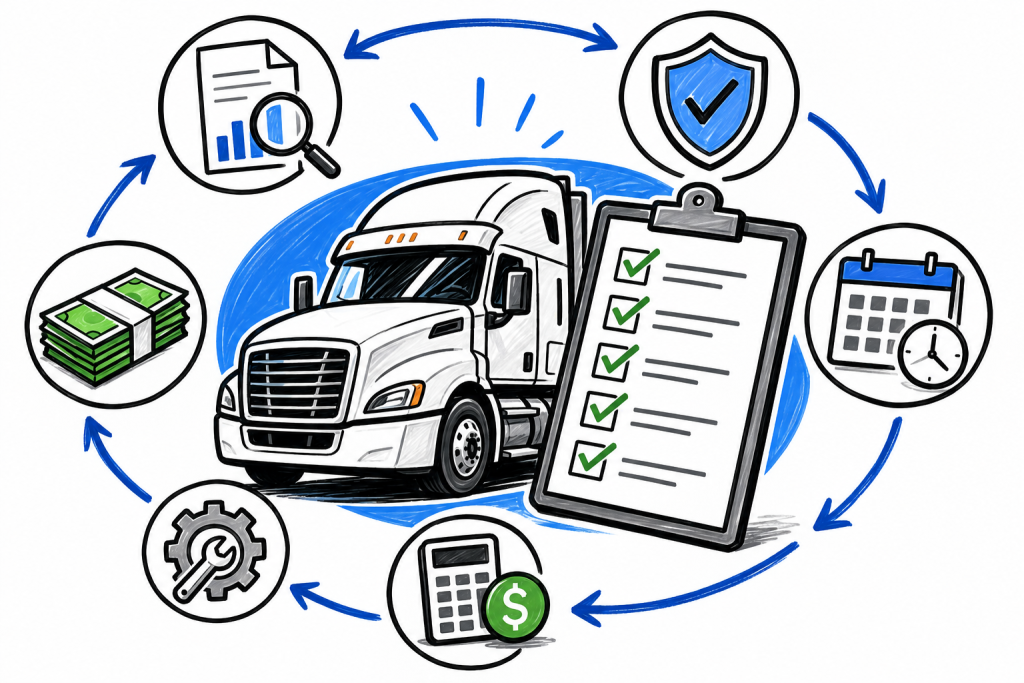
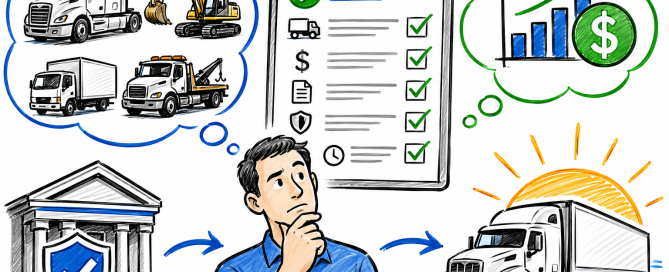
A truck sitting at a dealer lot is not the same as a truck ready to earn. The difference is often paperwork, asset details, insurance requirements, delivery timing, and whether the payment structure fits the business. This fleet financing checklist helps established operators prepare for those issues before they commit to a purchase order, trade-in, or replacement decision.
For a fleet manager or CFO, financing is not simply a question of whether a monthly payment fits the budget. It is a decision about uptime, working capital, equipment life, lender appetite, and the revenue the asset is expected to produce. A well-prepared transaction can move efficiently. A poorly defined one can stall when a lender asks basic questions that should have been answered before the equipment was selected.
Define what the equipment must do for the business. A replacement tractor may be needed because repair frequency is increasing, fuel economy is falling, or driver retention is becoming harder with older units. A new rollback, dump truck, box truck, or excavator may support a signed contract, a new route, or more capacity in an existing market.
Put the operational case in simple terms: what asset is being acquired, what it will replace or add, when it needs to be in service, and how it will generate revenue or reduce avoidable cost. That information helps determine whether the requested term, advance rate, and equipment type make sense together.
Be realistic about utilization. A truck assigned to a documented route or contract usually presents a clearer operating case than a speculative expansion with no available drivers. The same applies to construction equipment. An excavator tied to a project pipeline is different from equipment being purchased before the company has a confirmed workload.
The equipment itself affects financing options. Lenders commonly look at age, mileage, condition, manufacturer, model, configuration, title status, and expected useful life. A late-model sleeper tractor from an established dealer may fit a broader range of programs than a high-mileage specialty truck acquired through a private seller.
Used equipment is often a sound commercial decision, but it needs closer review. Confirm the VIN or serial number, maintenance history where available, current mileage or hours, accident and damage history, title status, and any modifications. For vocational equipment, identify both the chassis and the body or upfit. A wrecker, car hauler, ambulance, or service body may have separate values and specifications that matter to the transaction.
Private-party purchases can be financed in some circumstances, but they typically require more verification than a purchase from a franchised dealer, manufacturer, or established commercial vendor. The seller must be able to provide clear ownership documentation, accurate payoff information if a lien exists, and a complete bill of sale. If the equipment is coming from an auction, account for buyer fees, transportation, inspections, and the short window in which payment may be due.
A payment should be evaluated alongside the full cost of putting equipment into service. Include insurance changes, registration, permits, fuel, tires, maintenance reserves, driver wages, telematics, tags, body installation, and any initial repairs or reconditioning. For a trailer, the monthly payment may be modest compared with the cost of tires, brakes, compliance work, and keeping it properly matched to available tractors.
Review whether the new asset will create revenue immediately or whether there is a ramp-up period. A company adding five trucks for a new contract may need to carry payroll, fuel, and insurance before receivables begin arriving. Preserving working capital can be more valuable than minimizing the payment on paper.
Term length is a tradeoff. A longer term can reduce the monthly payment and protect cash flow, but it may increase total financing cost and leave a balance when the business is ready to rotate the equipment. A shorter term generally builds equity faster, but demands more from monthly cash flow. The right structure depends on the asset’s expected service life, annual mileage or hours, replacement cycle, and business priorities.
Down payment is another structuring question, not a one-size-fits-all rule. A stronger borrower profile and newer, readily marketable equipment may support lower-down-payment possibilities in some programs. Older assets, specialized equipment, thin collateral value, or certain transaction structures can require more cash at closing. Businesses should decide in advance how much liquidity they are willing to commit without weakening operations.
Established businesses can save time by collecting current, consistent information before submitting a financing request. Lenders and funding sources want to understand the company behind the equipment, not just the asset being purchased.
A practical file usually includes:
Documentation needs vary. A mature transportation company buying a newer tractor through an established dealer may have a more straightforward file than a towing operation acquiring a used heavy wrecker with a complex payoff. The goal is not to provide every possible document at the outset. It is to provide accurate information quickly when the structure or funding source requires it.
Commercial financing decisions often consider both business and personal credit, especially for closely held businesses. Good credit is helpful, but it is only one part of the file. Time in business, revenue consistency, payment history, fleet experience, bank activity, existing debt, and the relationship between the equipment and the company’s operations can all influence available structures.
Review the business credit report and personal credit profile for errors before applying. More importantly, be prepared to explain legitimate items that may raise questions, such as a temporary revenue decline, a prior equipment payoff, seasonal cash flow, or a recently completed acquisition. Straightforward context is better than leaving an underwriter to infer the reason from incomplete records.
Existing equipment debt deserves attention. A business may have strong revenue but also substantial monthly obligations from recent purchases. List financed assets, approximate balances, monthly payments, and whether any equipment is being traded, sold, or paid off. If a trade-in is part of the deal, confirm its estimated value and the exact payoff amount early. Negative equity can materially change the structure.
Equipment deals often slow down because the quote changed after a financing request was reviewed. Confirm the final cash price, deposits already paid, warranties, upfits, freight, taxes where applicable, and any dealer documentation fees. Ask whether the unit is physically available, in production, in transit, or subject to another buyer’s deposit.
Delivery timing matters. A funded transaction may still require insurance evidence, title or registration instructions, final inspection, or a signed delivery confirmation. For new vocational trucks, a chassis may be available while the body installation is weeks away. For used trucks, an independent inspection can uncover issues that should be resolved before funds are released.
Coordinate among the buyer, seller, insurance agent, and financing partner. A specialized equipment finance broker such as Commercial Fleet Financing can help qualified businesses organize the transaction, compare appropriate funding paths, address lender documentation requests, and keep vendor communication moving. Timing, terms, and funding speed remain dependent on the credit profile, asset, documentation, seller, and lender requirements.
The right structure depends partly on what the business expects to do at the end of the term. If the company intends to own and operate a truck well beyond the financing period, a structure designed for ownership may be appropriate. If it expects to rotate late-model units on a defined replacement cycle, a lease-style structure may deserve consideration.
Do not choose solely on the lowest advertised payment. Compare the payment, term, down payment, end-of-term obligation, prepayment provisions, and total out-of-pocket cost. Also consider whether the structure matches the way the company accounts for equipment and plans capital expenditures. Your CPA can advise on tax and accounting treatment; the financing conversation should focus on the commercial structure and asset plan.
Before signing a purchase agreement, confirm that the asset is appropriate for the work, the price is supported by its condition and marketability, the payment fits a conservative cash-flow forecast, and the documentation is available. Identify who owns each next step, including vendor contact, insurance, trade payoff, title work, and delivery.
The best equipment purchase is not necessarily the newest unit or the lowest monthly payment. It is the one that can enter service with a structure the business can support through normal operating cycles. When the equipment, operating plan, and financing file tell the same story, the transaction is better positioned to move from quote to productive asset.
Compare top fleet acquisition strategies for replacing, expanding, and financing commercial vehicles while protecting cash flow and uptime with confidence.
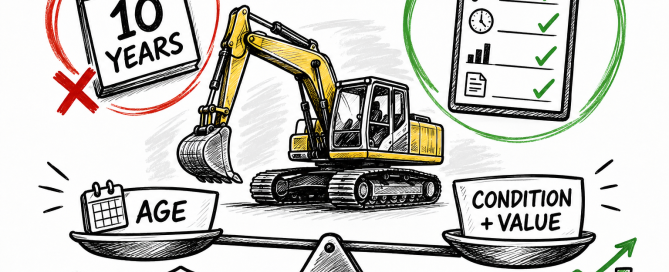
Does equipment age matter? Learn how age, mileage, condition, seller type, and useful life can affect commercial equipment financing options and timing.
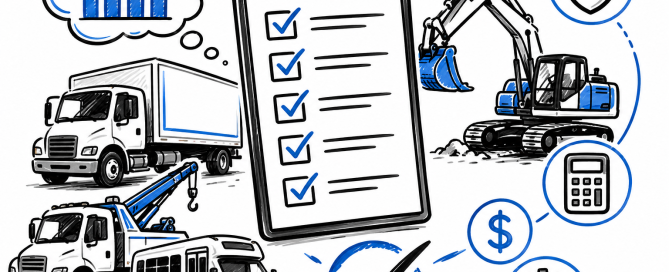
Use this fleet acquisition checklist to assess equipment fit, costs, financing readiness, vendors, and uptime before committing capital to a purchase.
A fleet financing partner review helps established businesses compare lender access, equipment knowledge, terms, timing, and support before they commit.

Learn how to finance ambulances with terms that protect cash flow, fit vehicle specifications, and help qualified medical fleets stay ready for service.